


To which idea of nature do we have access when living in heavily artificialized environments?
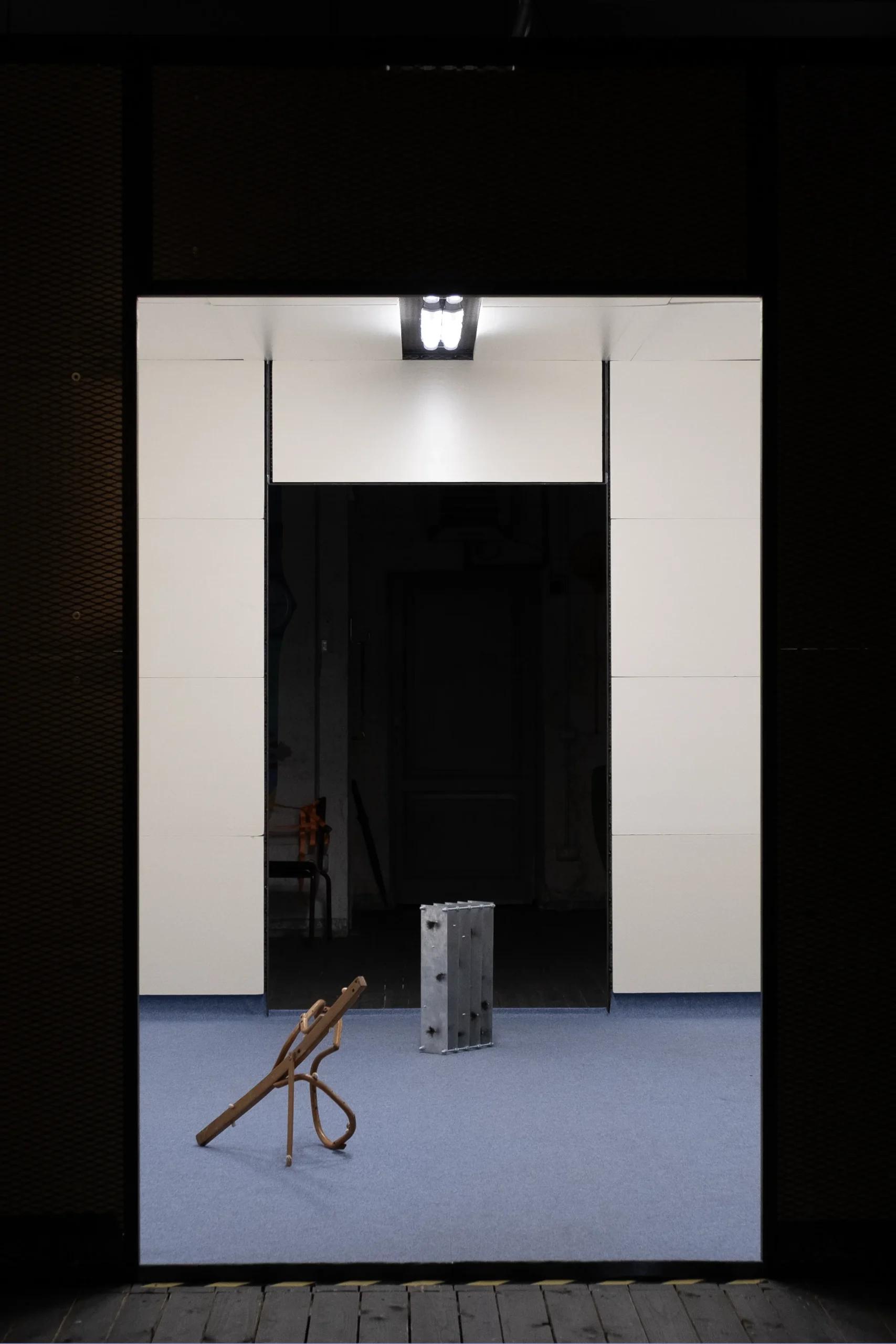
An Histrionic Matter presents a series of sculptures by Stef Fusani, emerging from his ongoing doctoral research. Questioning what counts as natural – or not – arises in daily moments, like a morning walk with his dog in Madrid. Here, nature appears to exist only in the shape of a park. Fenced, mown, kept.
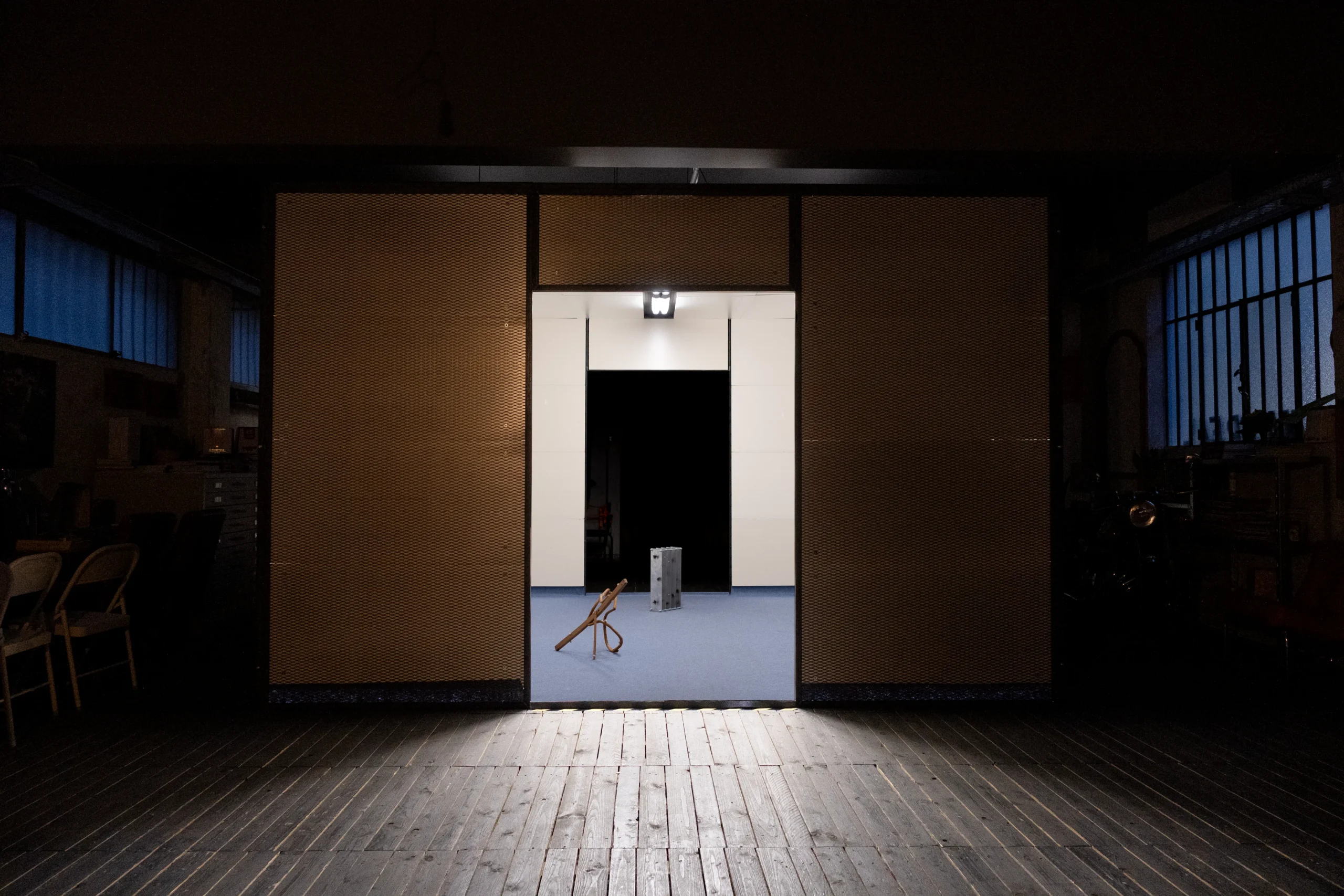
Drawing on libertarian ecology, in particular its rejection of hierarchies and its insistence on self-organization, each work shown is assembled intuitively and resists a predefined order. Fusani juxtaposes organic materials and other elements he collects himself with industrial and mass-produced goods. The encounter between organic and artificial becomes literal, with both categories sitting on the same level:
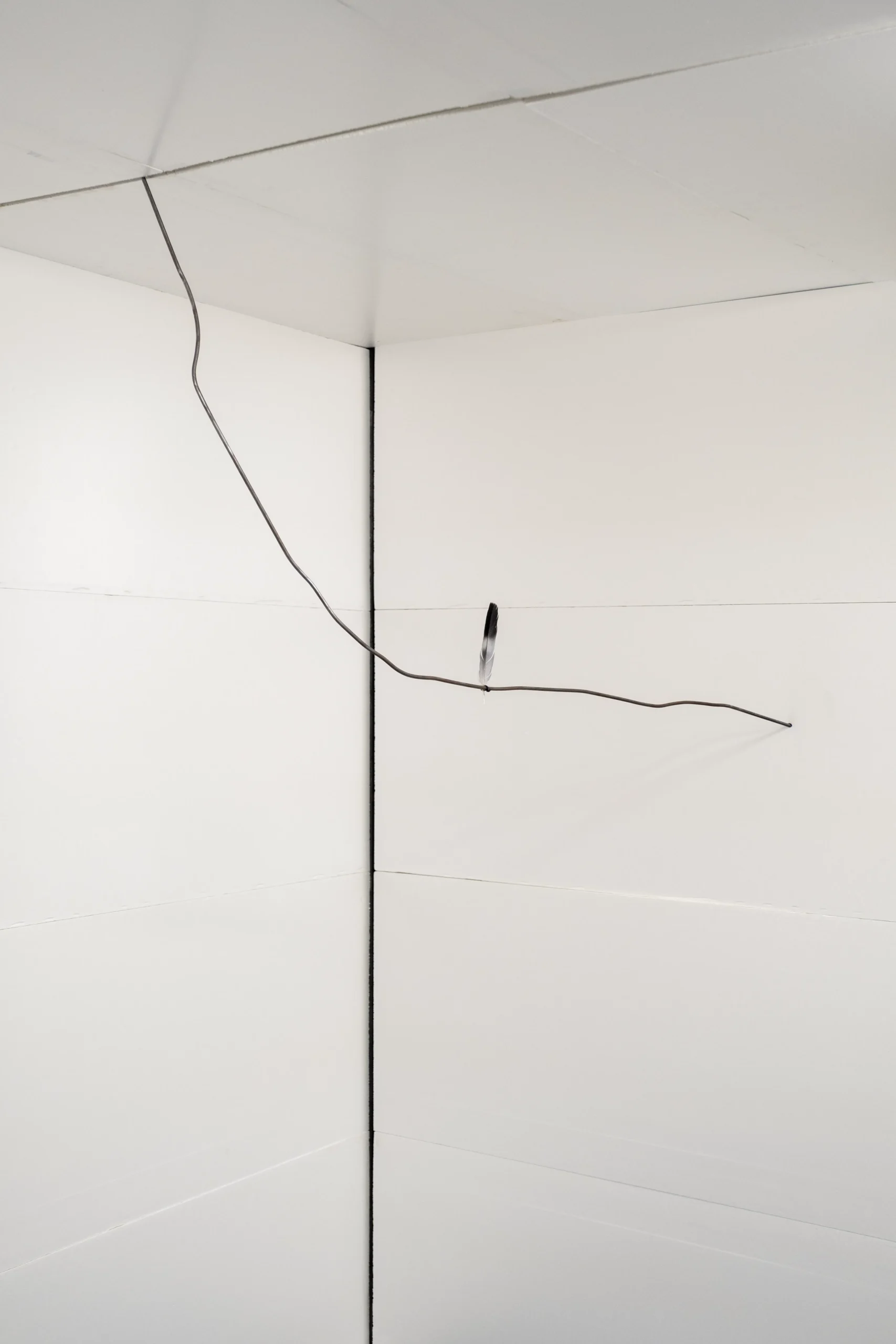
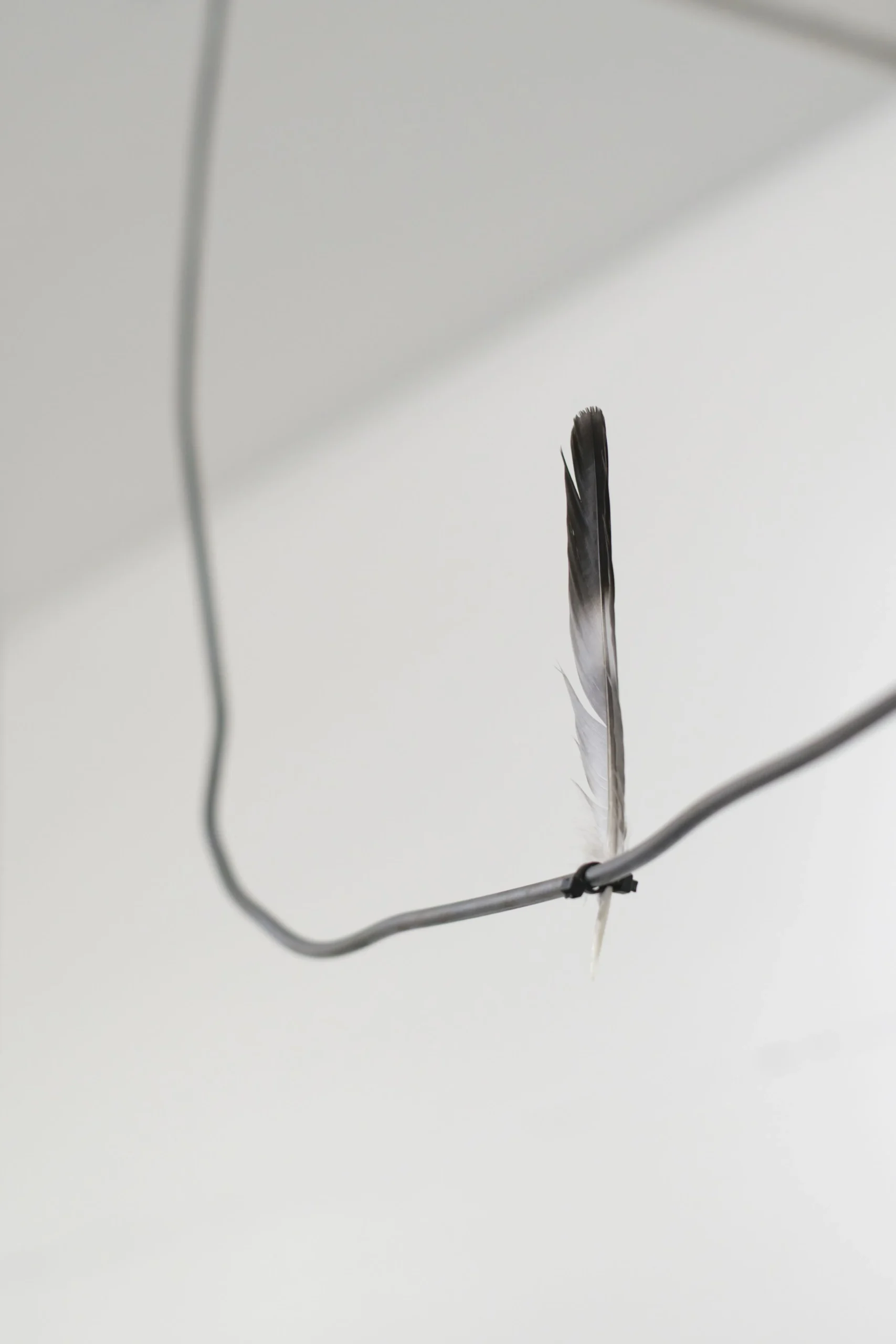
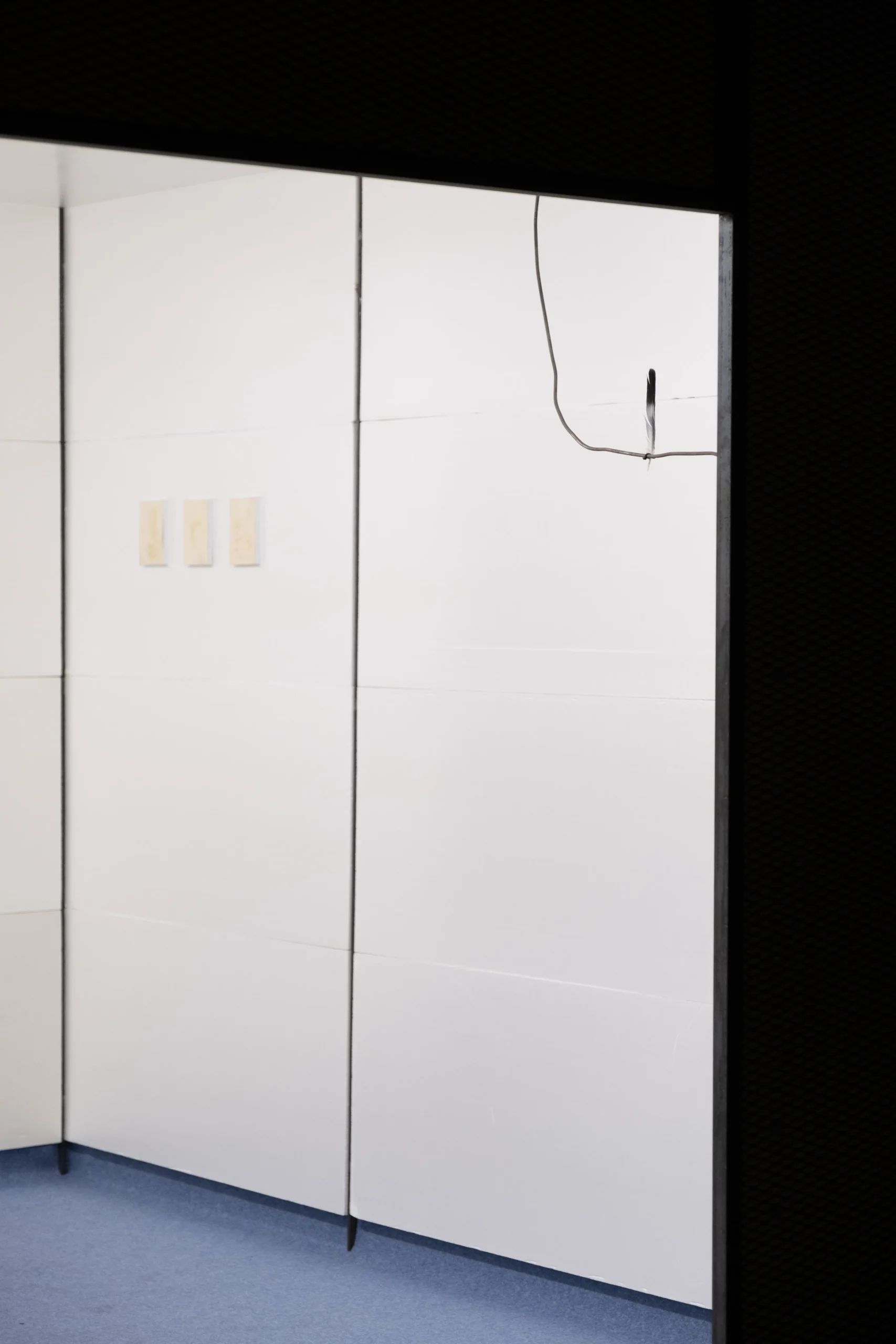
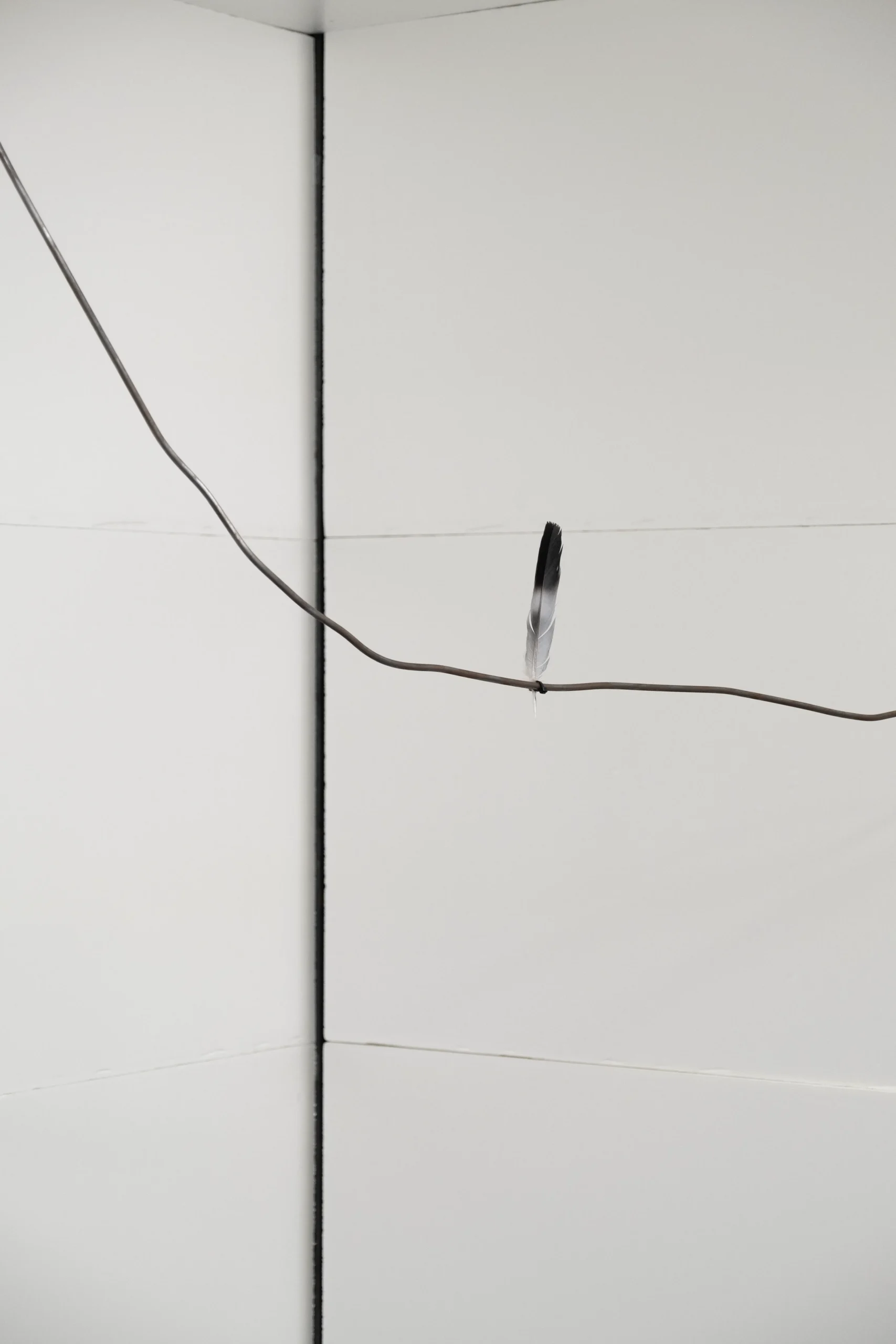
A pigeon feather fastened with a cable tie to a bent metal bar;
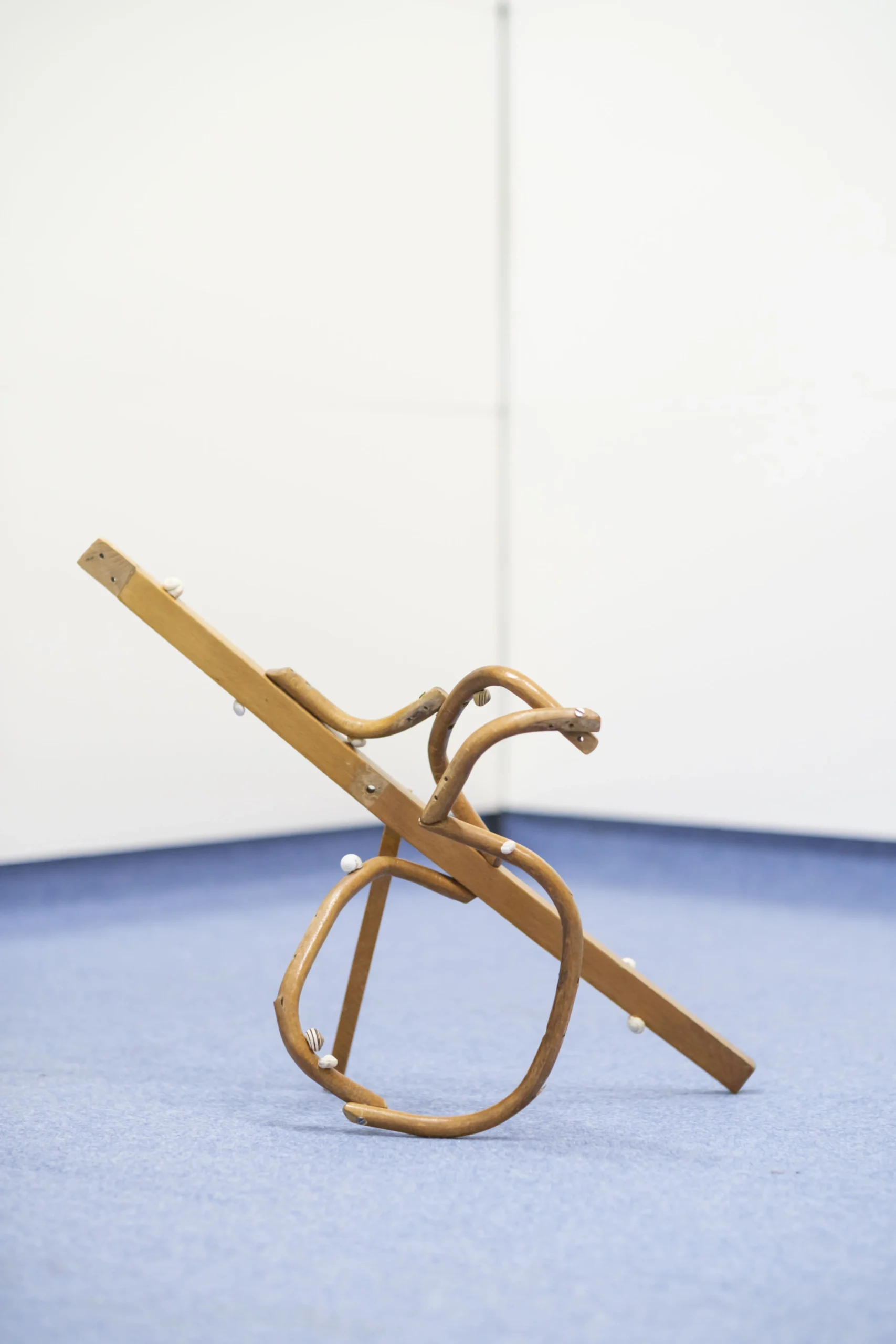
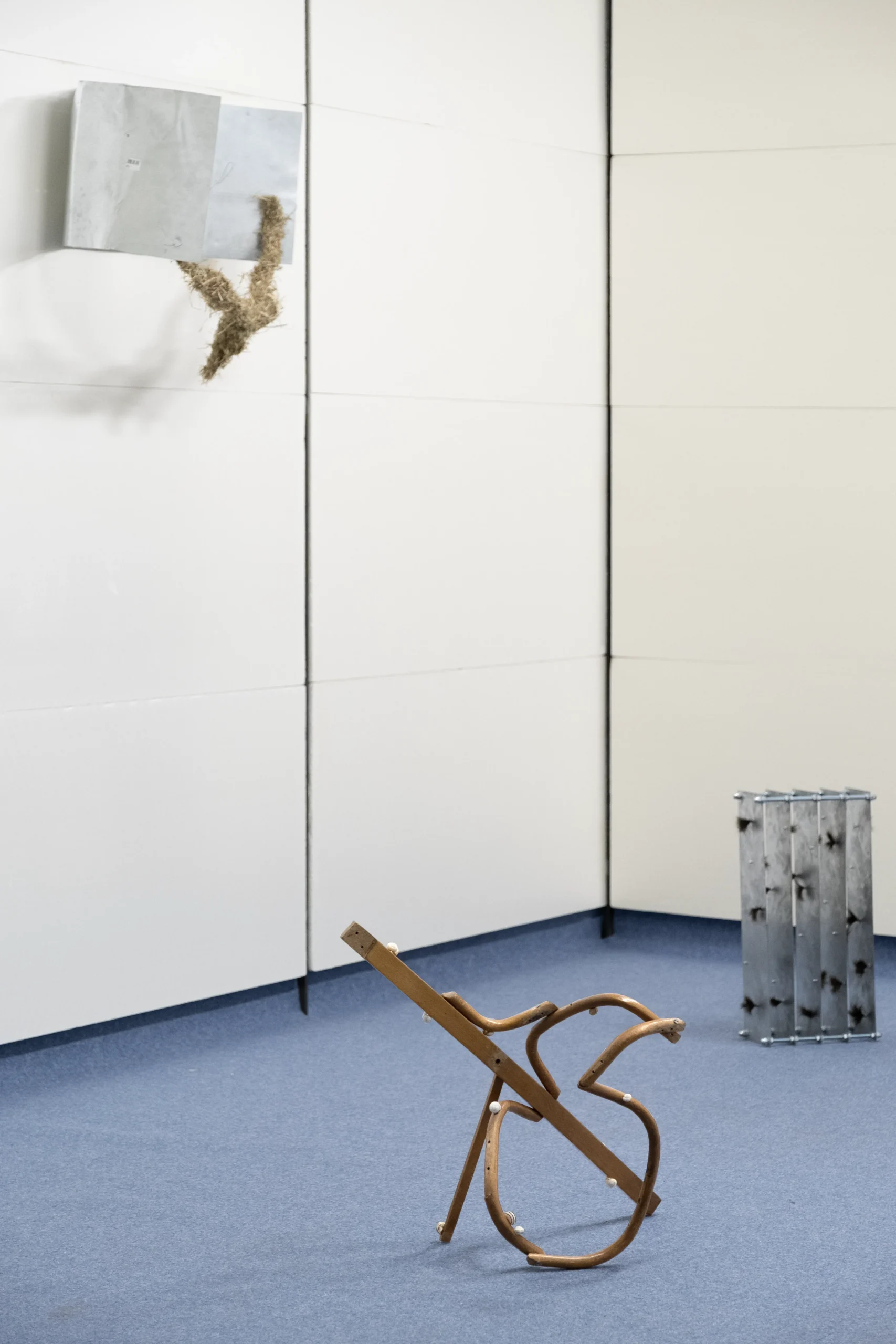
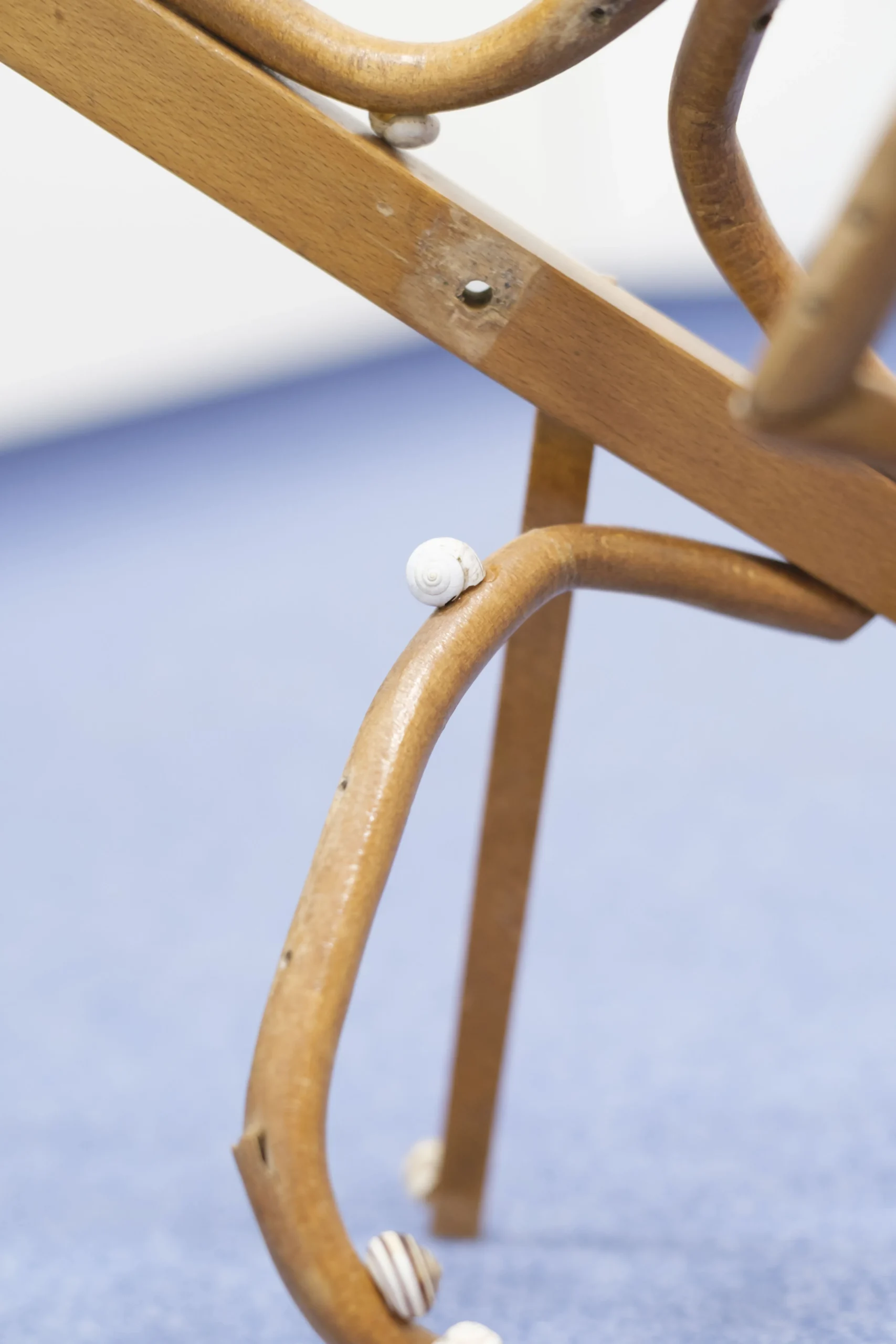
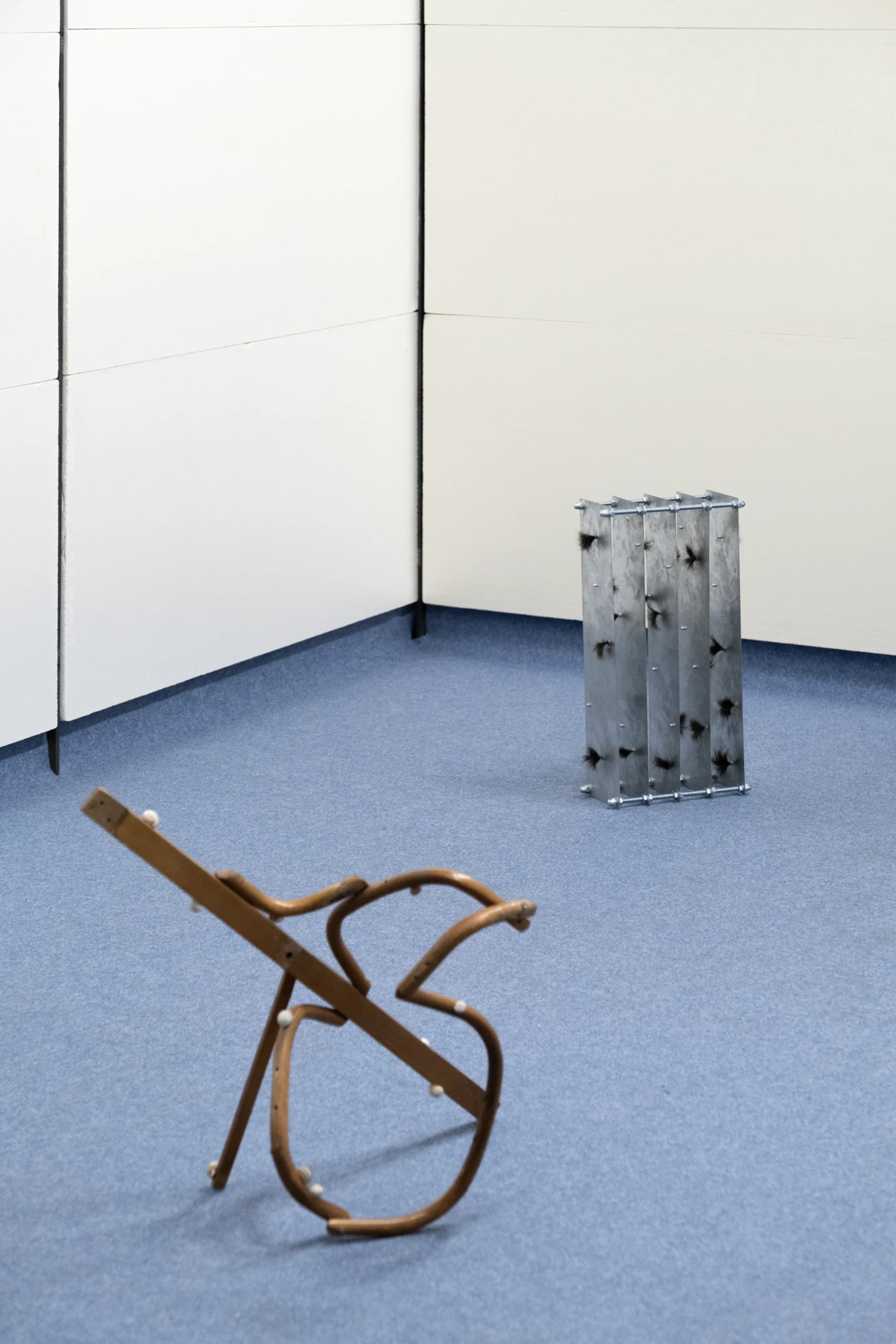
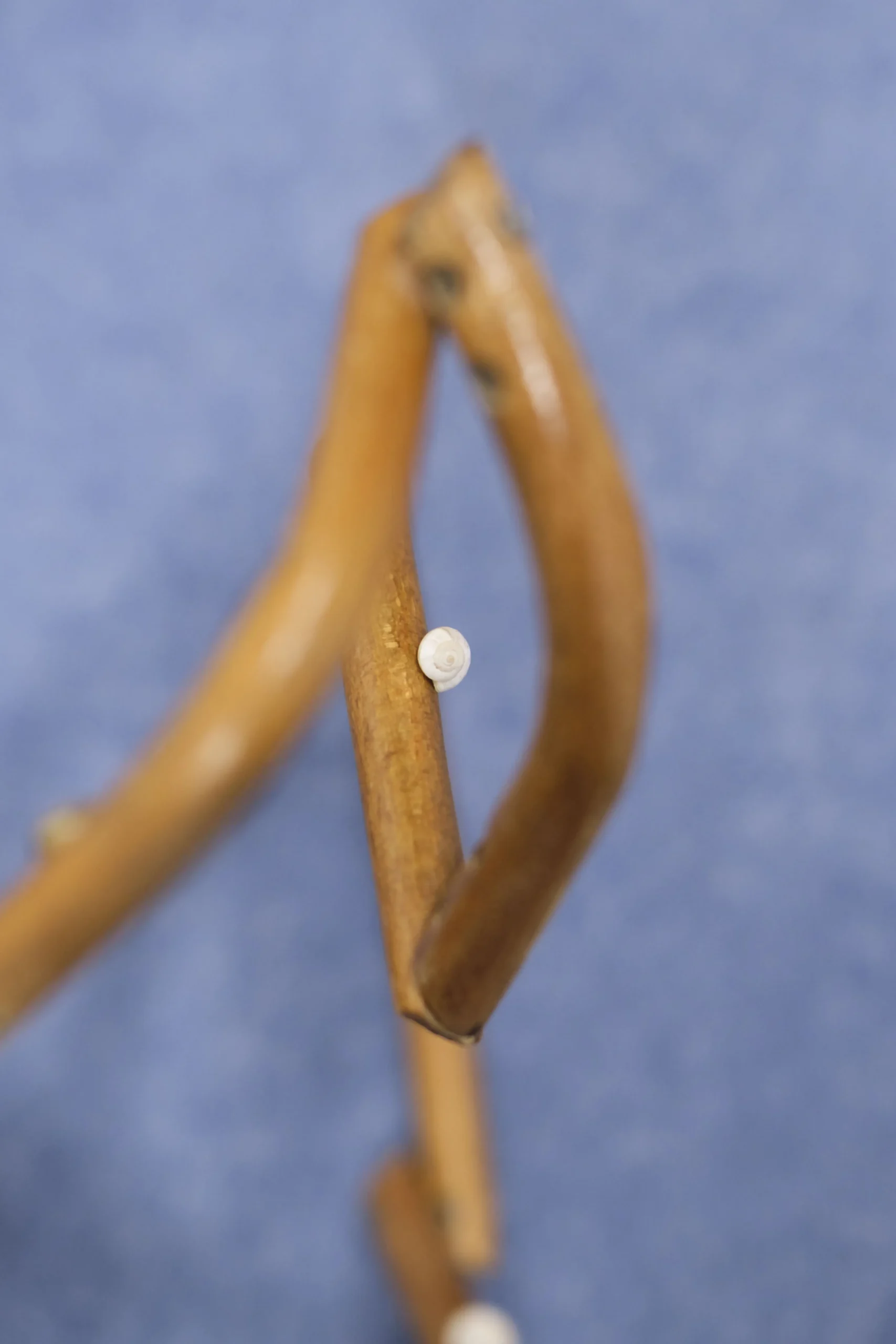
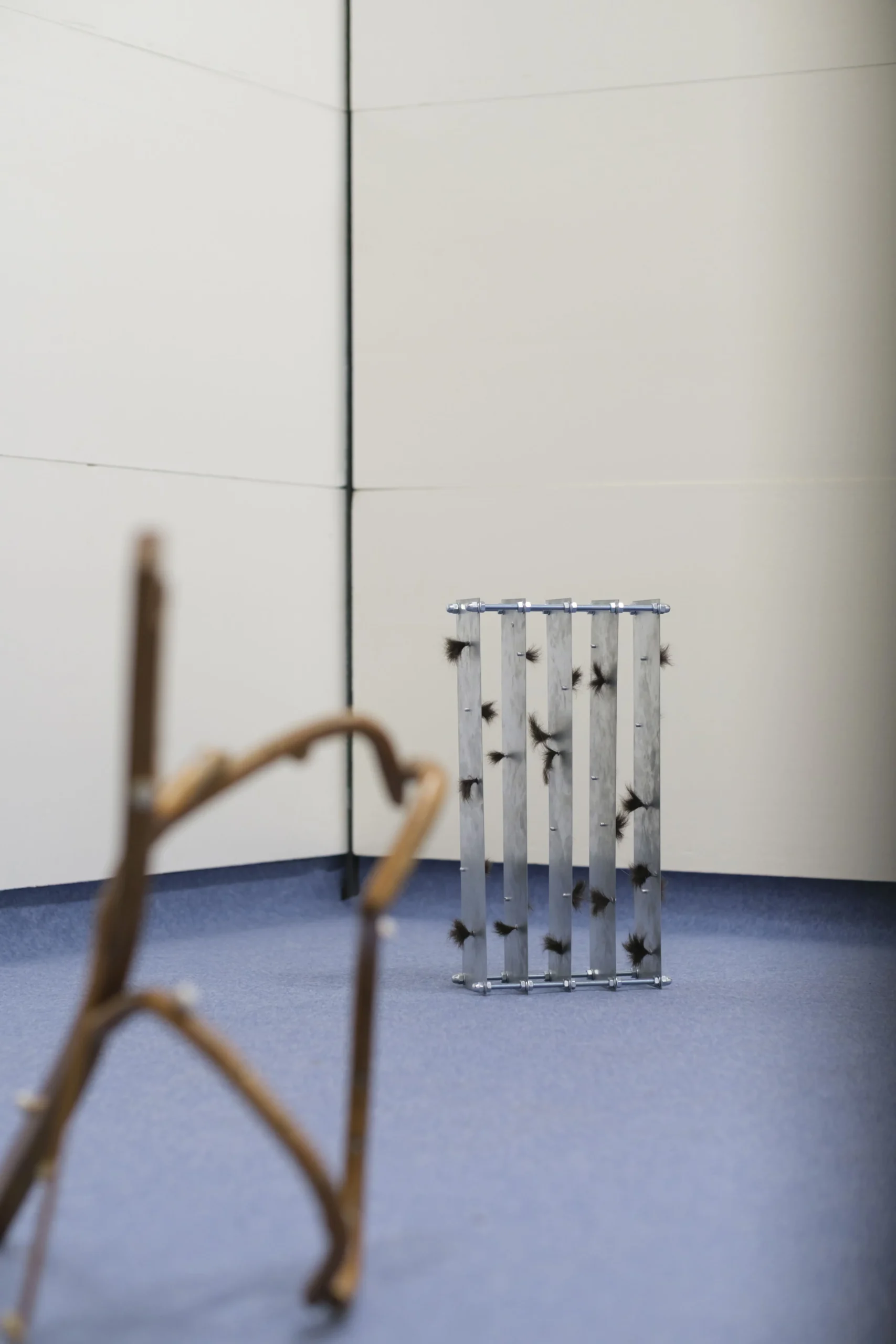
empty snail shells glued onto a dismantled and reshaped bentwood chair;
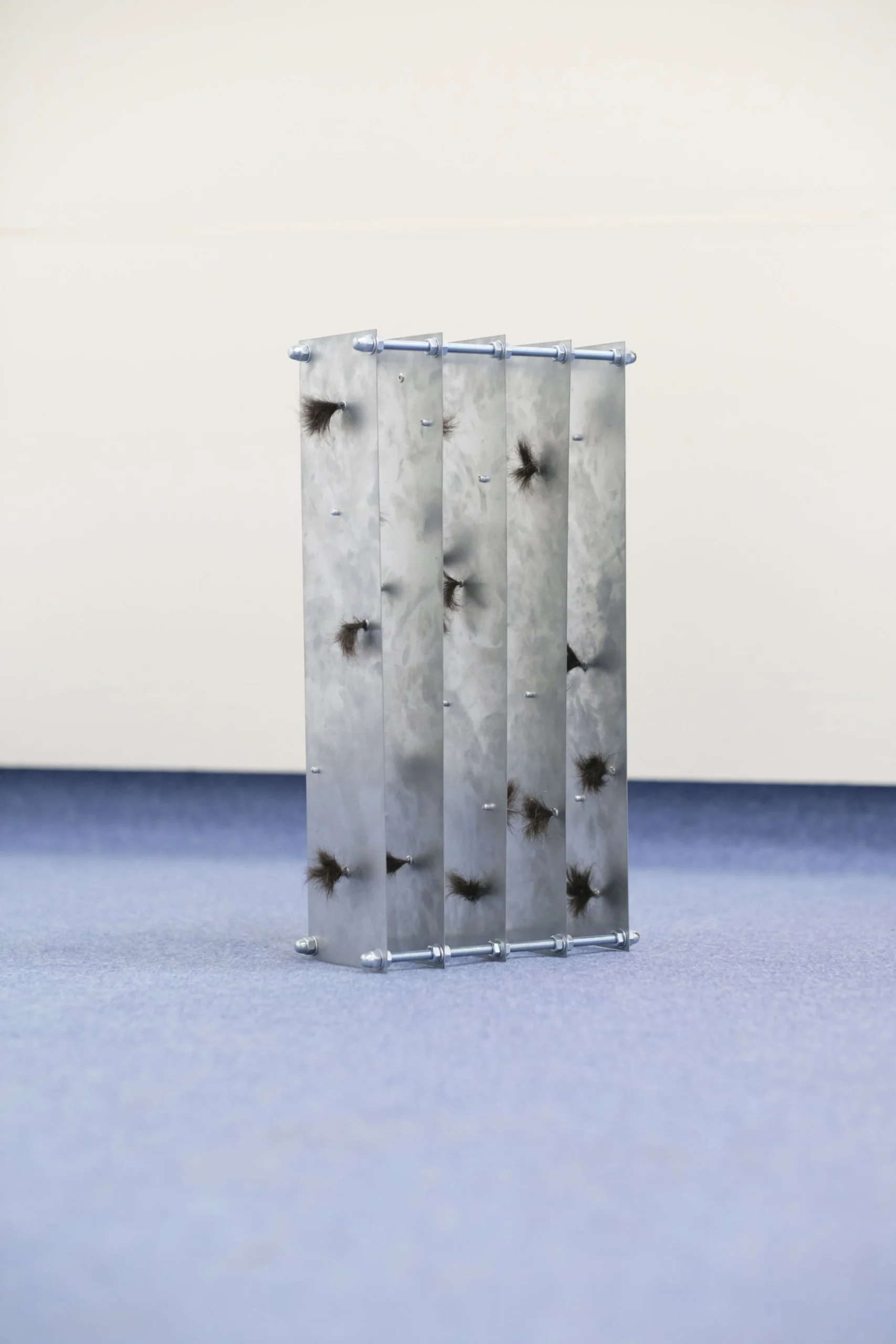
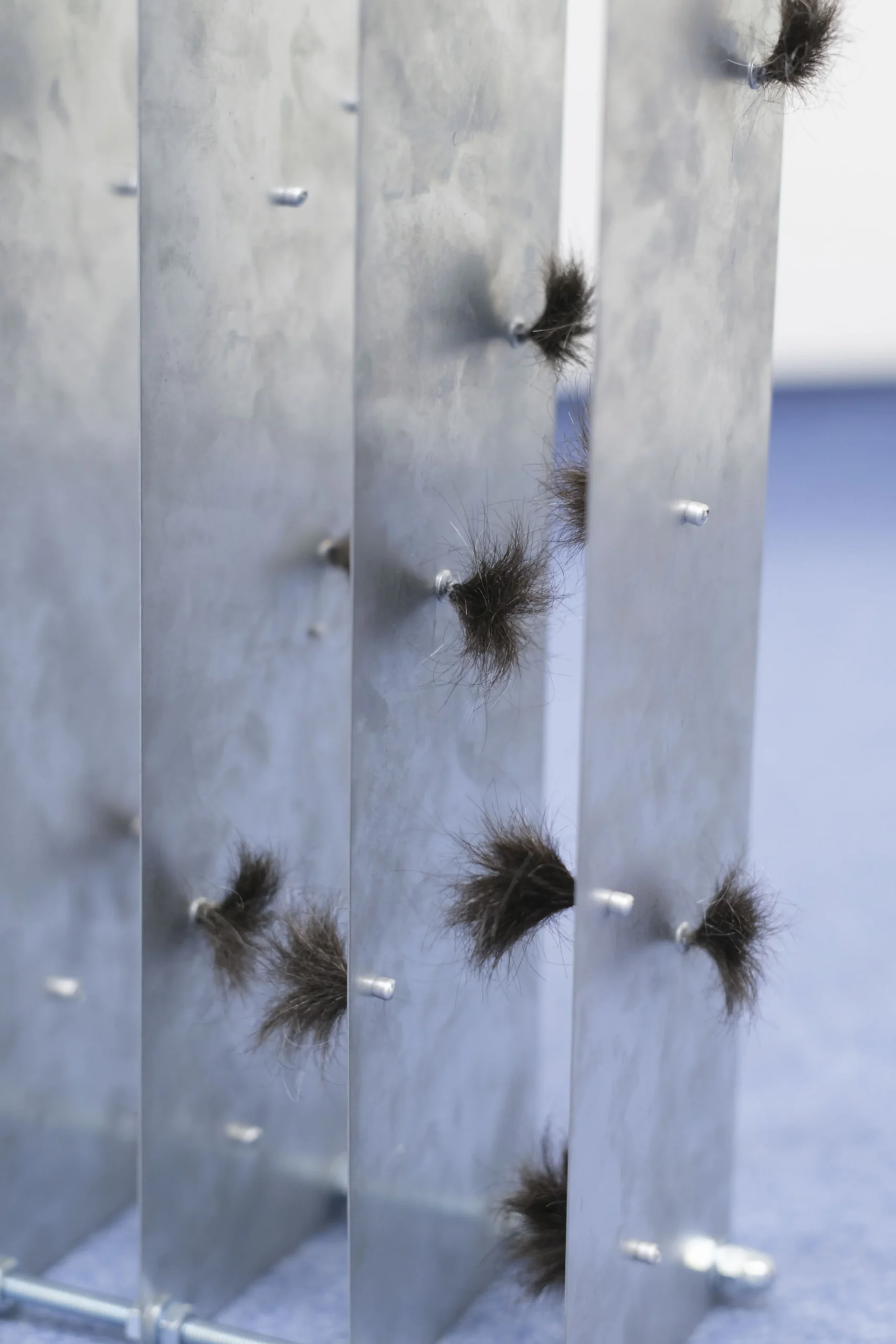
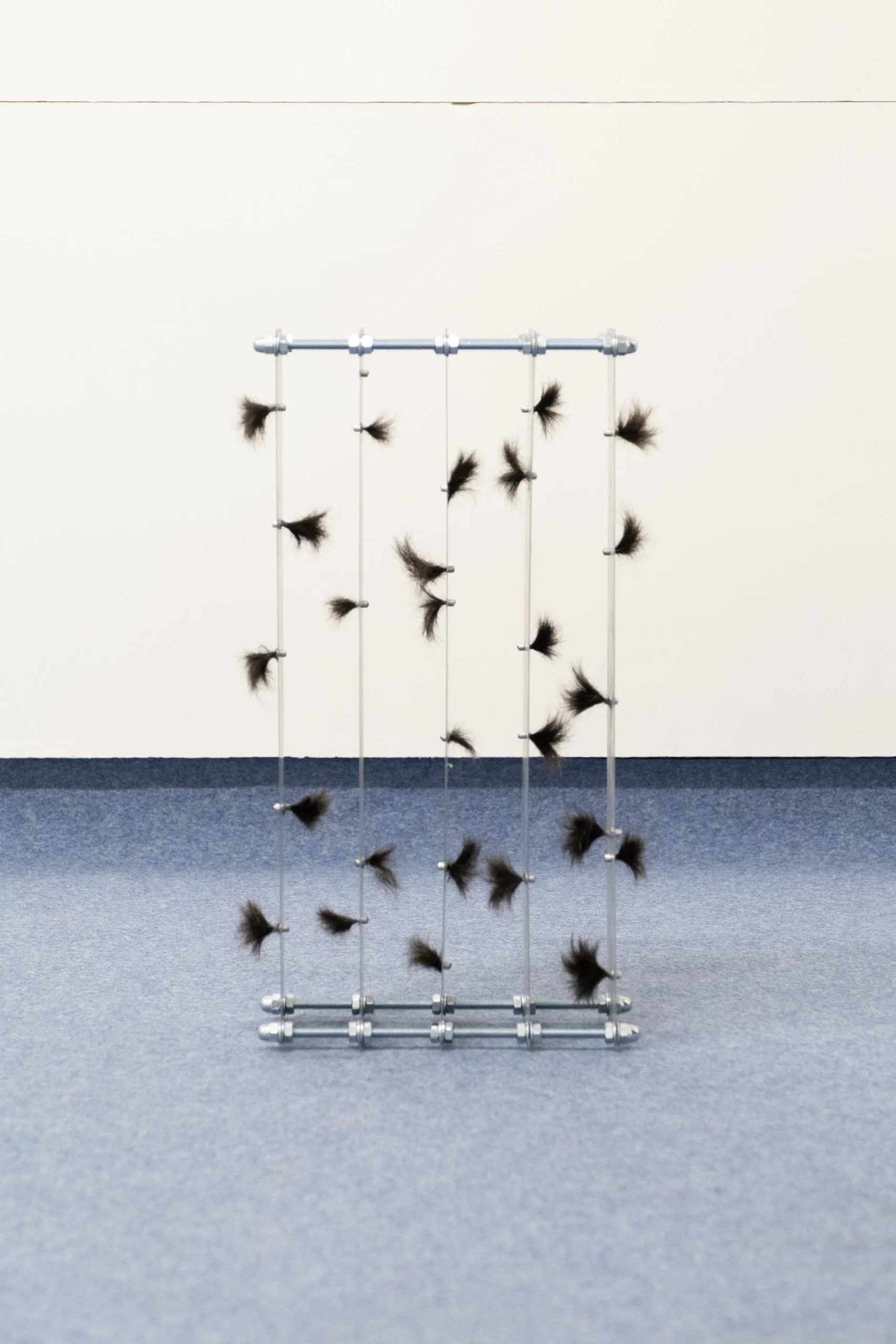
tufts of hair pushed through steel sheets;
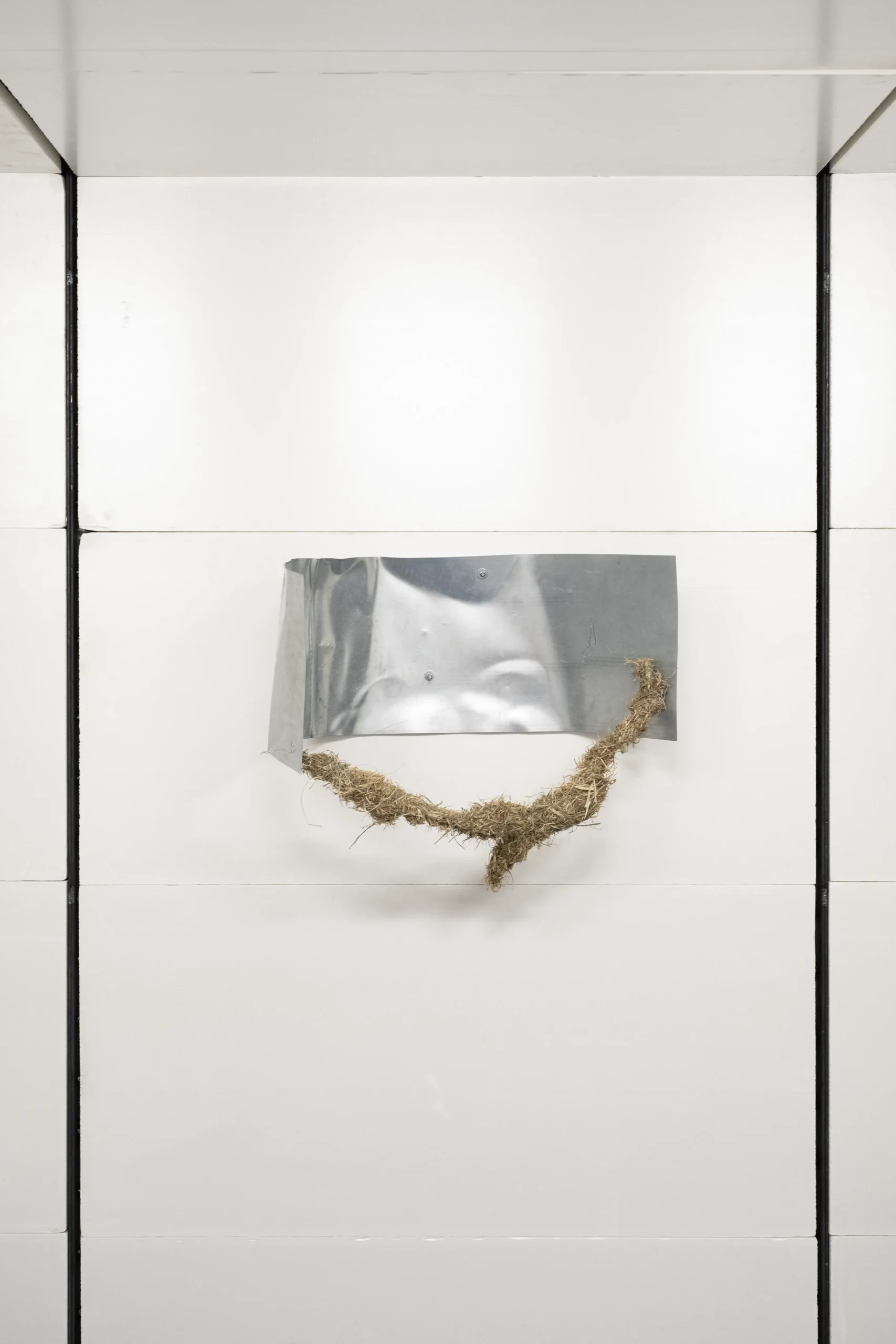
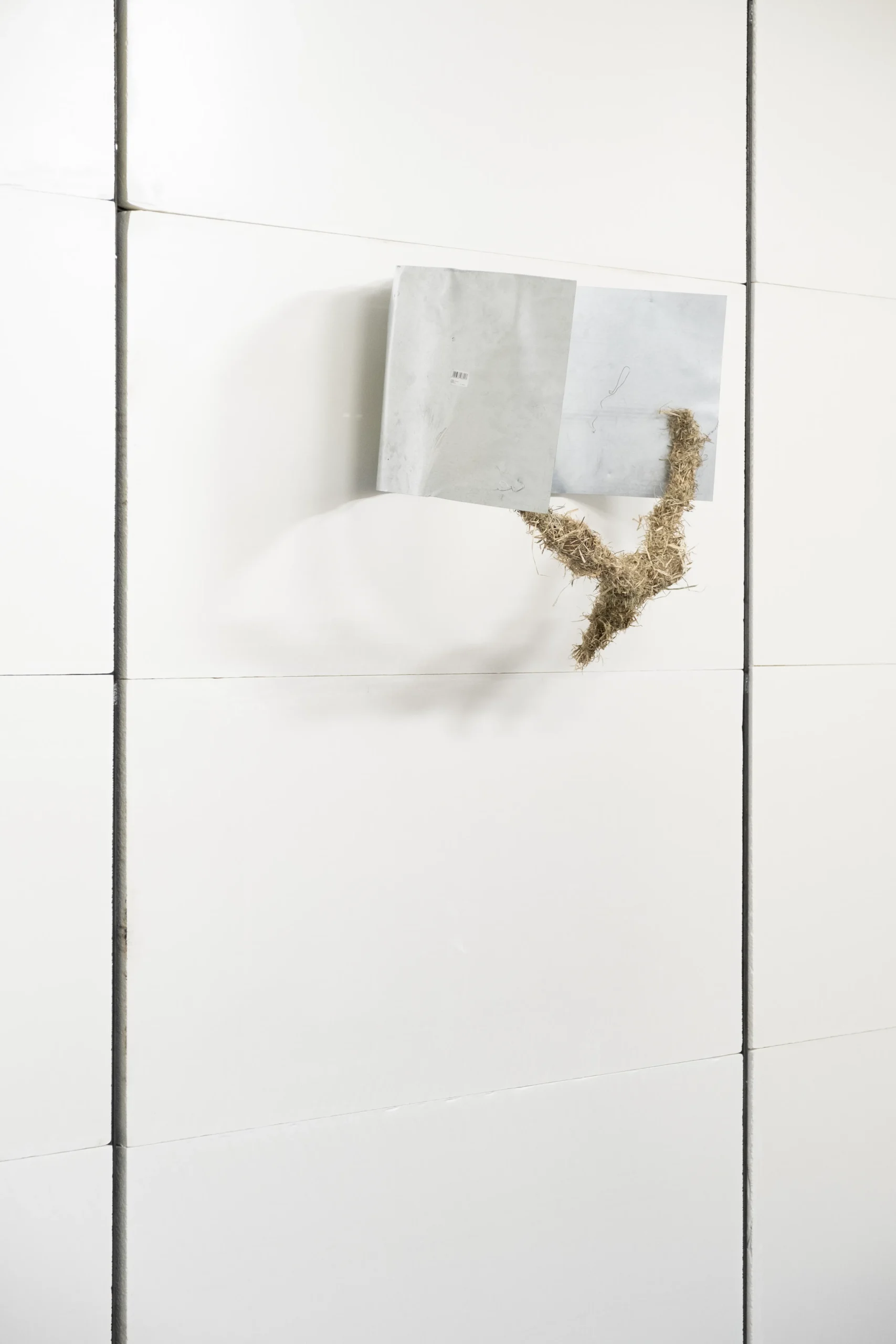
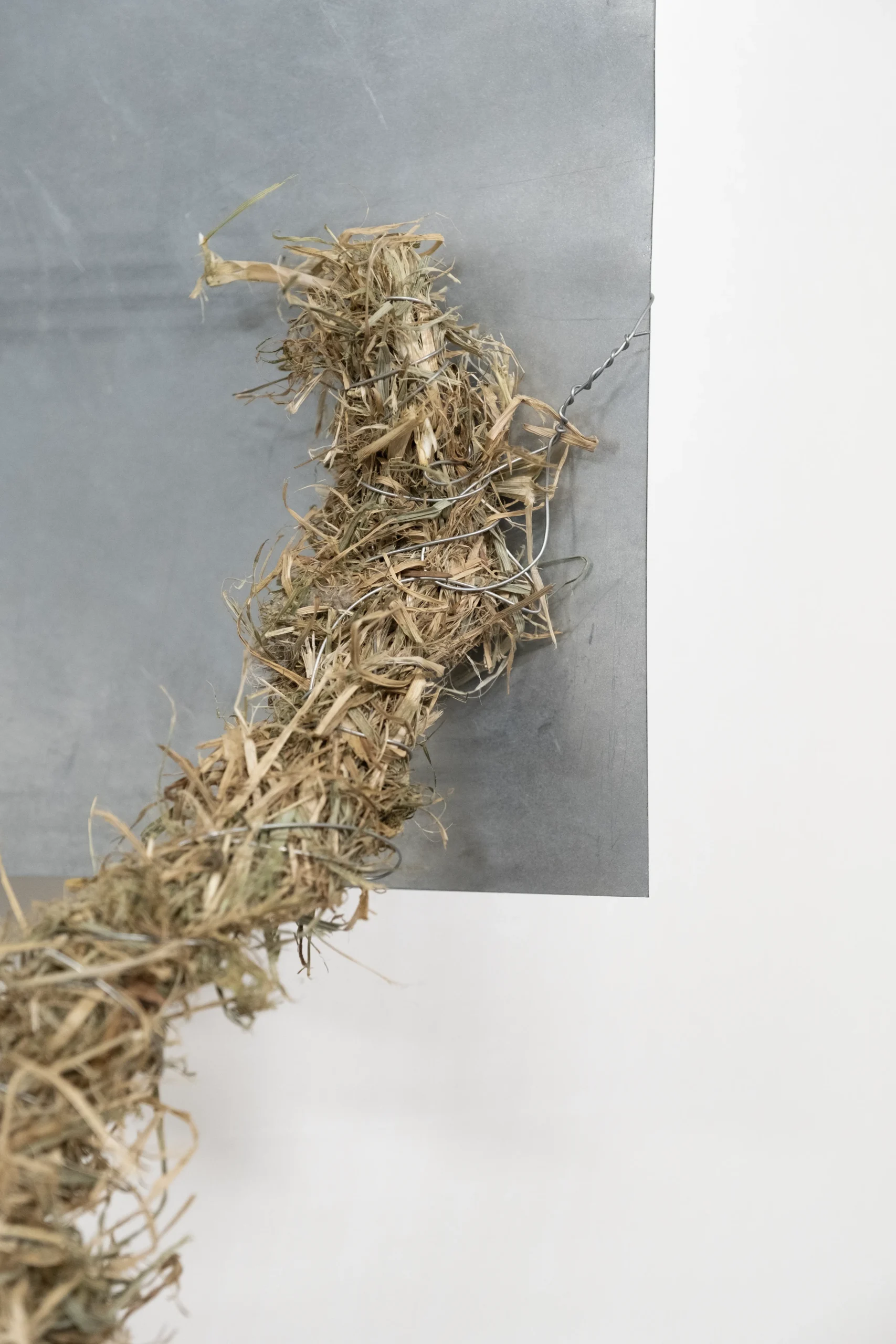
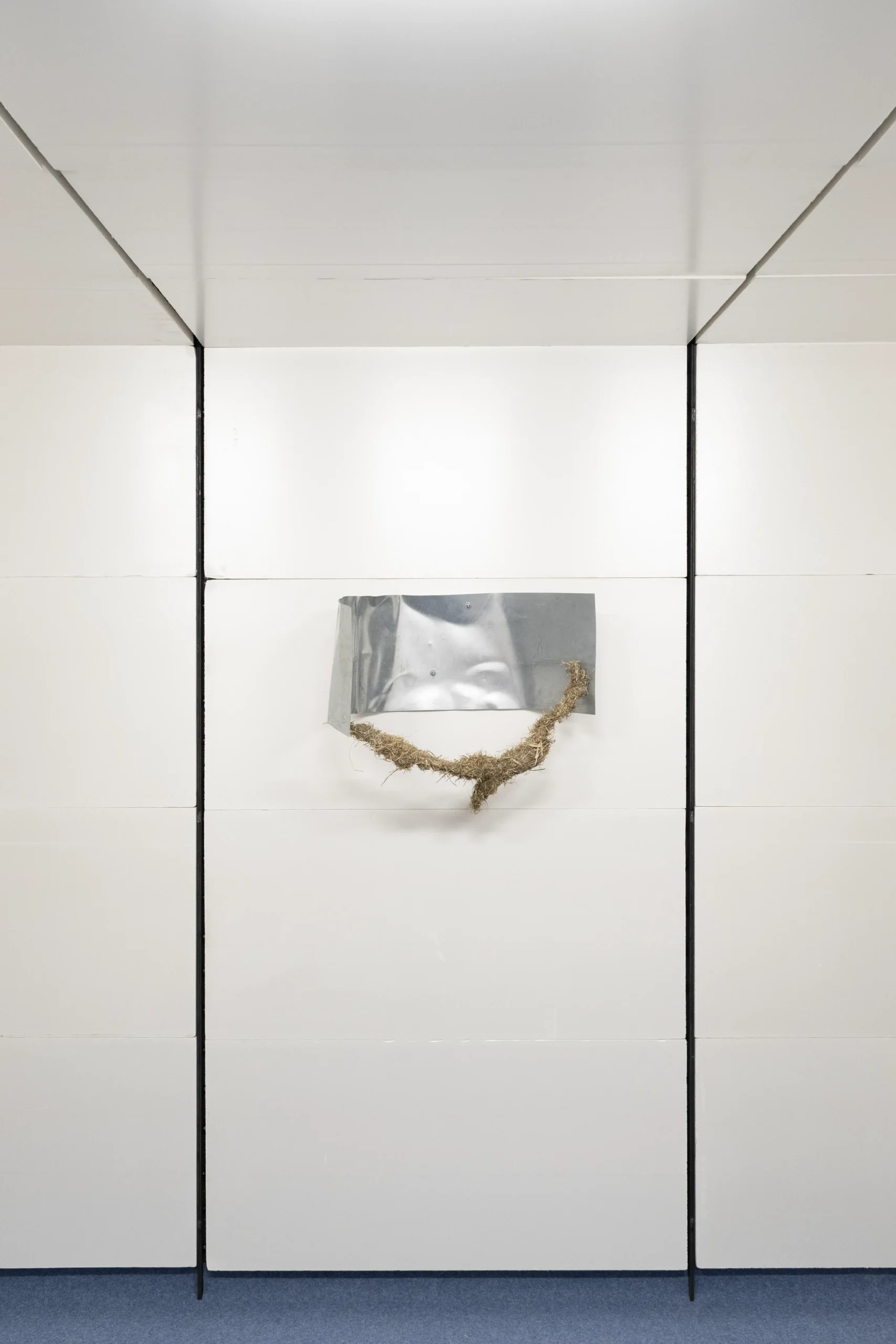
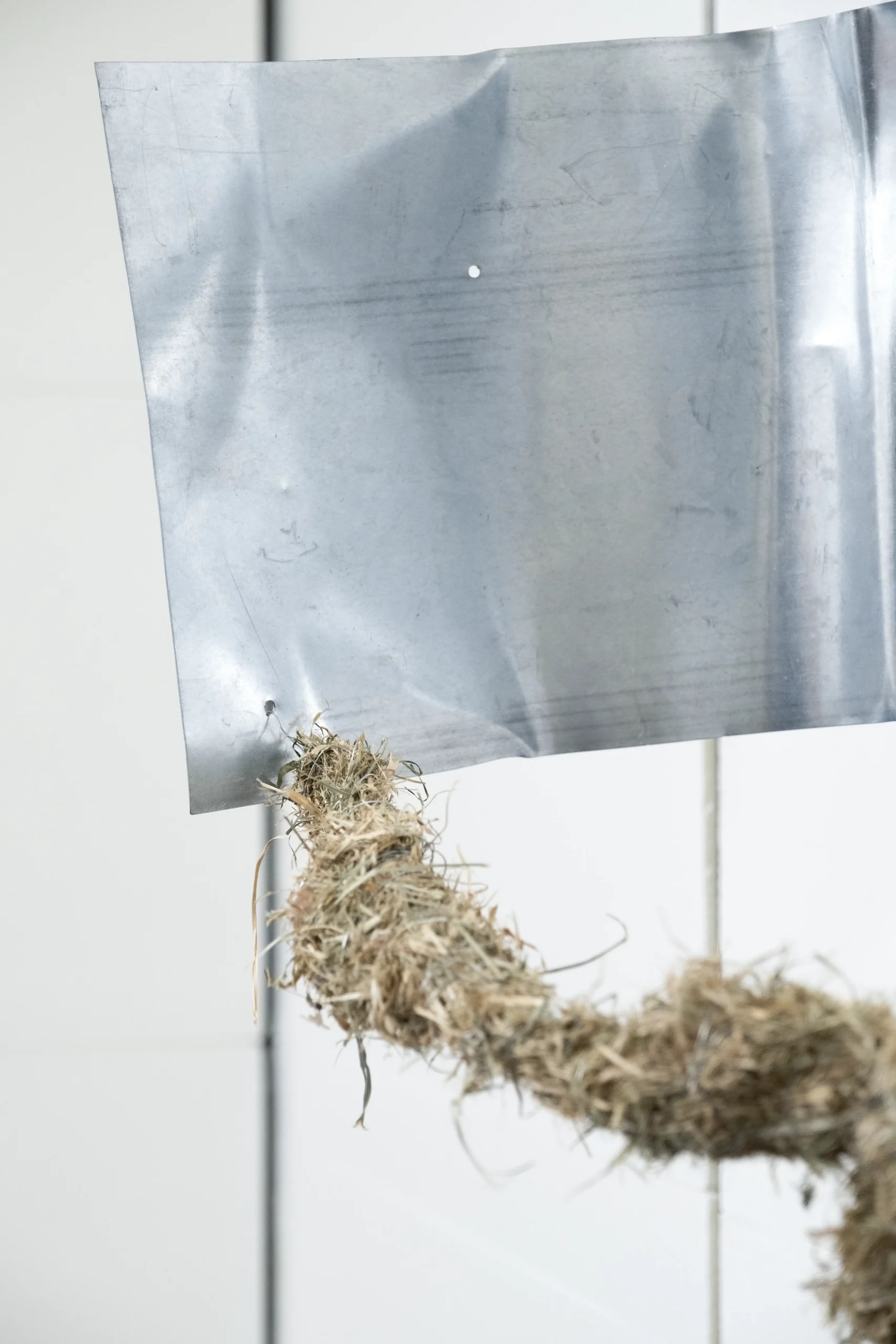
machine-cut grass from a park joined to a stock aluminum panel with metal wire;
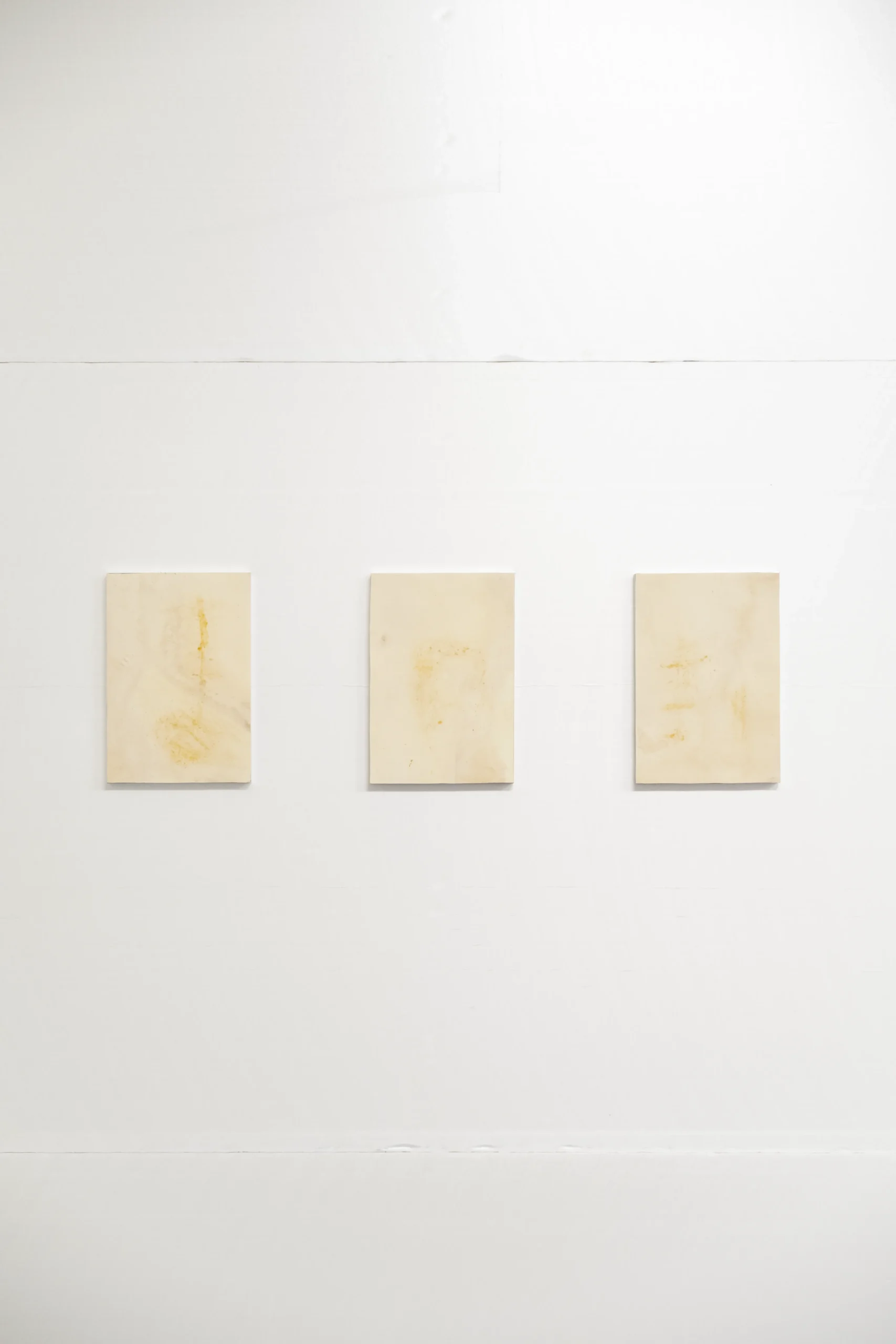
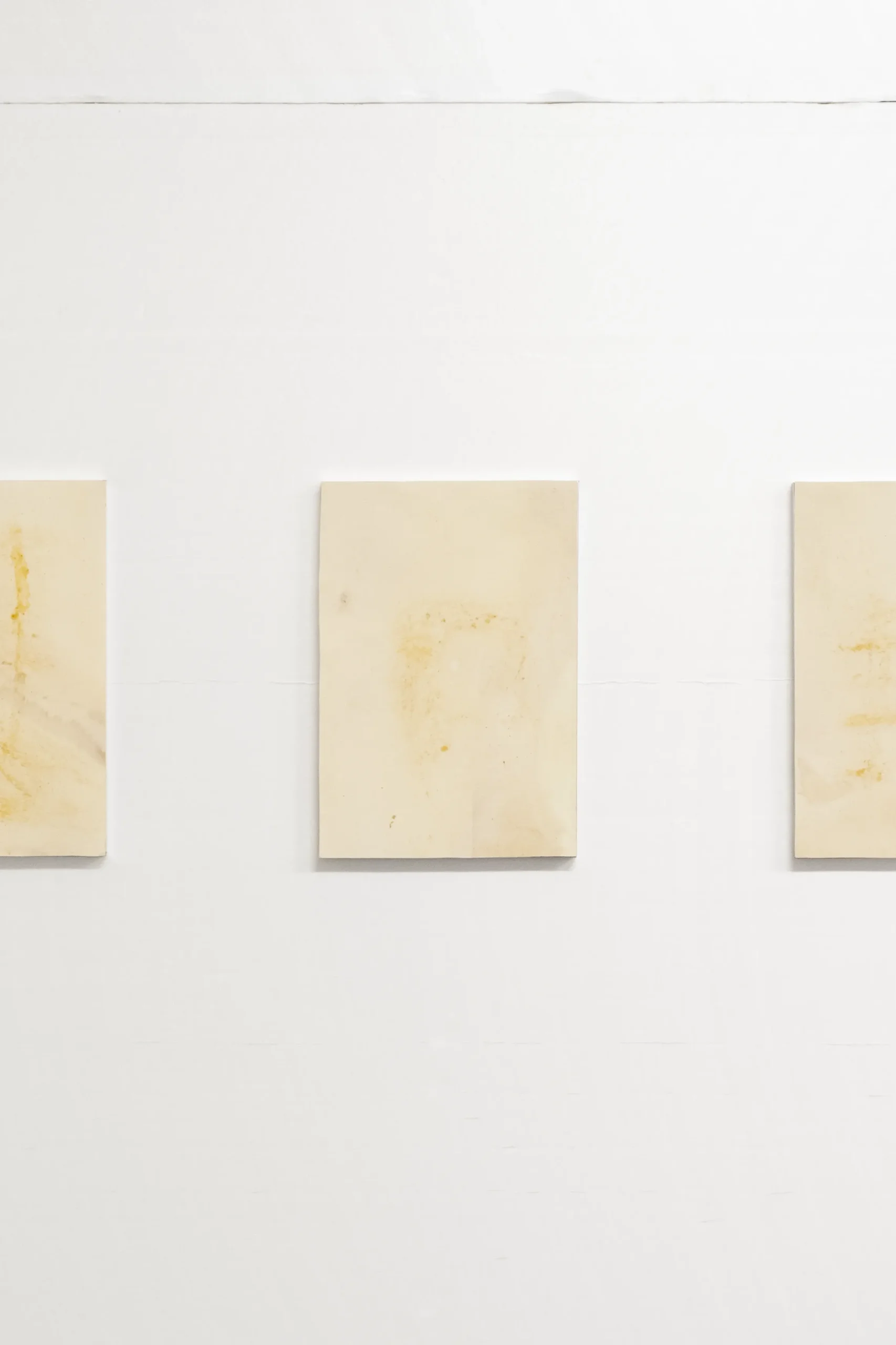
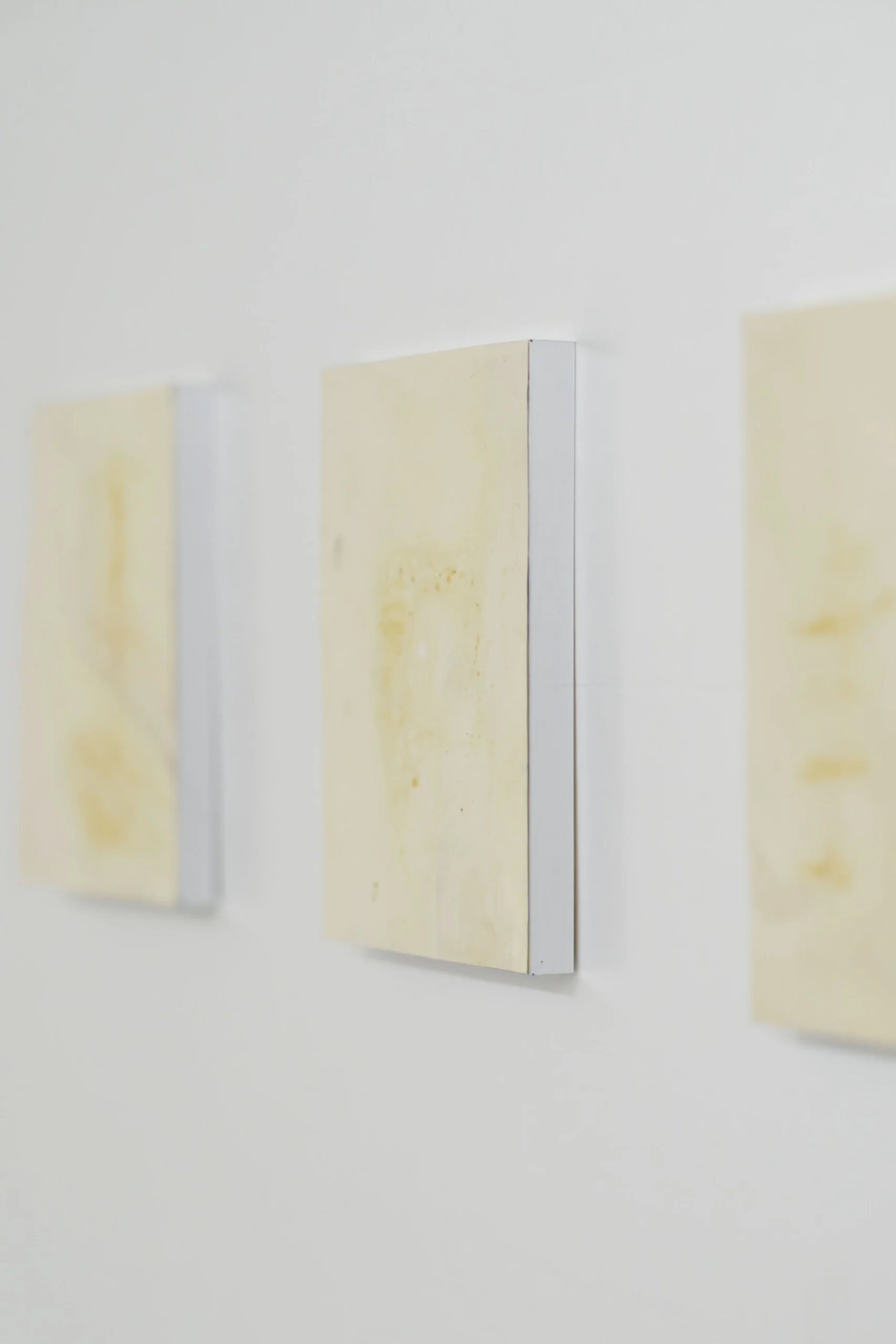
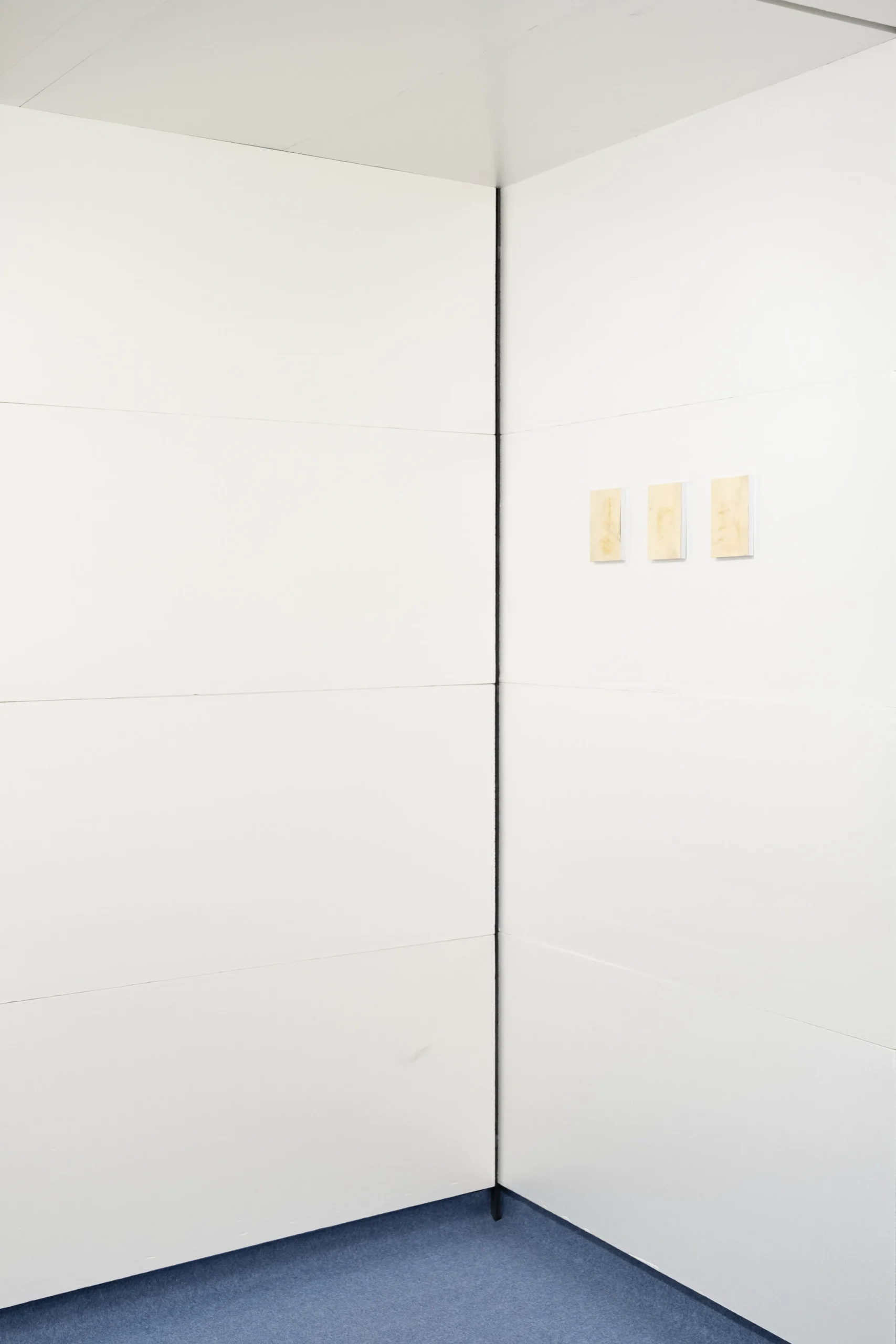
urine, earwax, sulfur and shellac staining simili japon papers.
The artist’s body takes an active part in this process, functioning as a producer of organic matter. In doing so, it stands on the same ground as the image of the park: what the body produces is organic, yet constantly managed. Hair, earwax and urine are residues of an act of maintenance. The daily routine of trimming, cleaning and discarding that preserves his body image within certain constraints is the same one that keeps the lawn short and the paths clear in the park.
The exhibition title points to a stage. Rooted in theatrical semantics, histrionic designates an exaggerated behavior driven by the search for attention, and Fusani adopts this logic deliberately. Like theater props, the elements and relations he stages in the space are exaggerated to be legible from the audience, so that “being fake” becomes secondary while the performance goes on.
Beneath the superficial clash between natural and artificial lies the urgency to amplify this separation until it becomes visible enough to be questioned, with the body as a possible place for a new turn.