


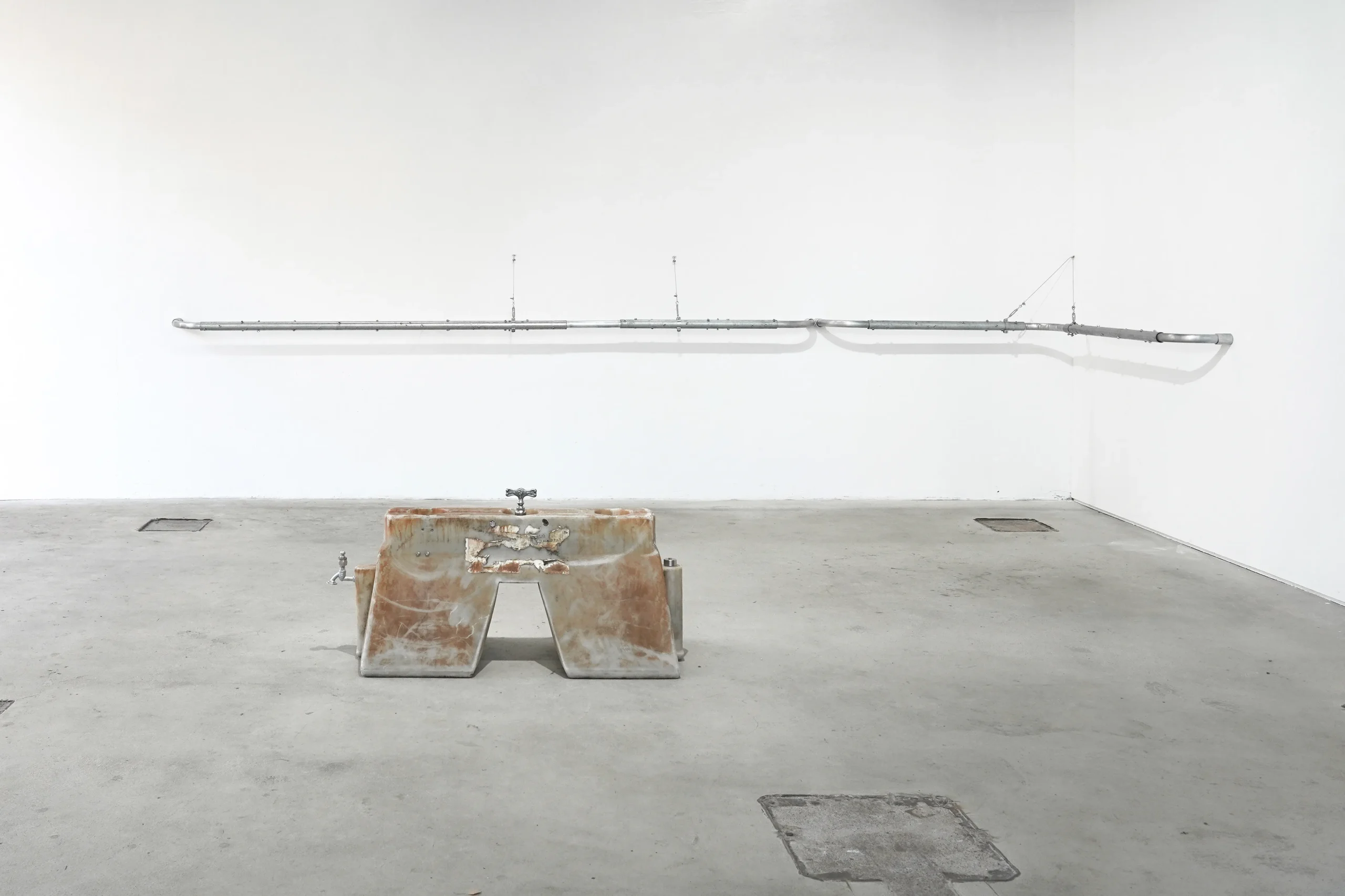
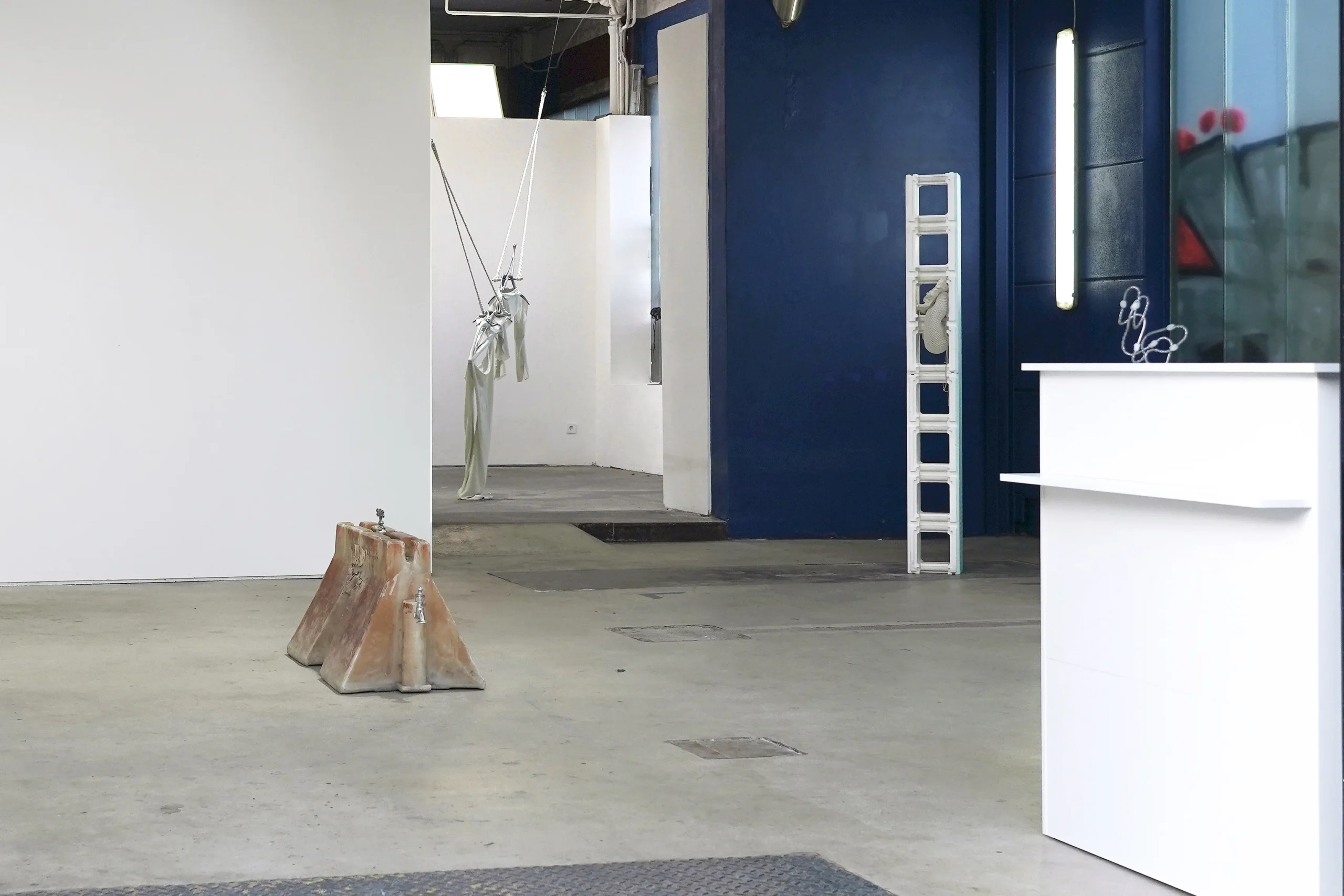
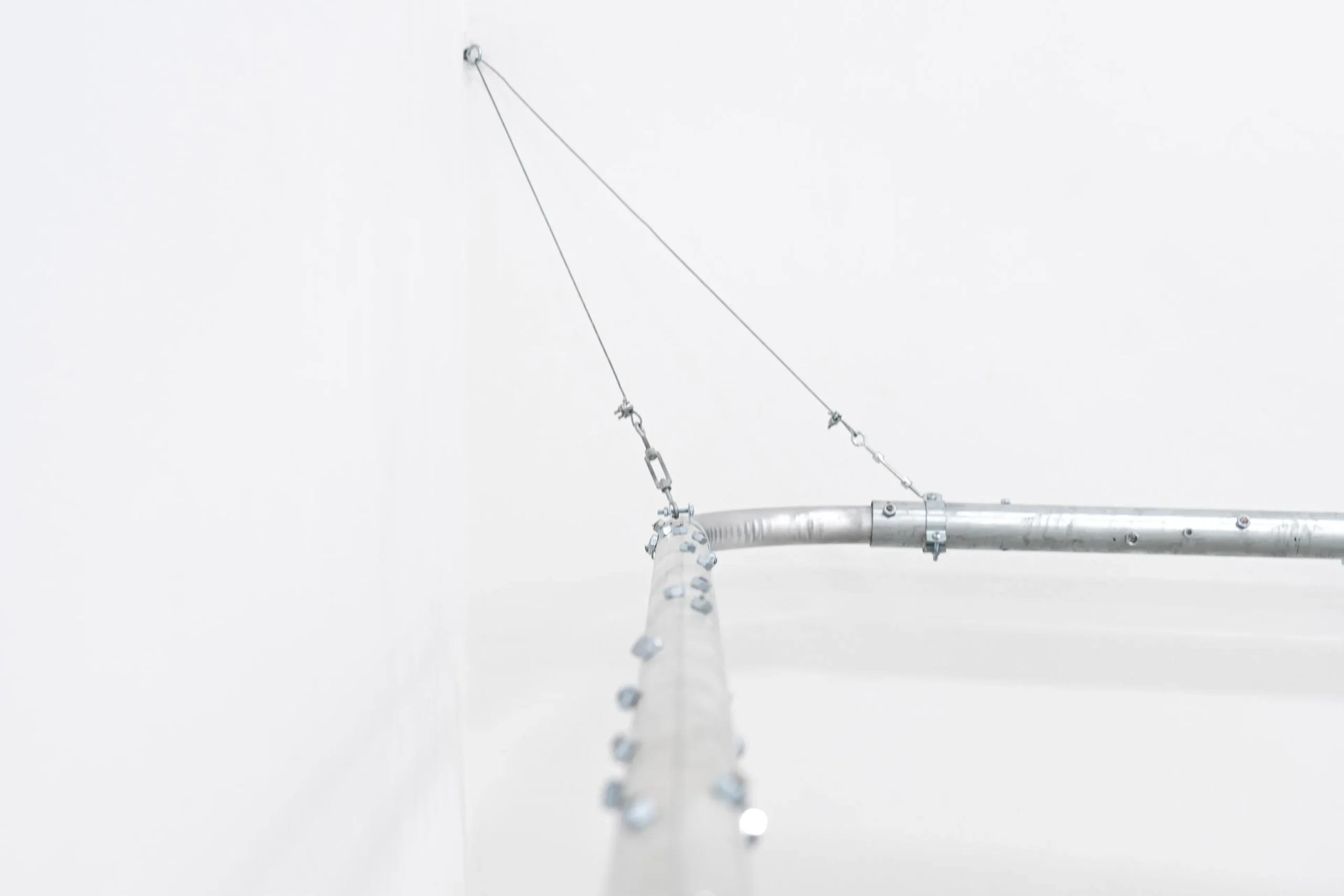
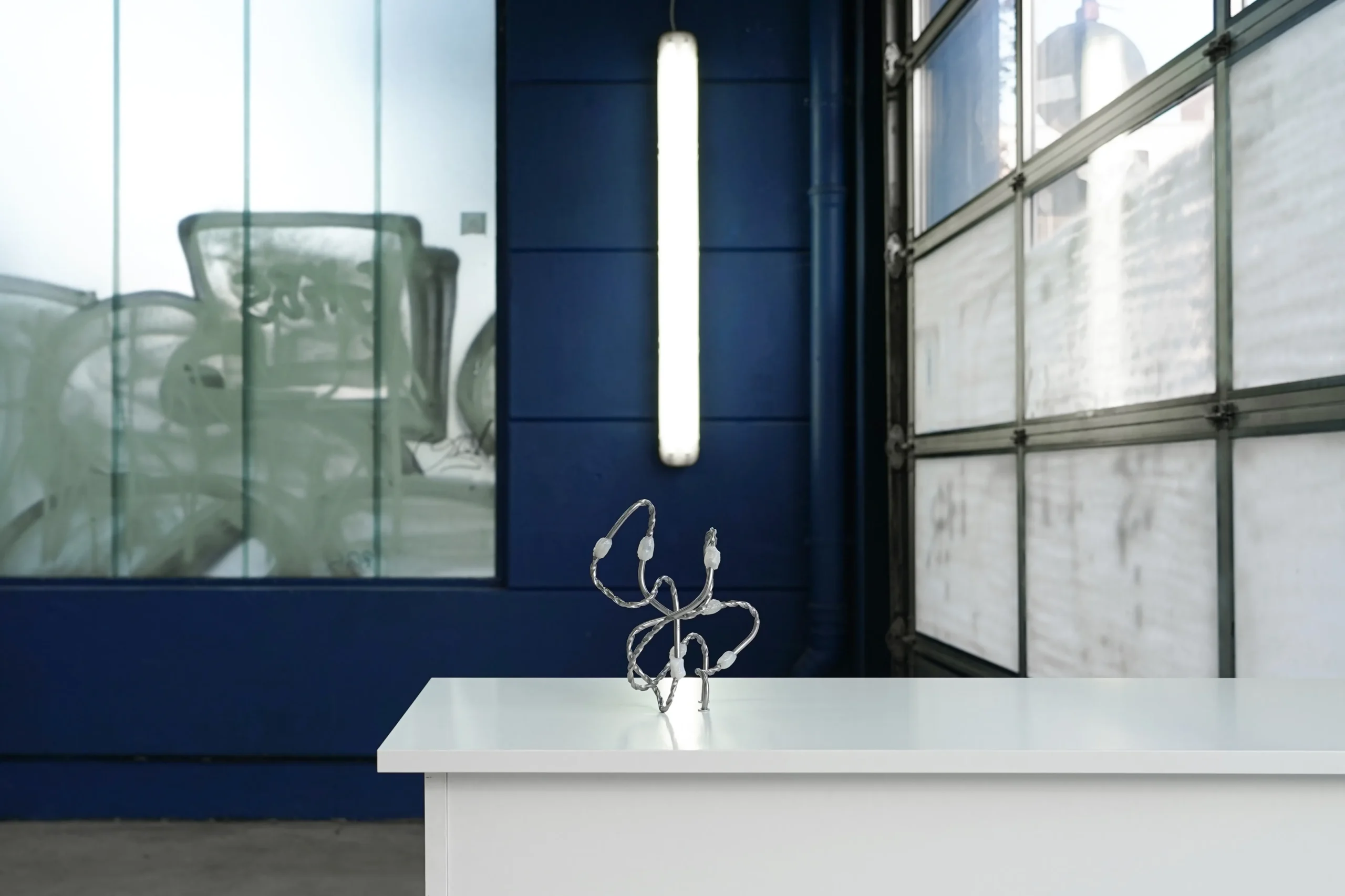
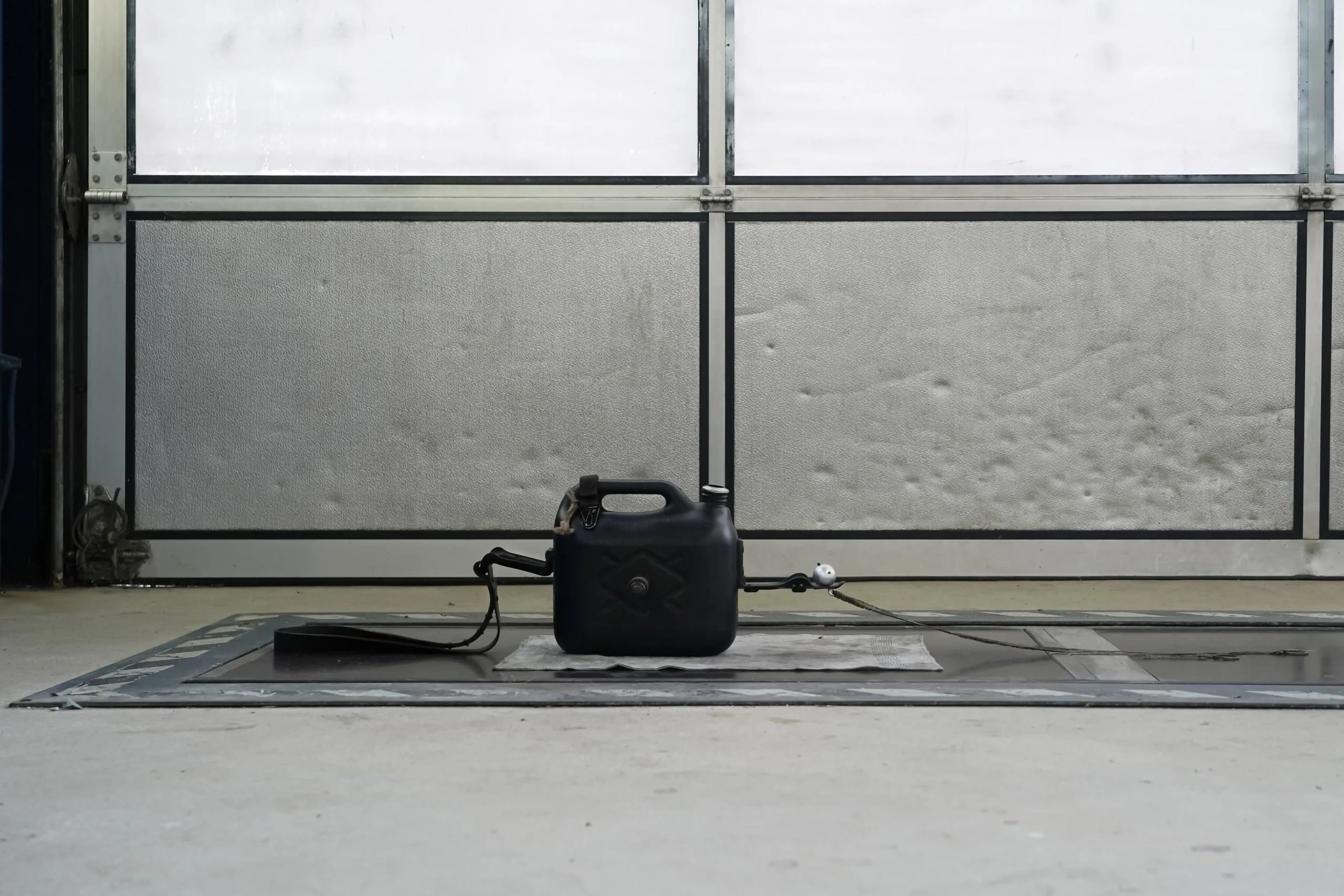
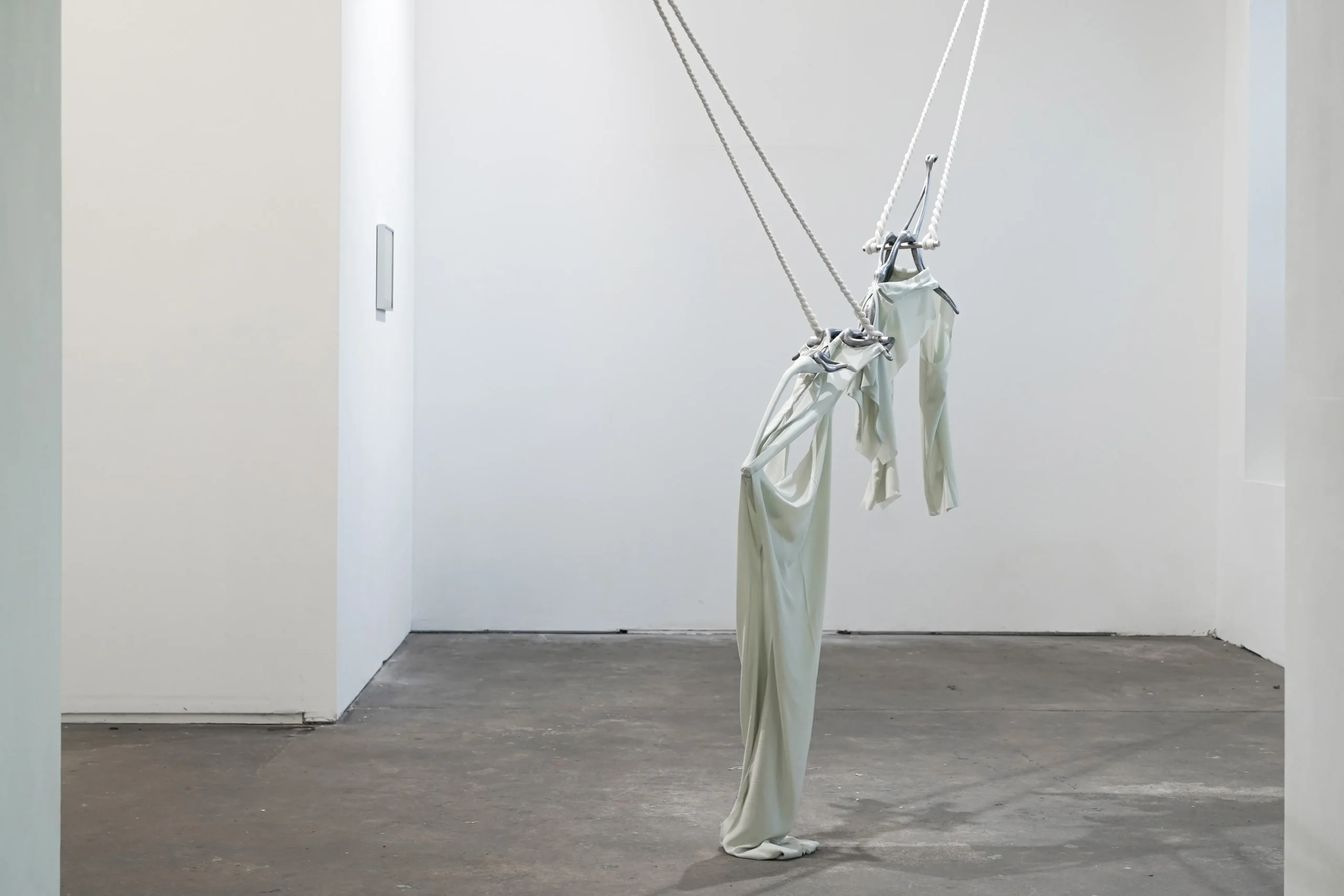
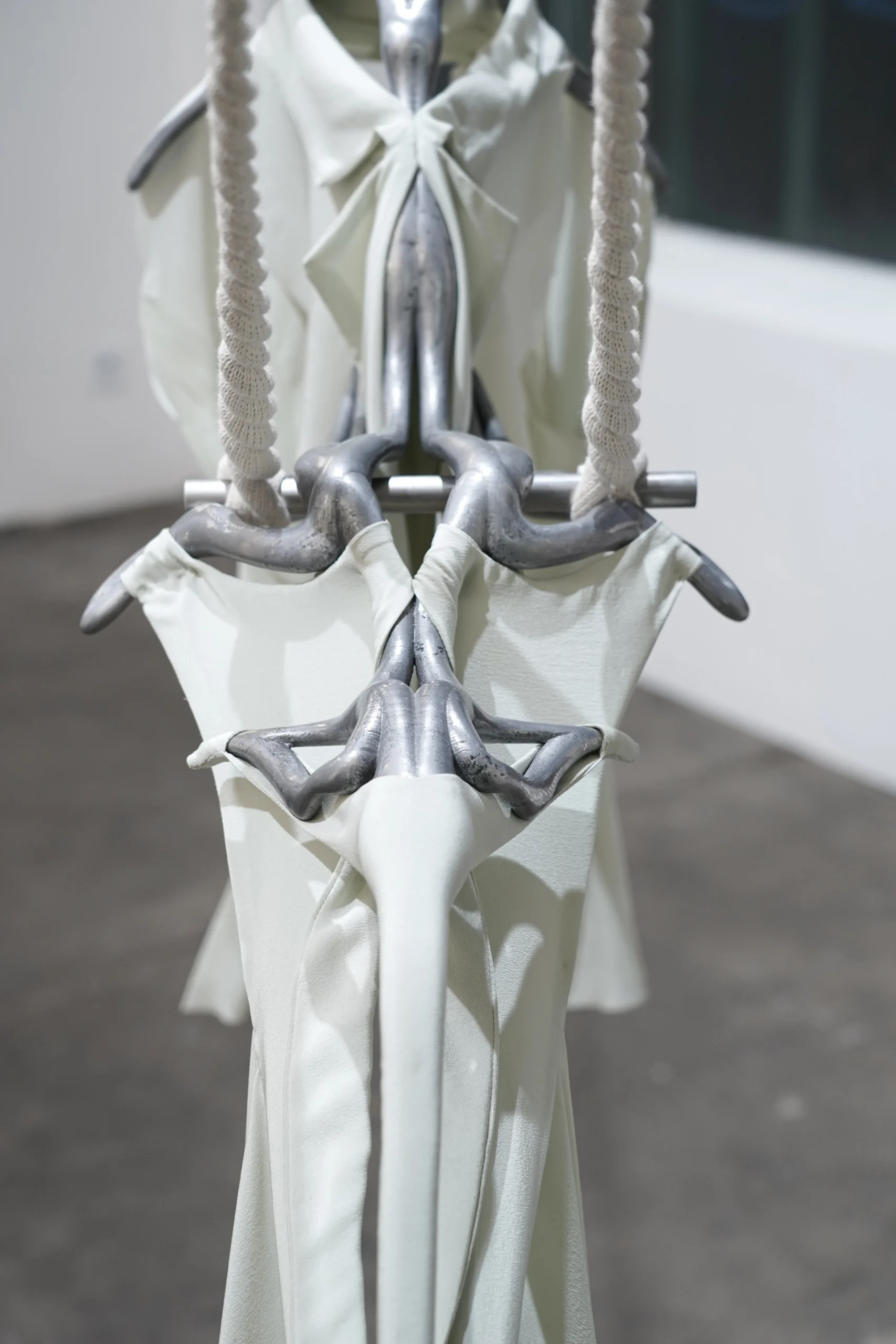
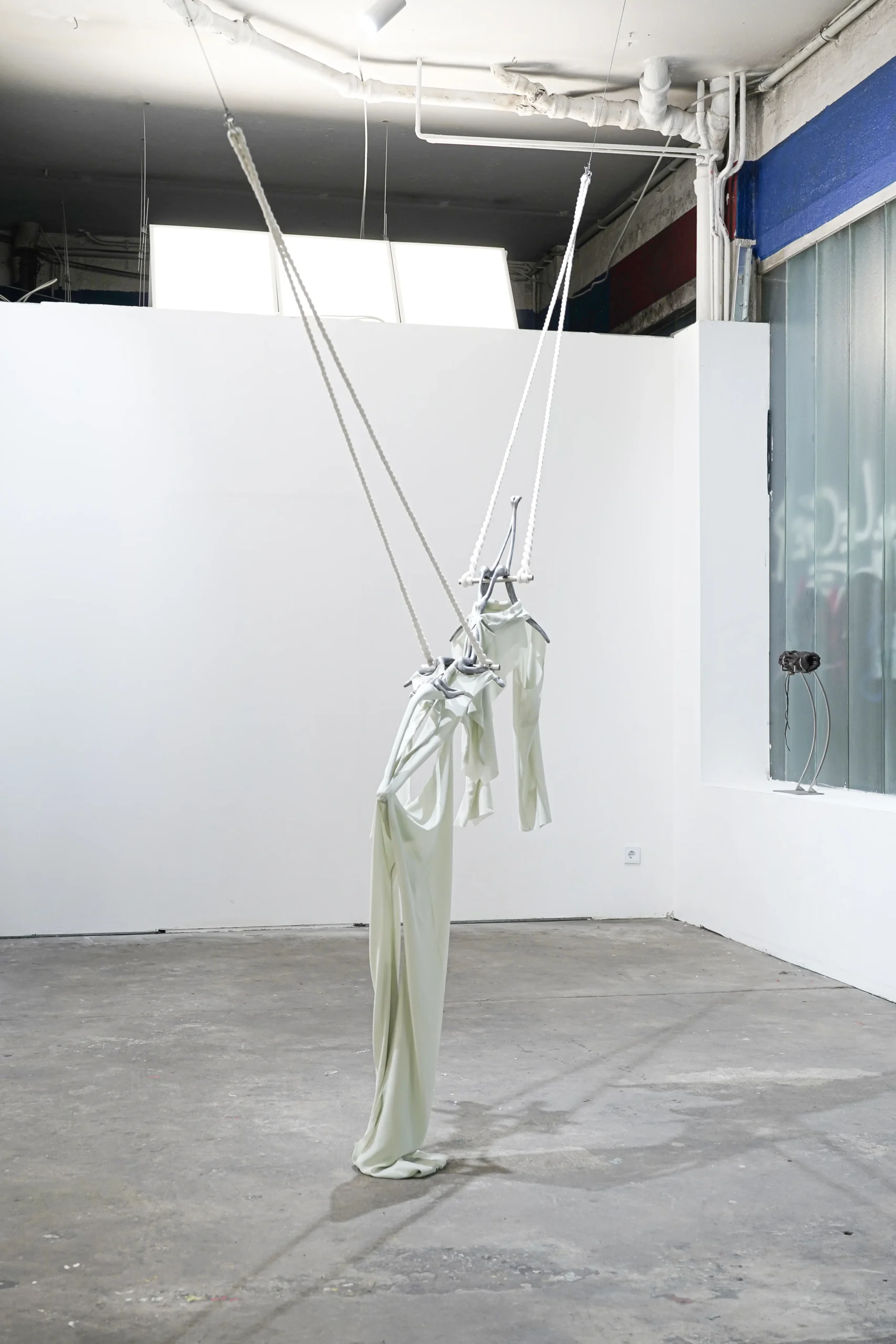
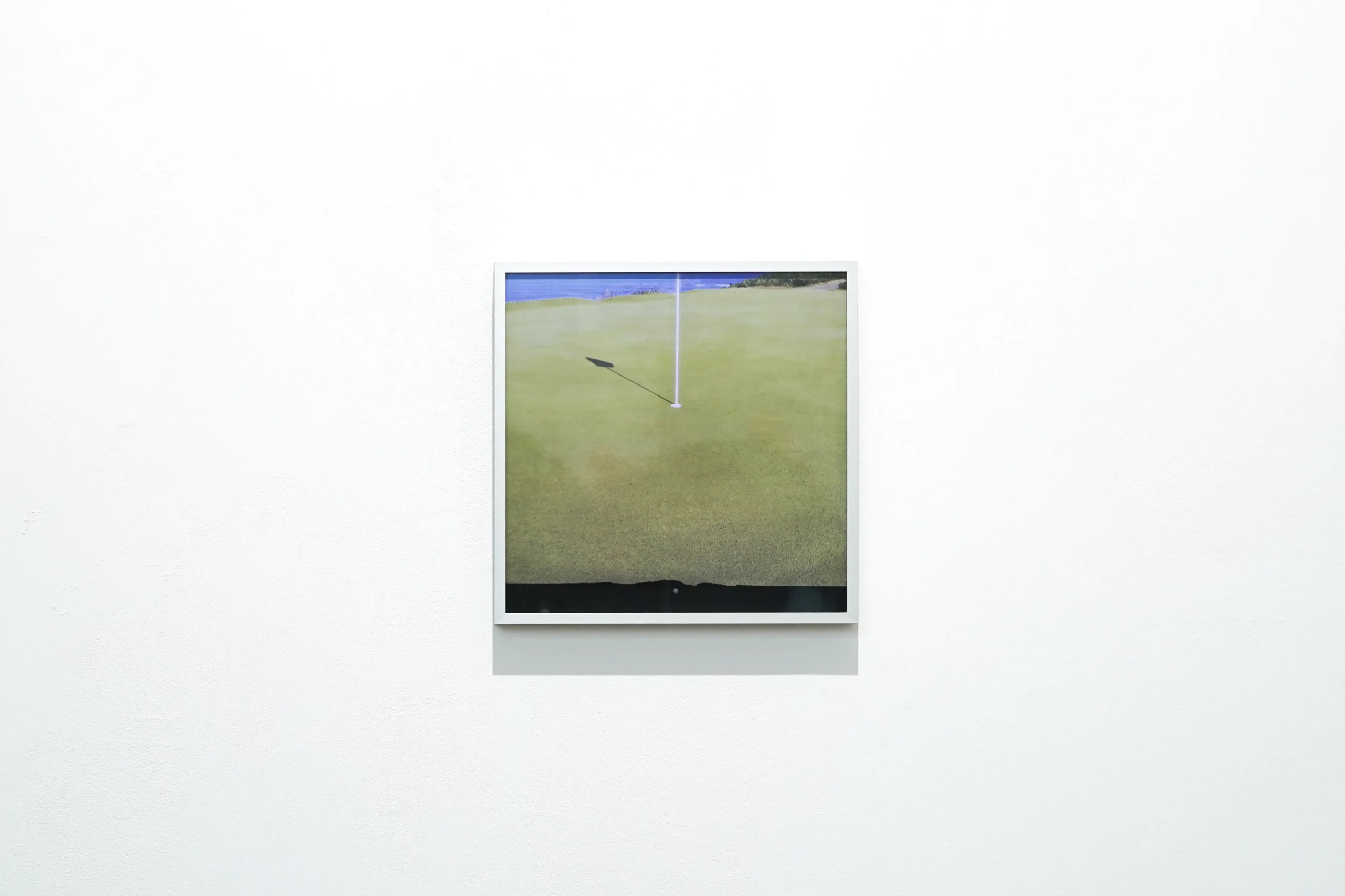
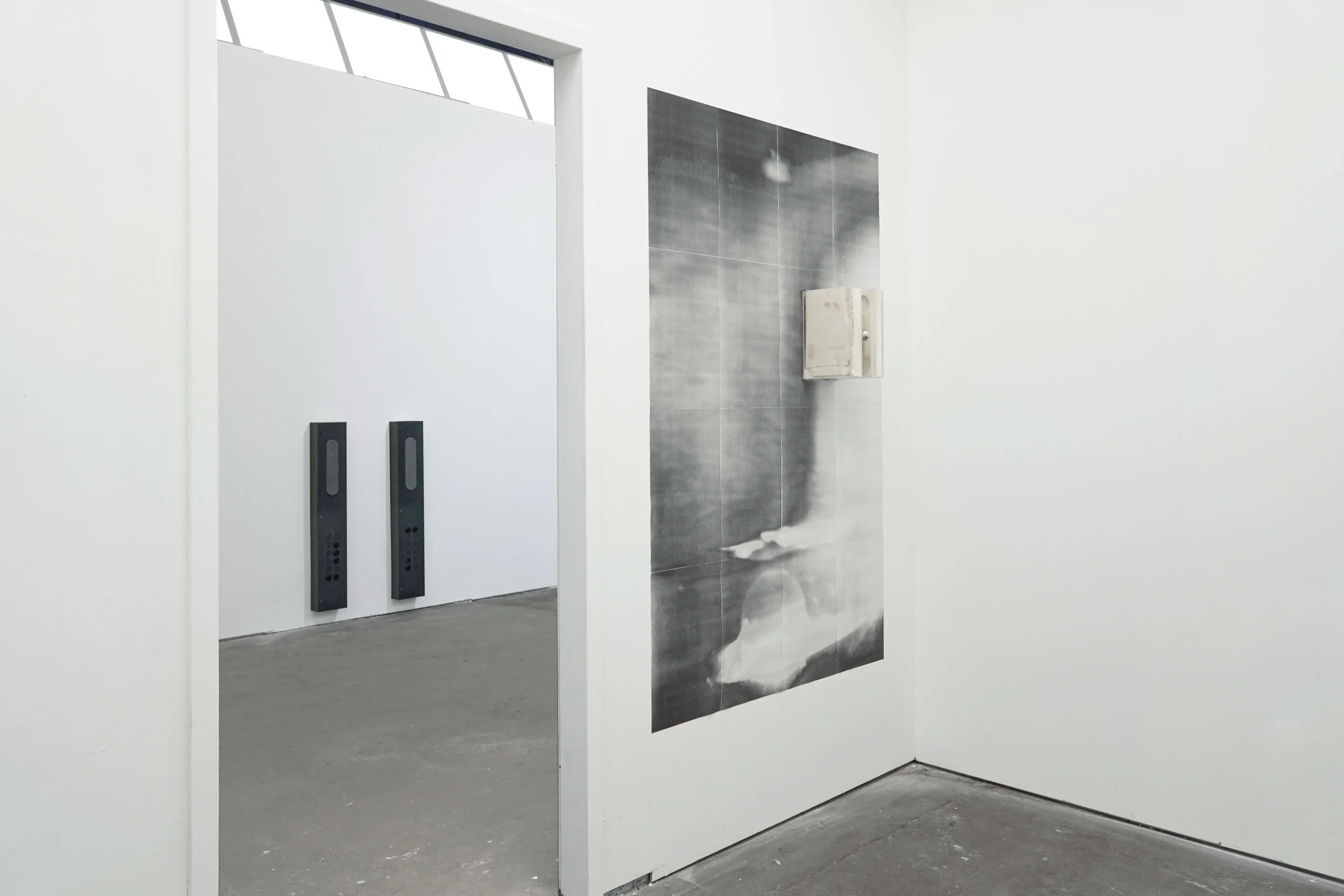
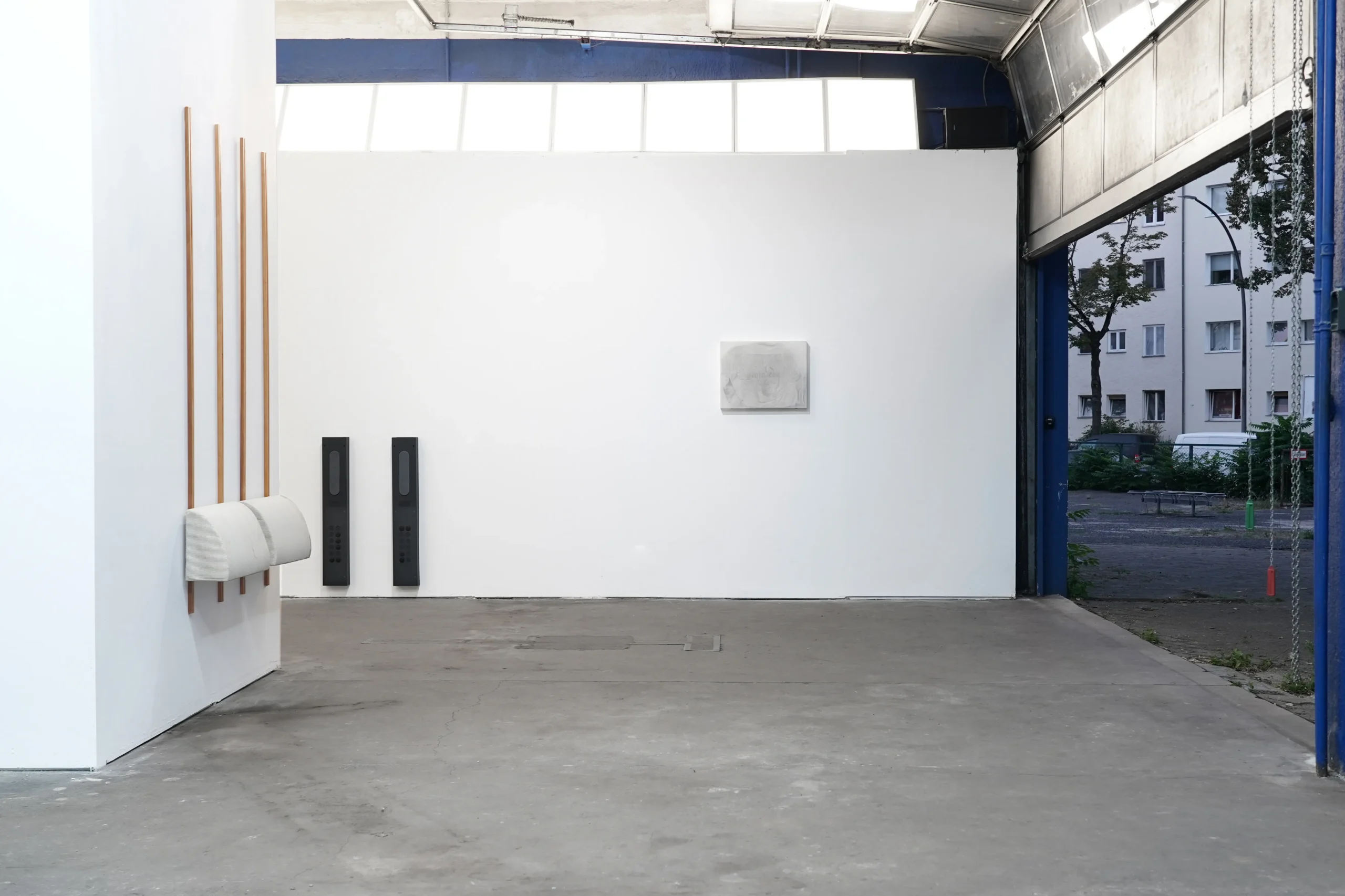
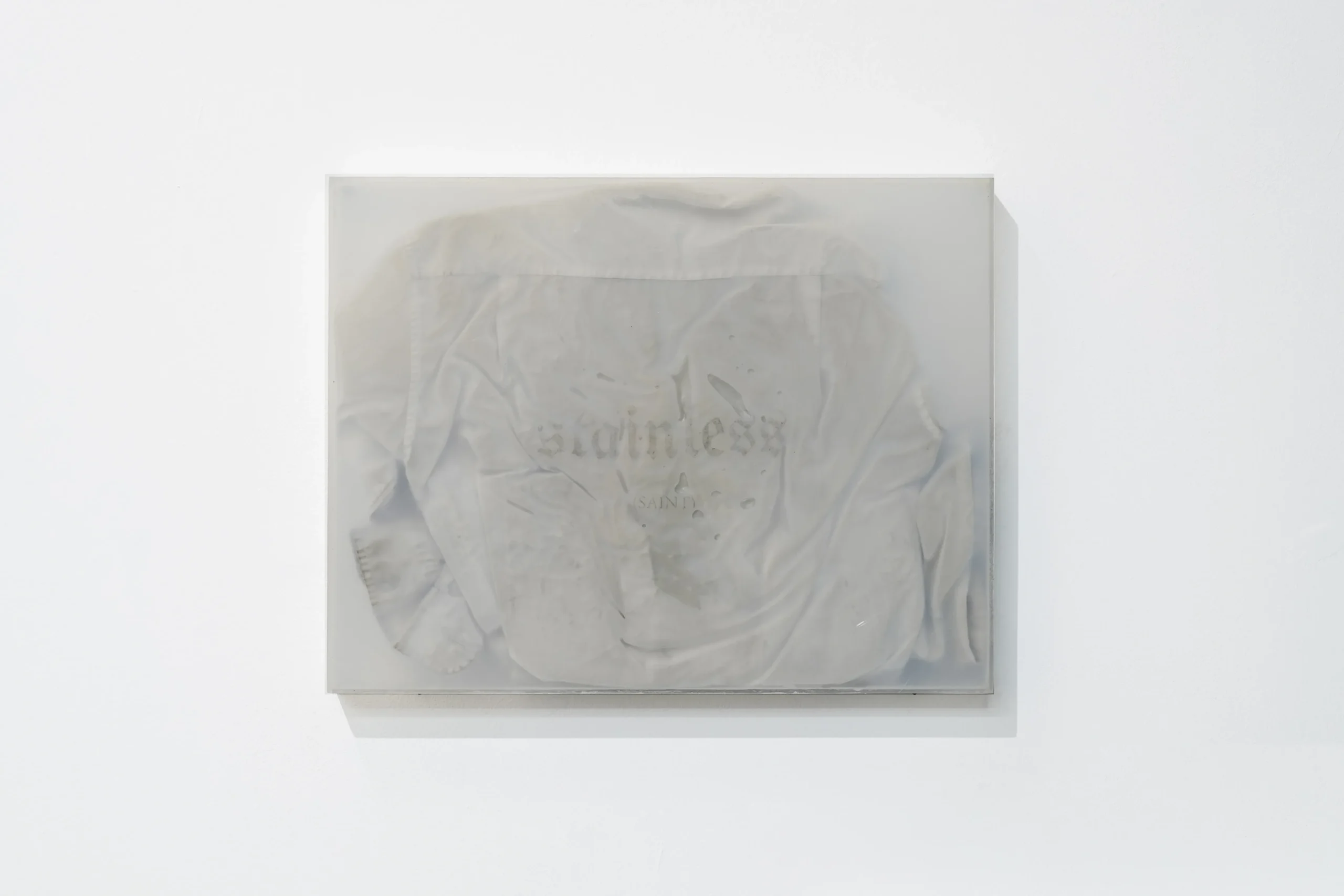
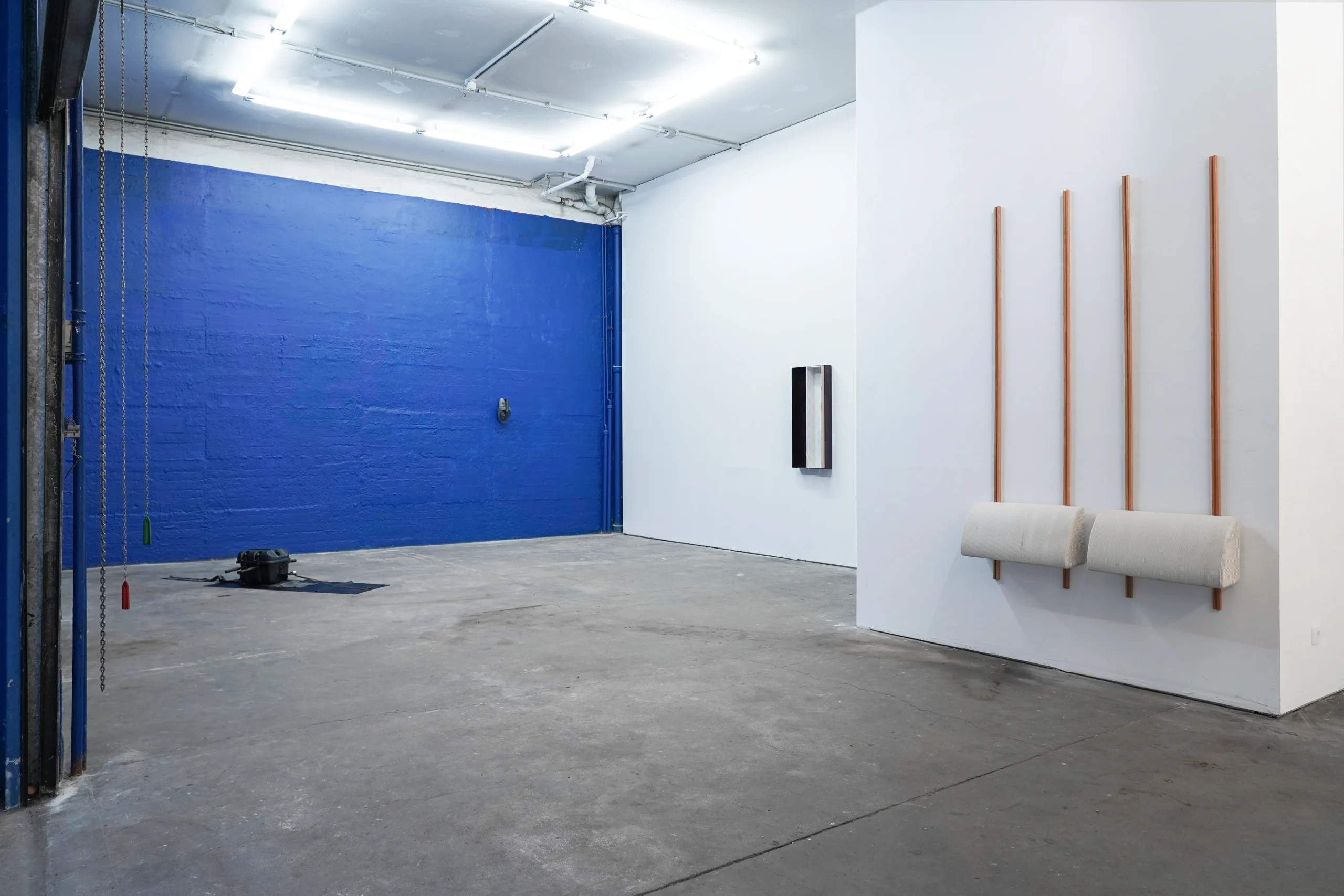
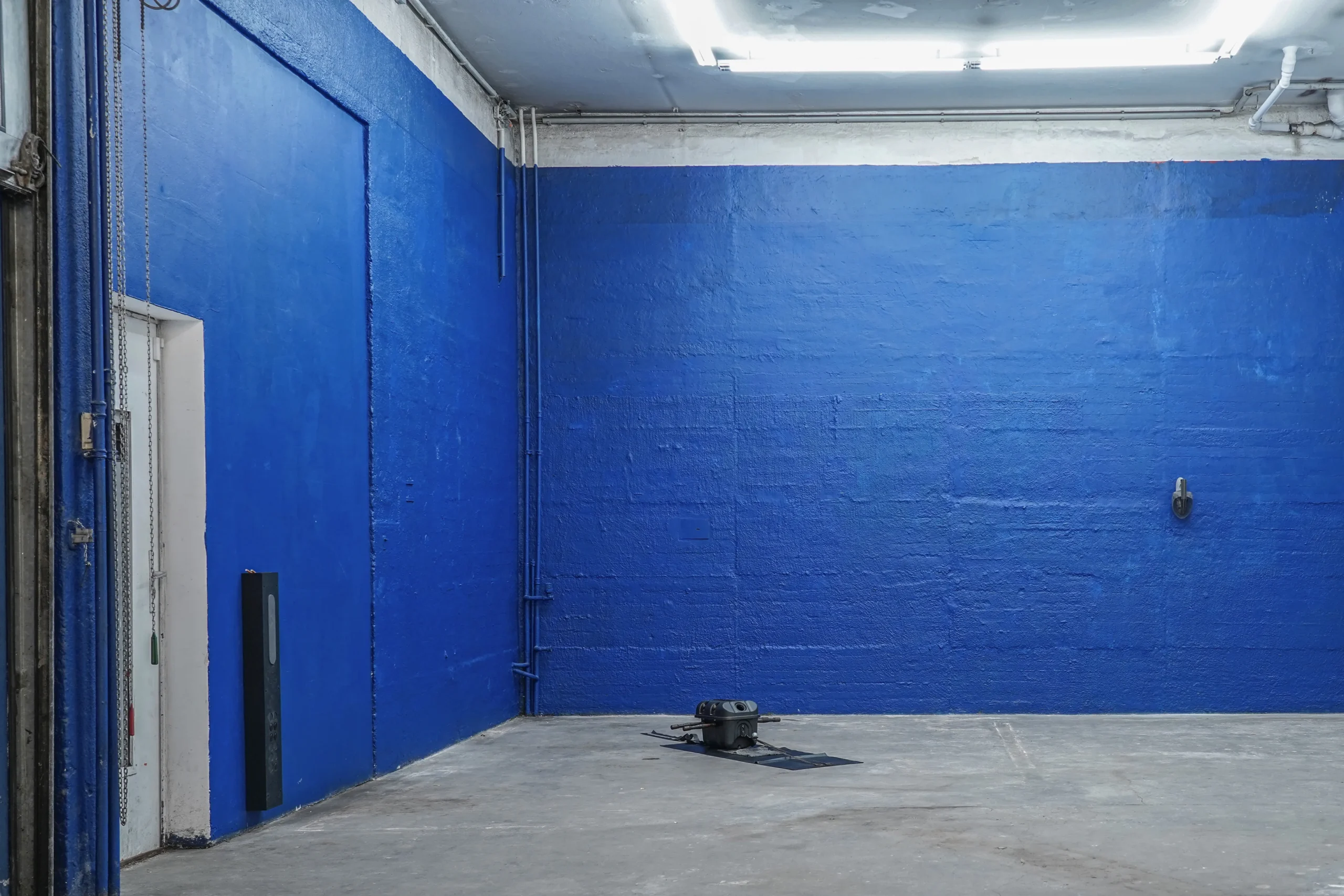
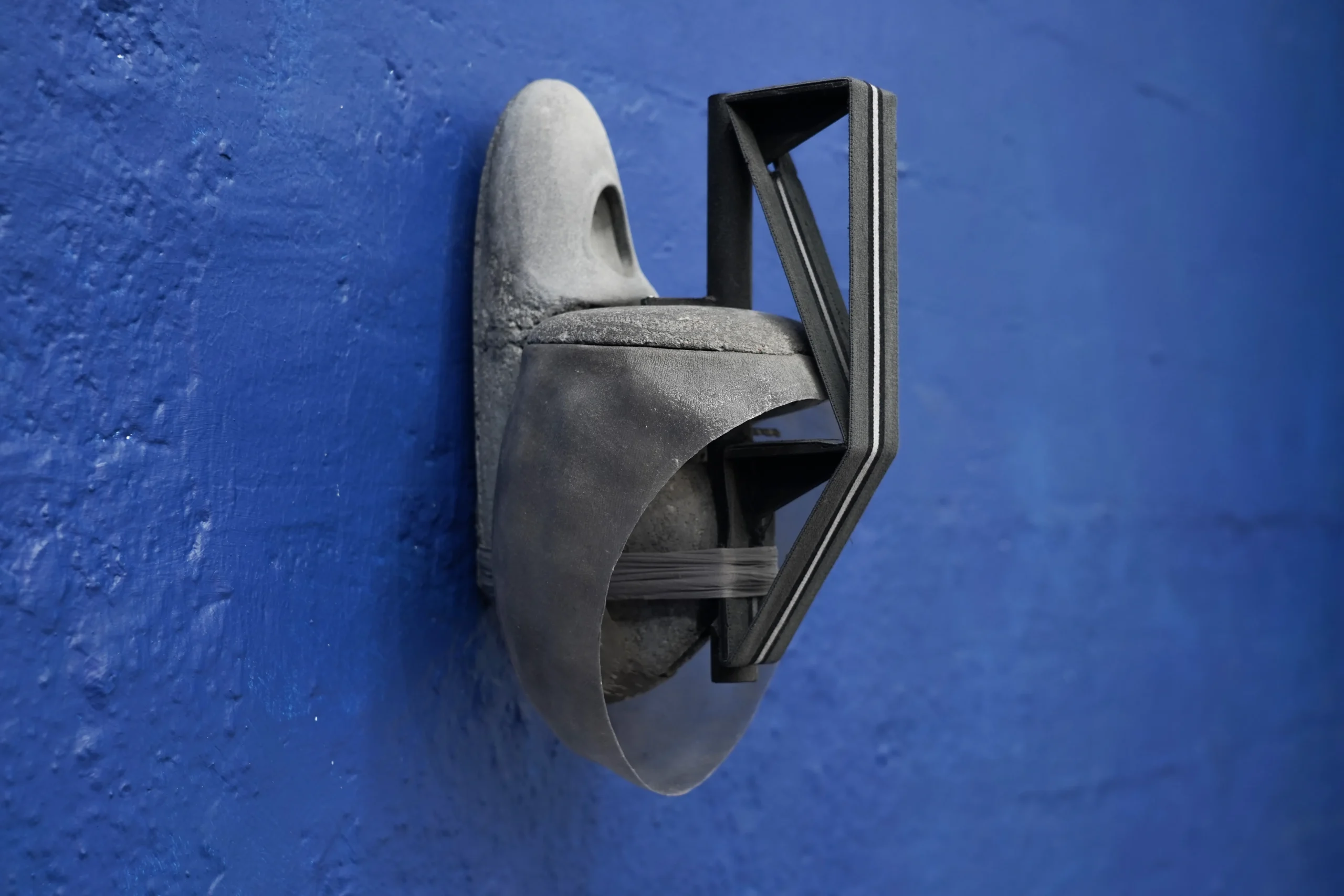

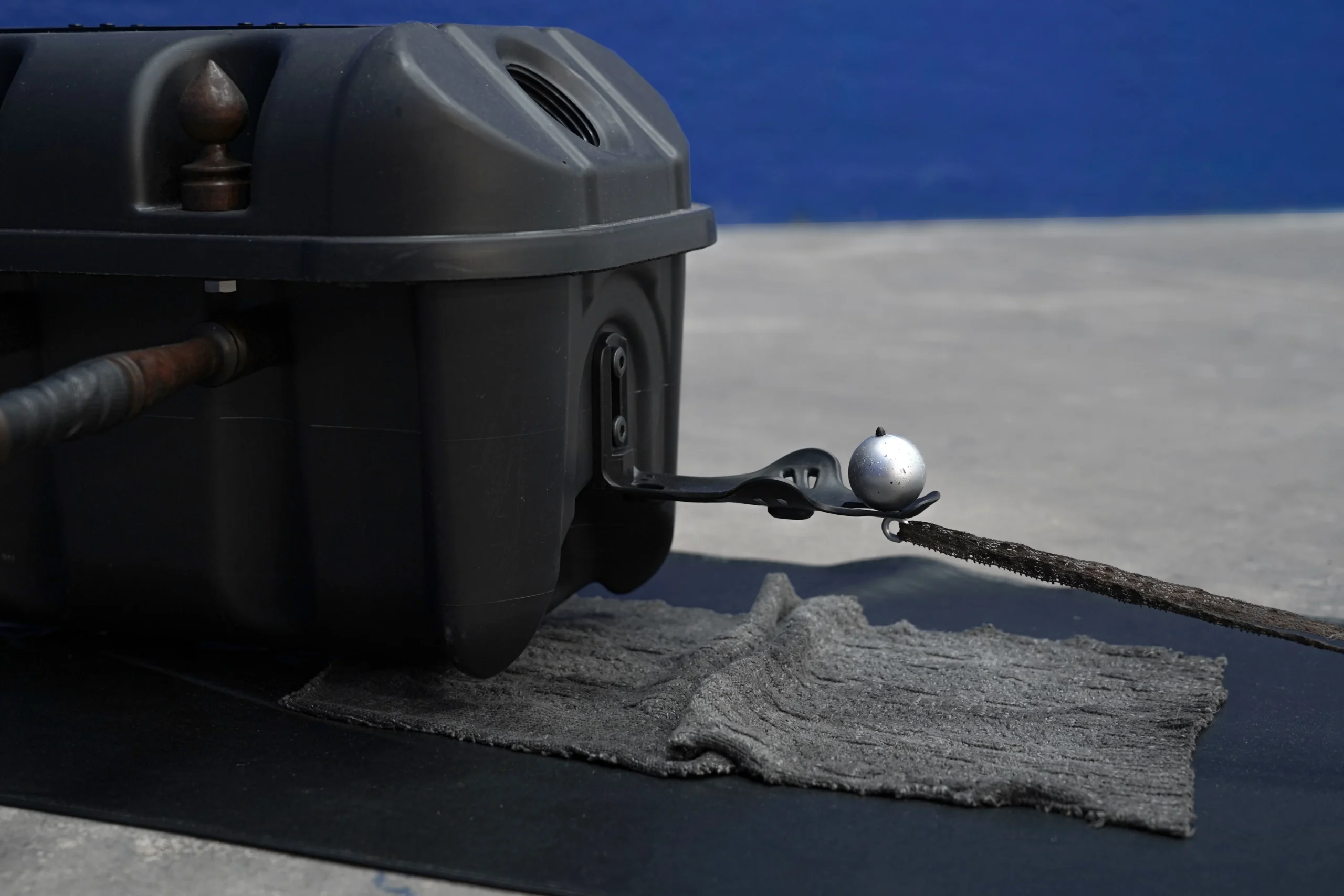
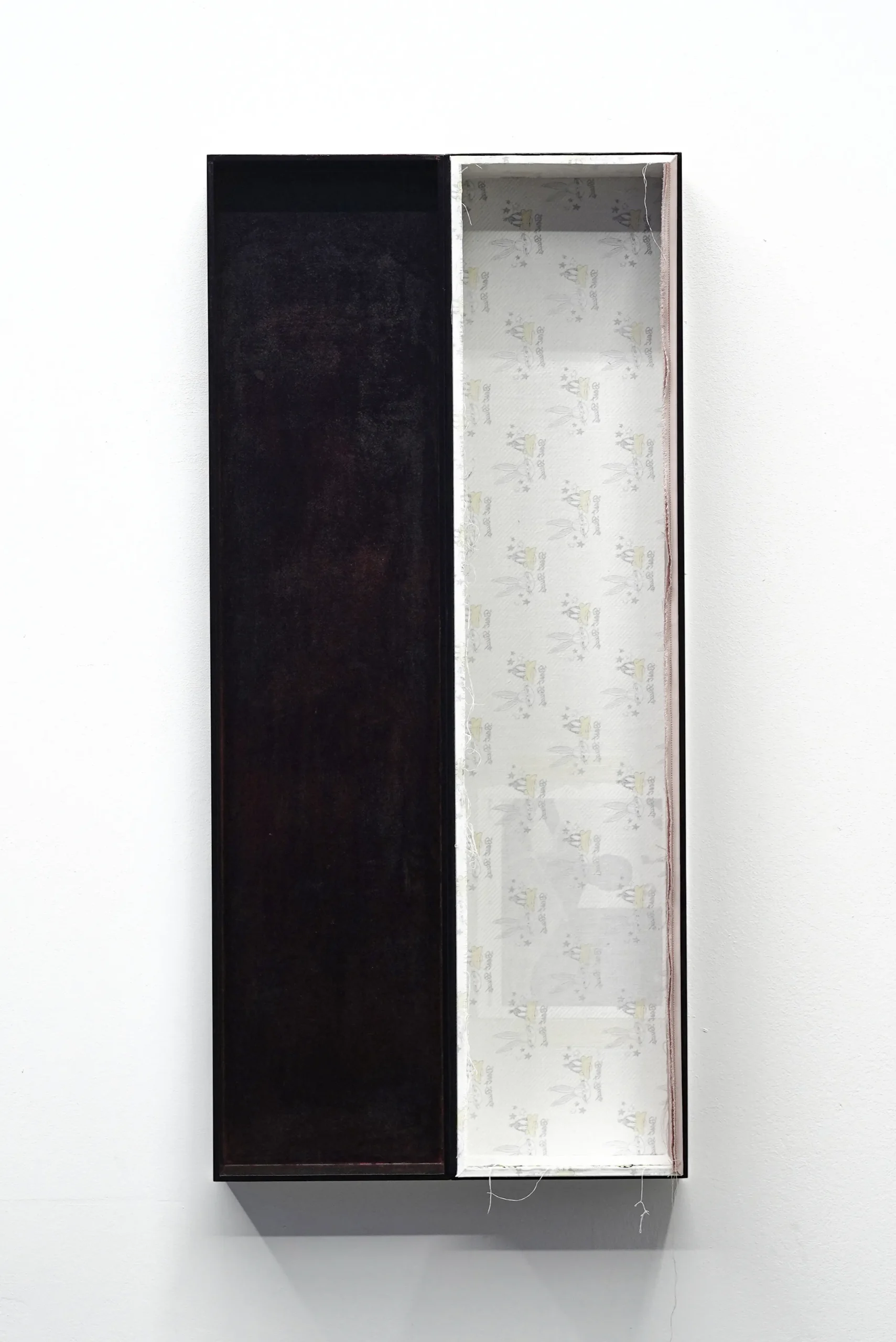
The exhibition Built for Drifting emerges from a quiet contradiction. The works appear forged through rigour and shaped from industrial and standardised materials, yet these familiar forms already contain the means of their own deviation.
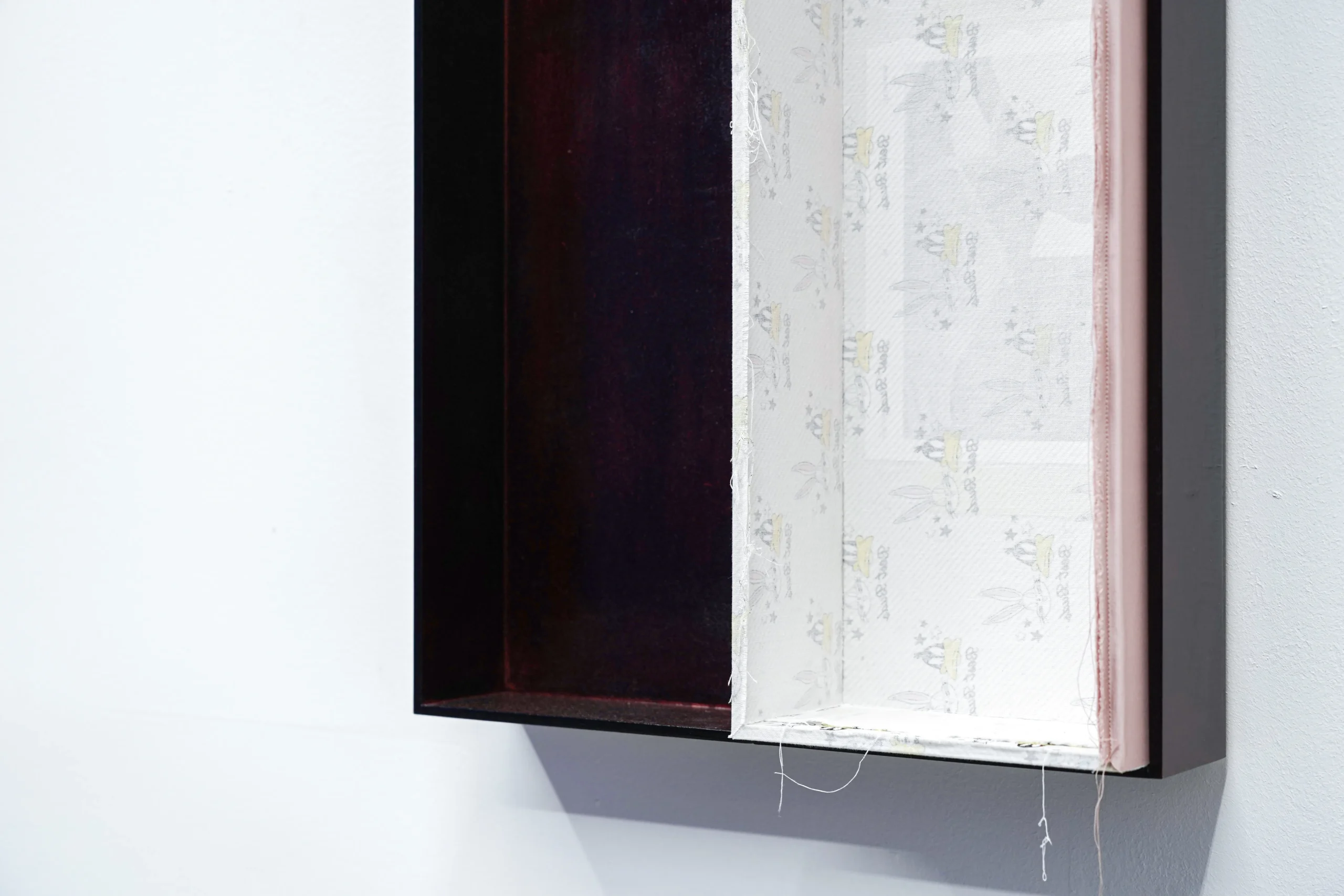
Strict lines and functionality begin to falter, the forces that hold them in place tire out, jam, and lose their grip. What emerges is something softer, something carrying a sort of tenderness. Surfaces bend. Assemblages sag. Forms lean towards one another, or pull away. Something shifts within the material without ever fully breaking from what holds it in place. Desire does not arrive as an opposition, but as a subtle disturbance: a shift within the efficiency of the form itself.
A construction, in its attempt to hold itself together, begins to produce the conditions of its own displacement. What was made to contain starts to let things through. What was meant to support becomes fragile. Forms become porous, their surfaces holding traces of weight, contact and resistance. Bodies emerge not as figures but as tensions between what holds and what gives way. Matter becomes a site of negotiation between discipline and impulse.
The exhibition takes shape where this rigidity begins to release and structure begins to drift. Things lose their intended destination, becoming open to other uses, other ways of being, and other forms of proximity.