


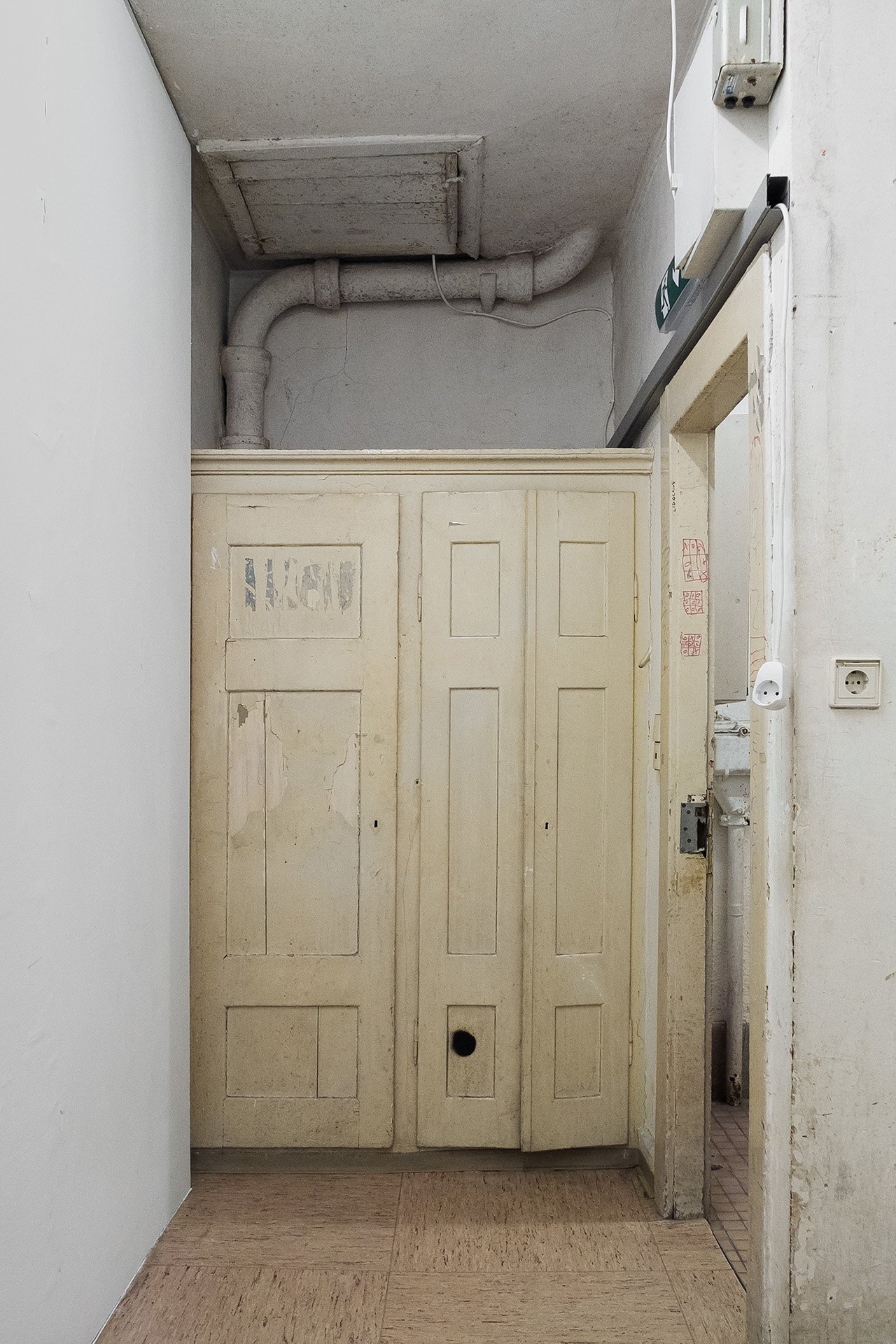
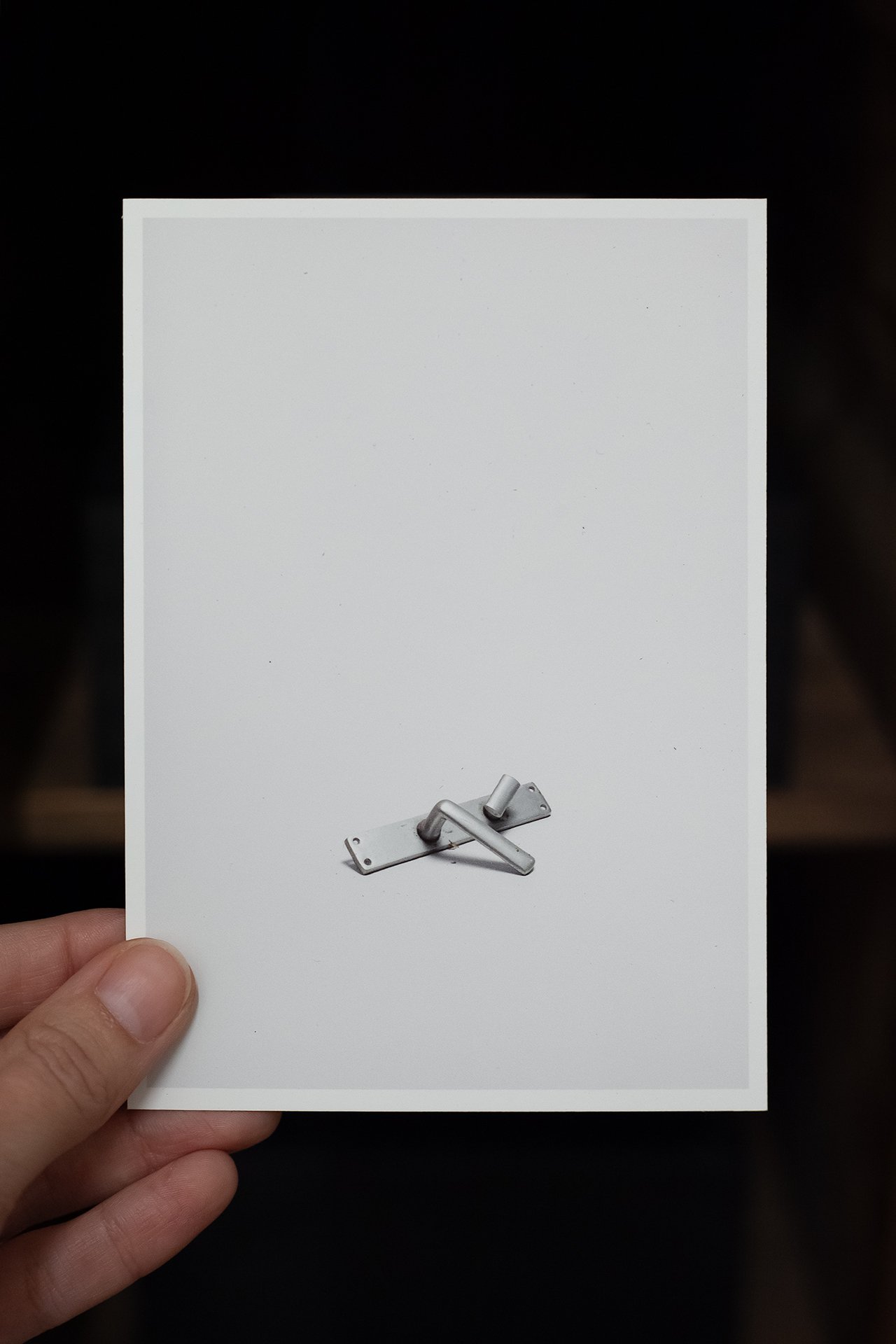
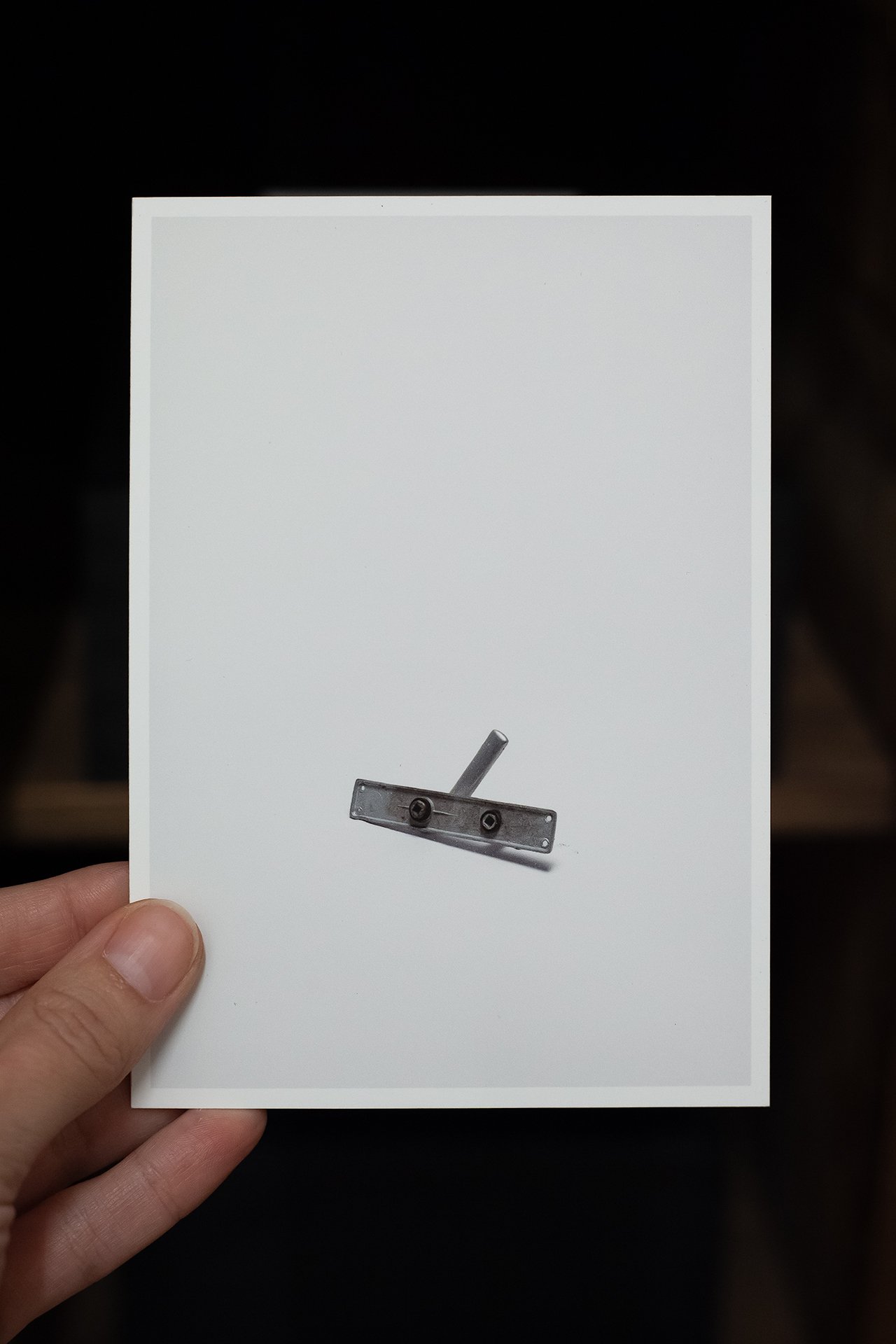
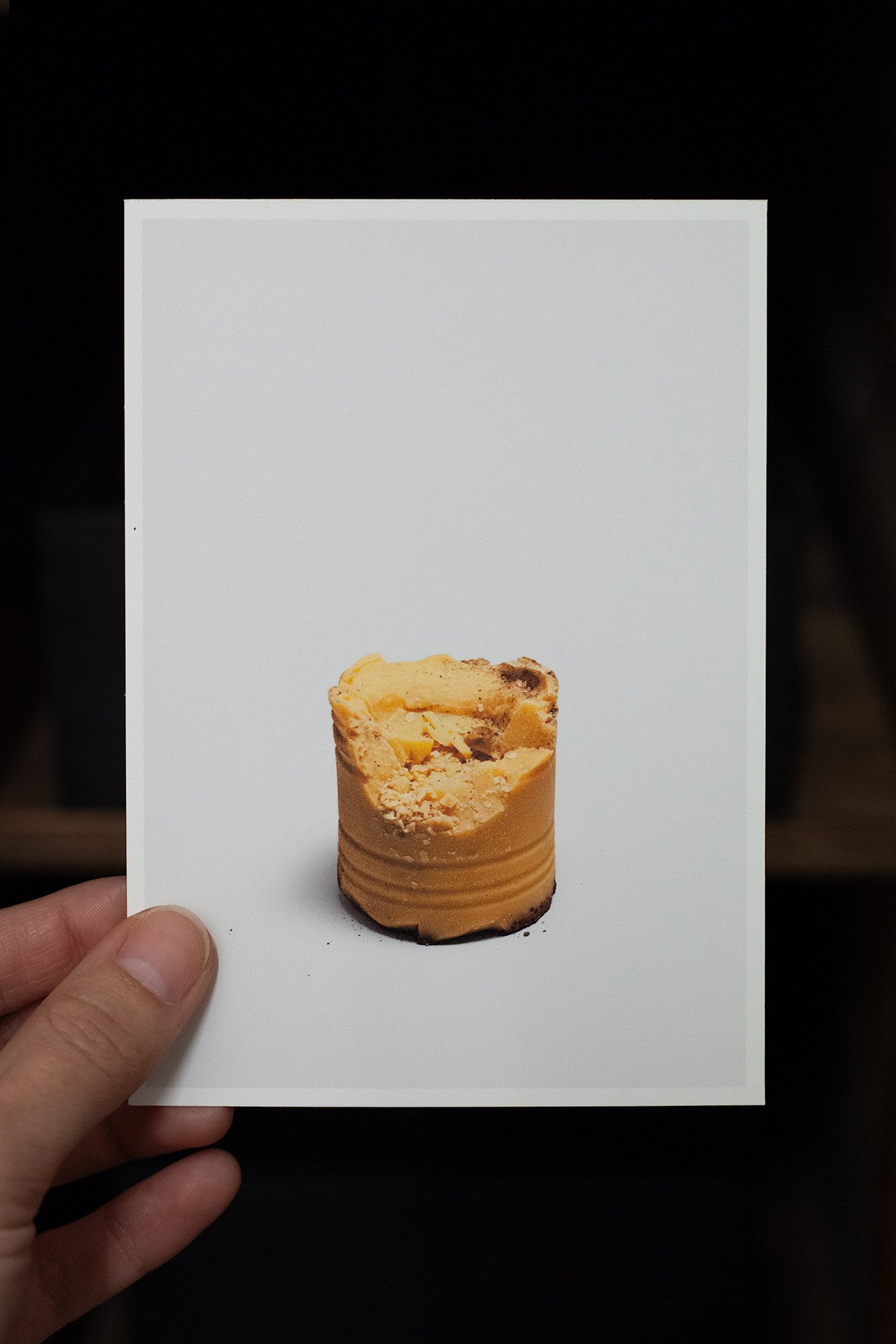
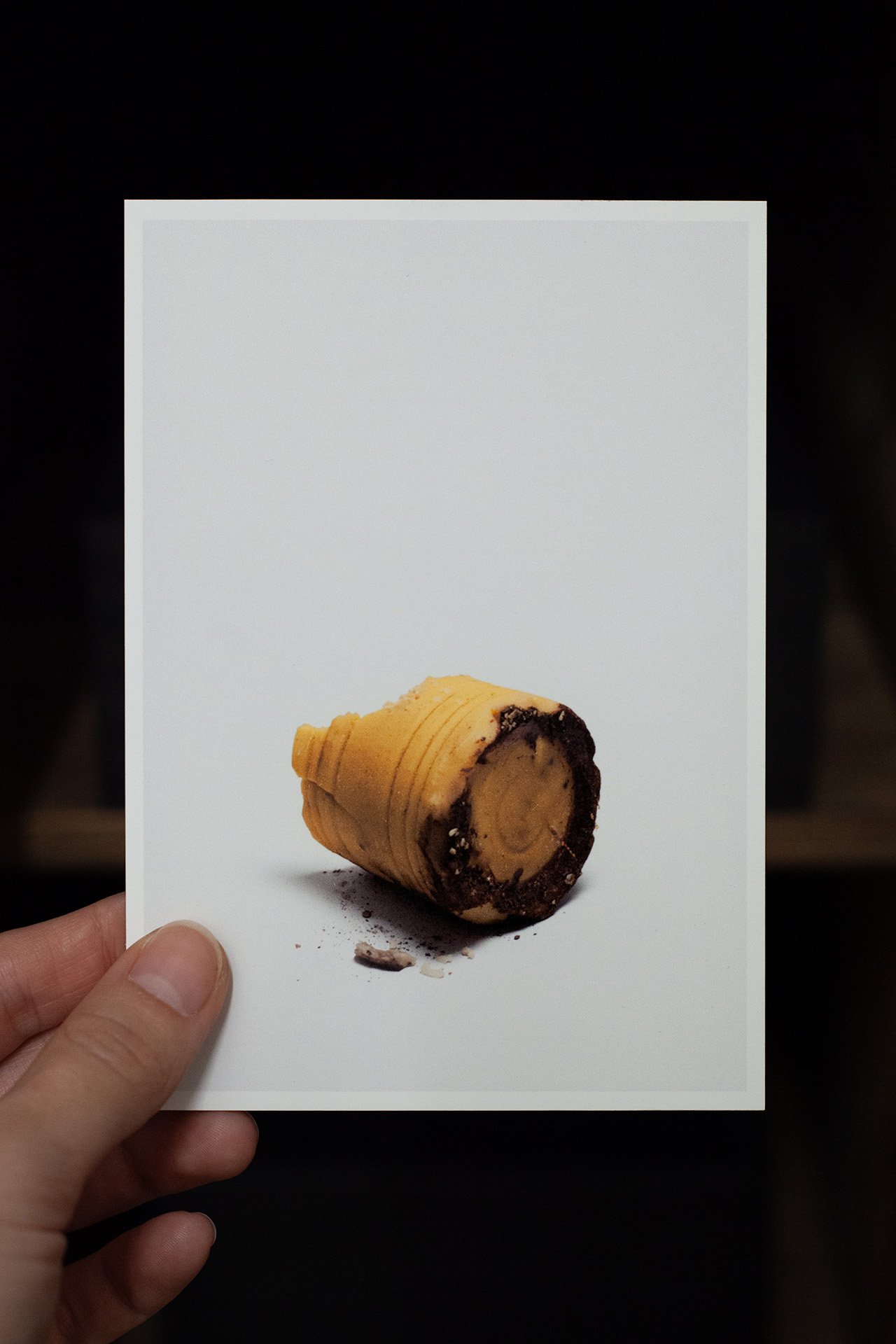
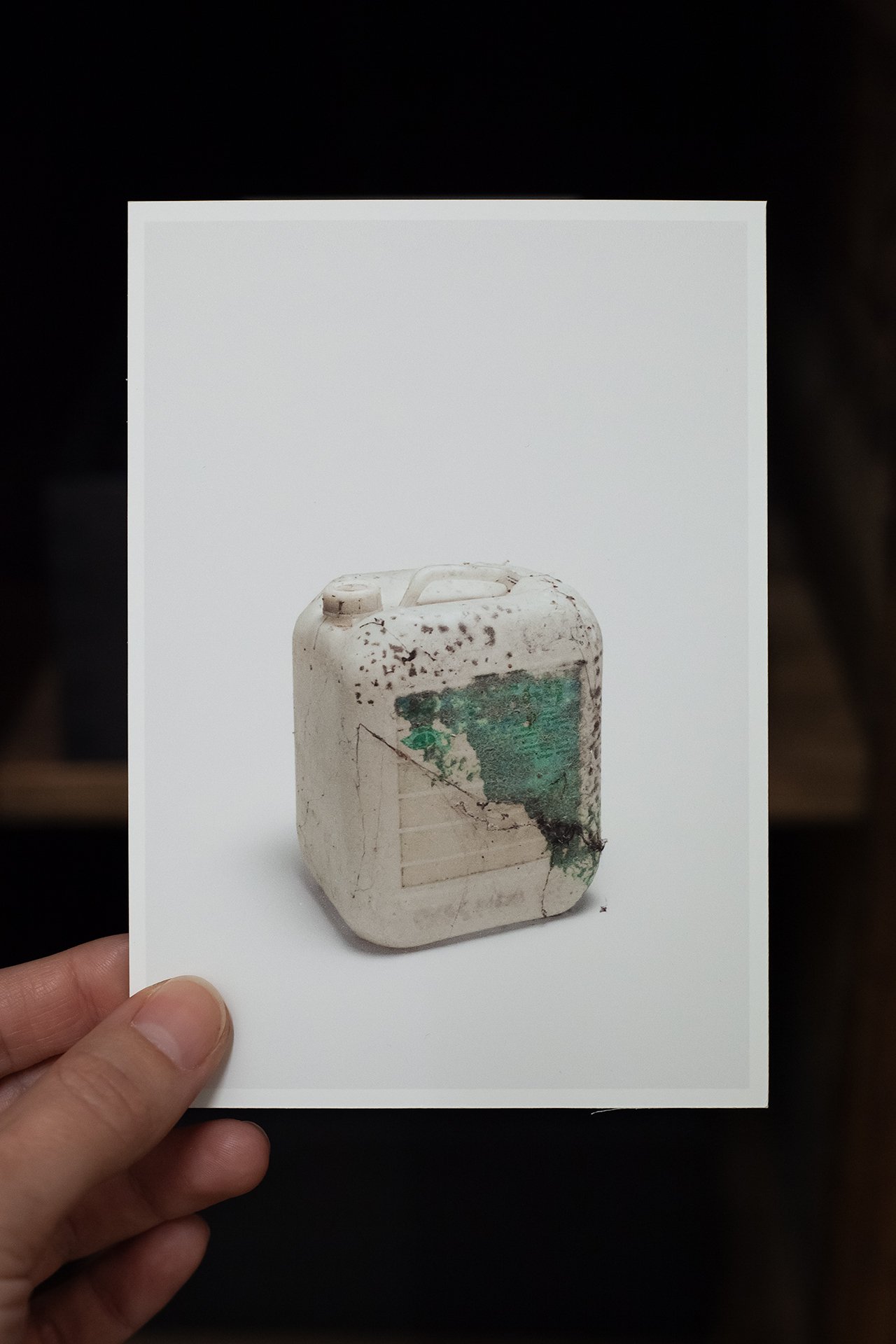
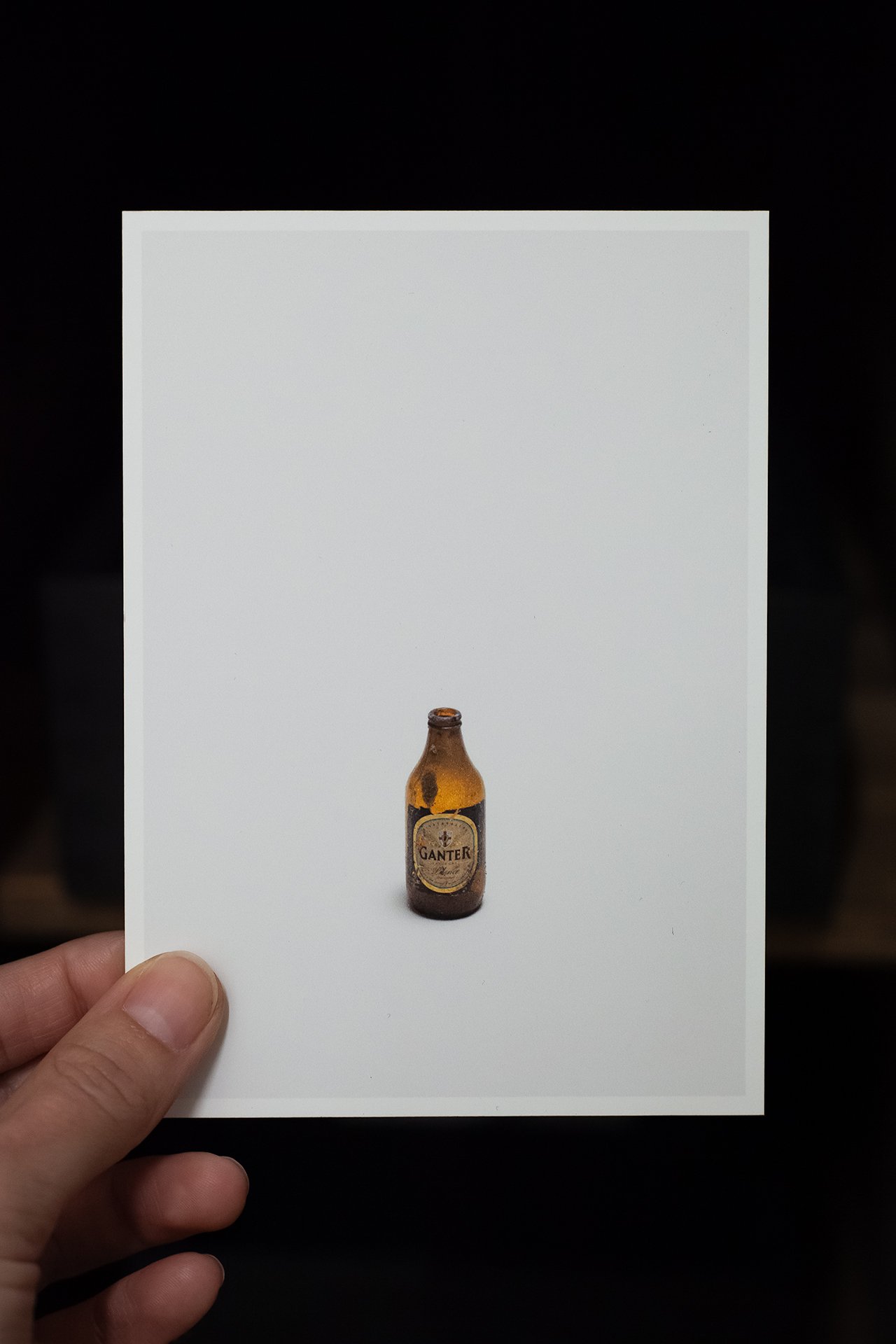
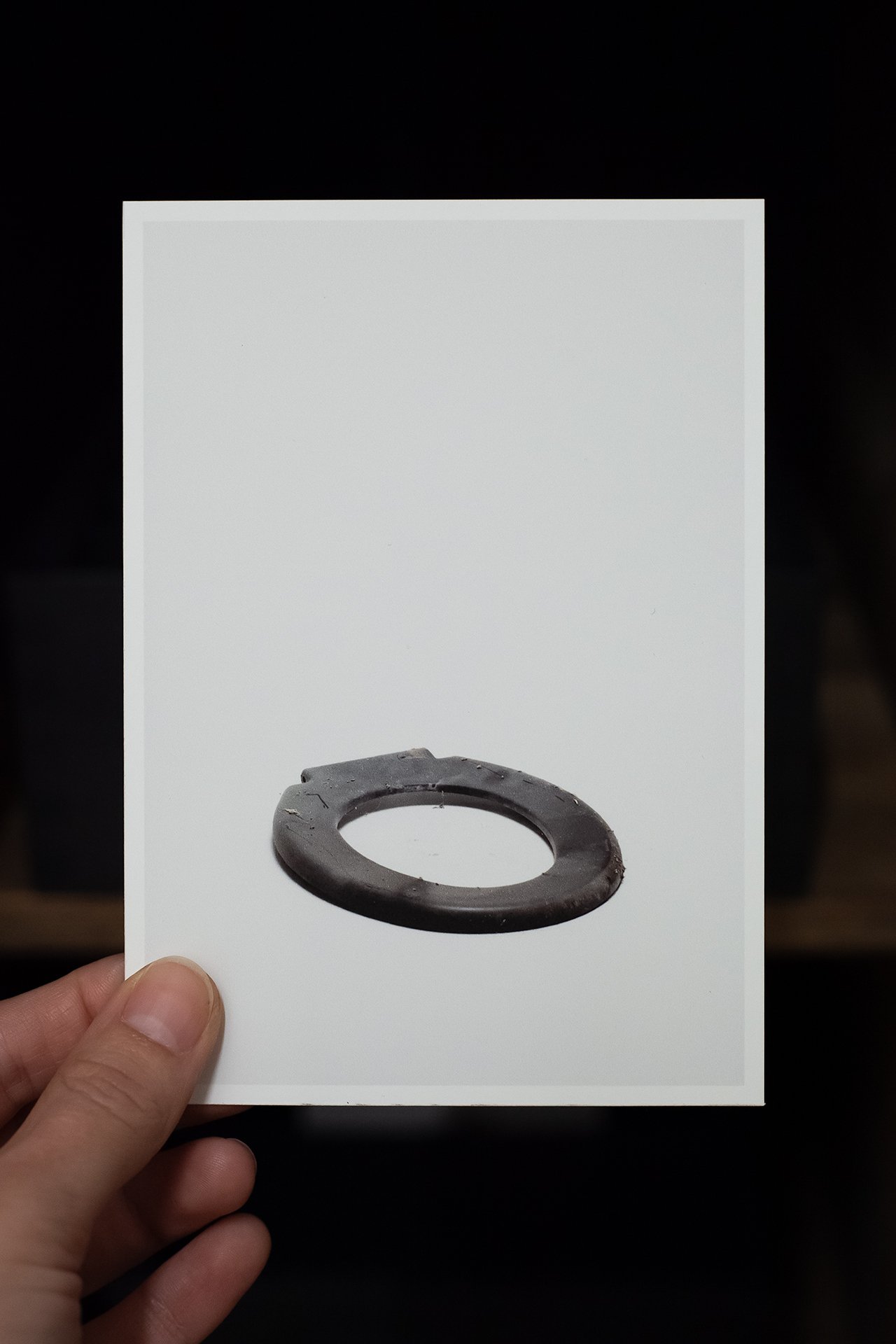
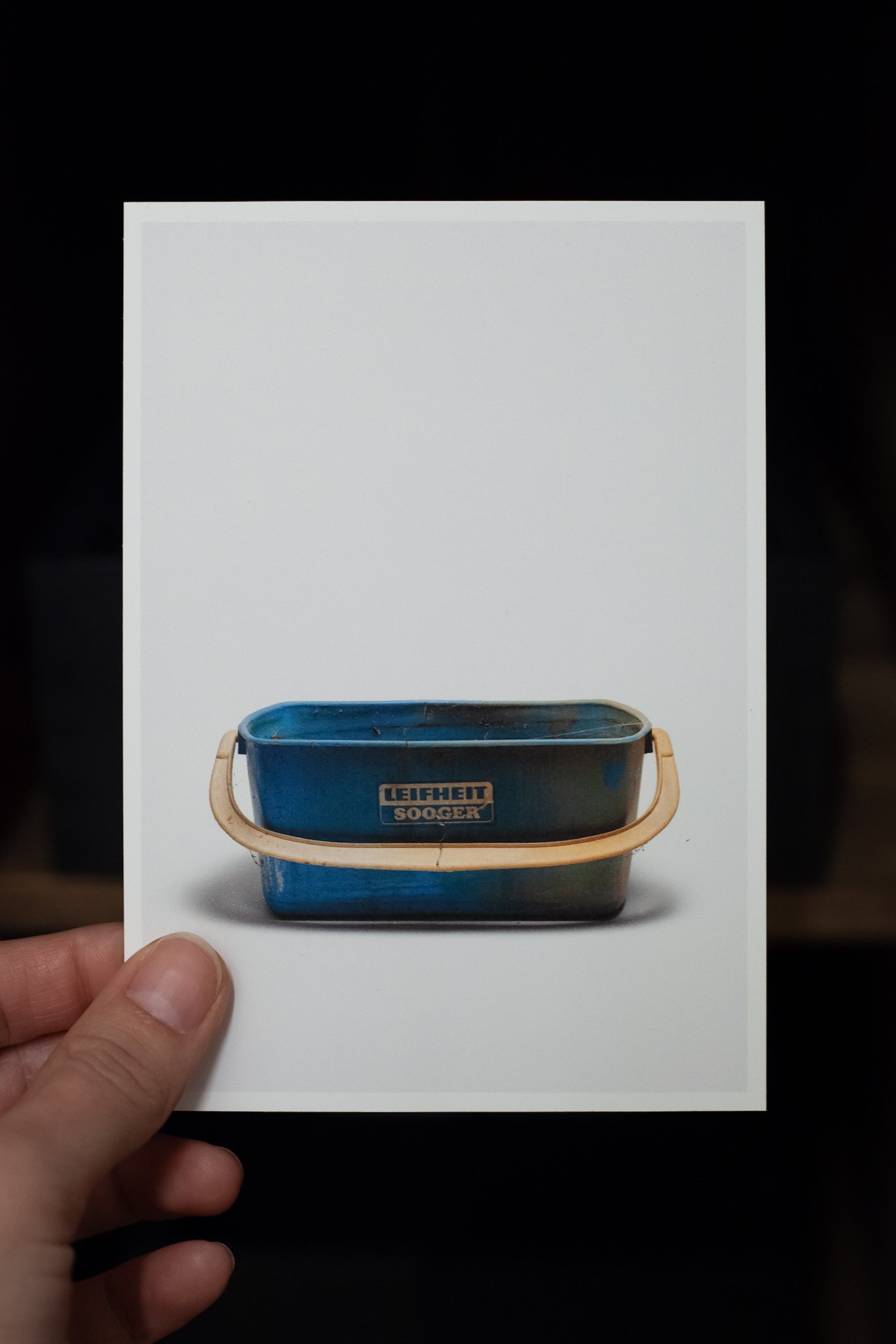
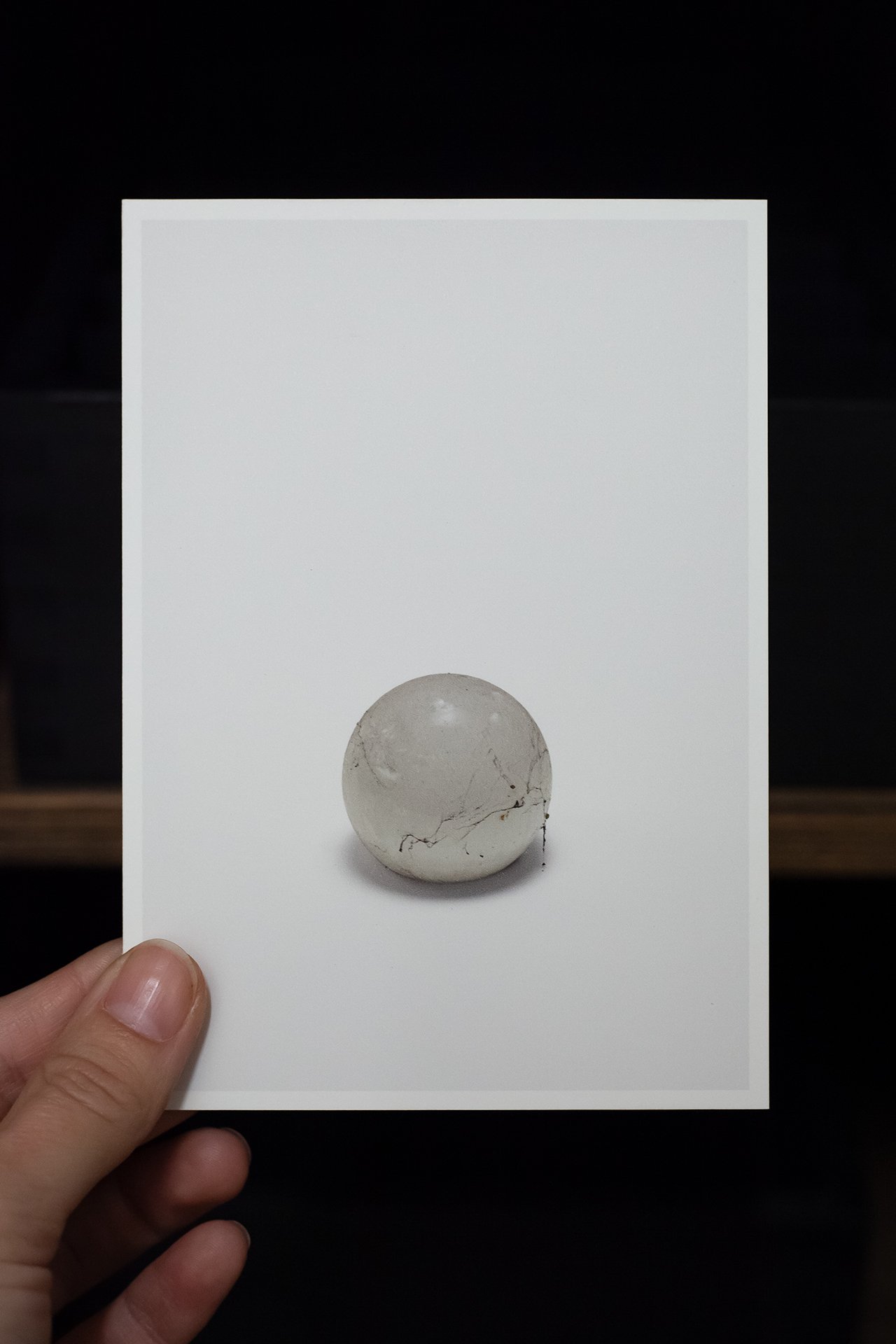
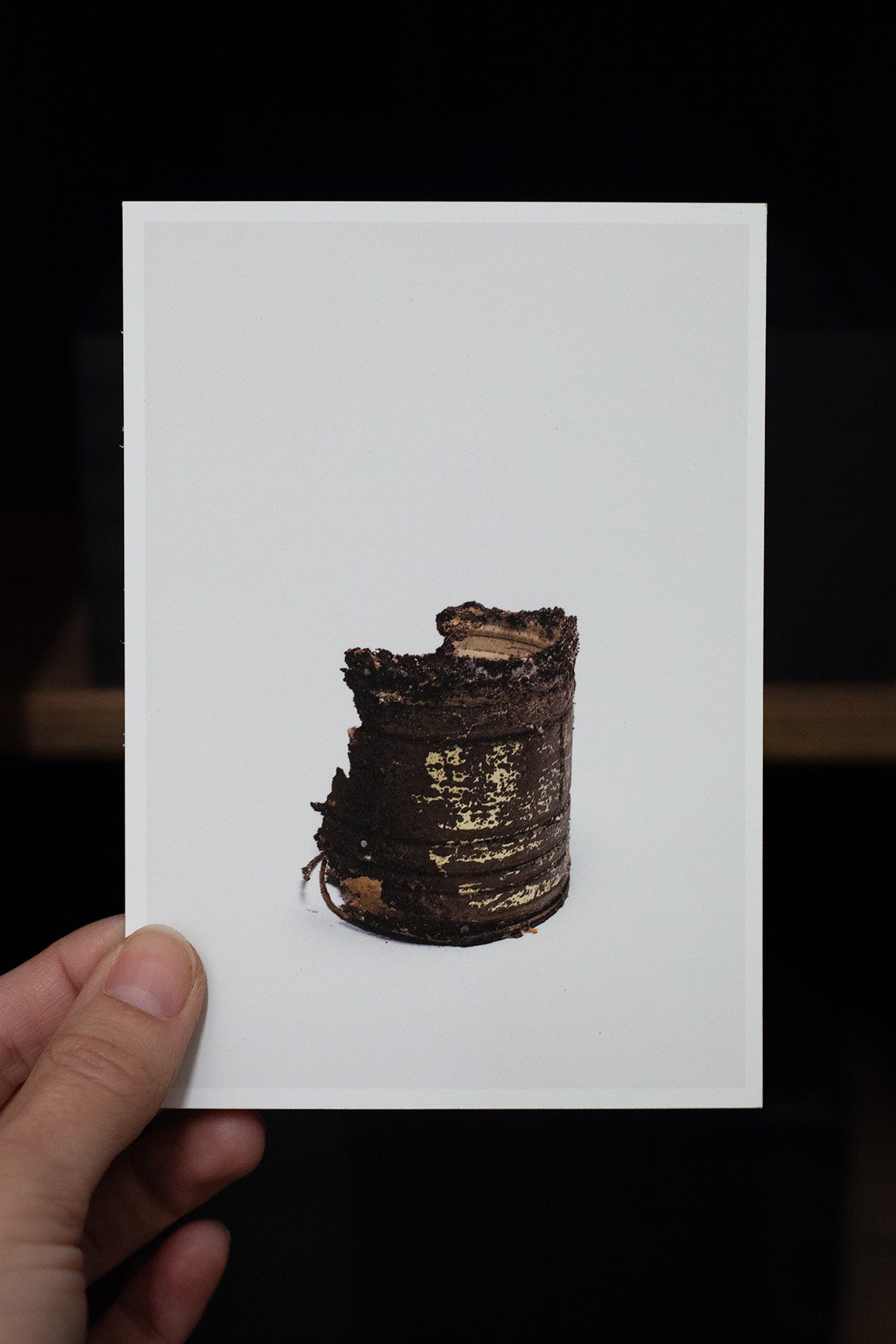
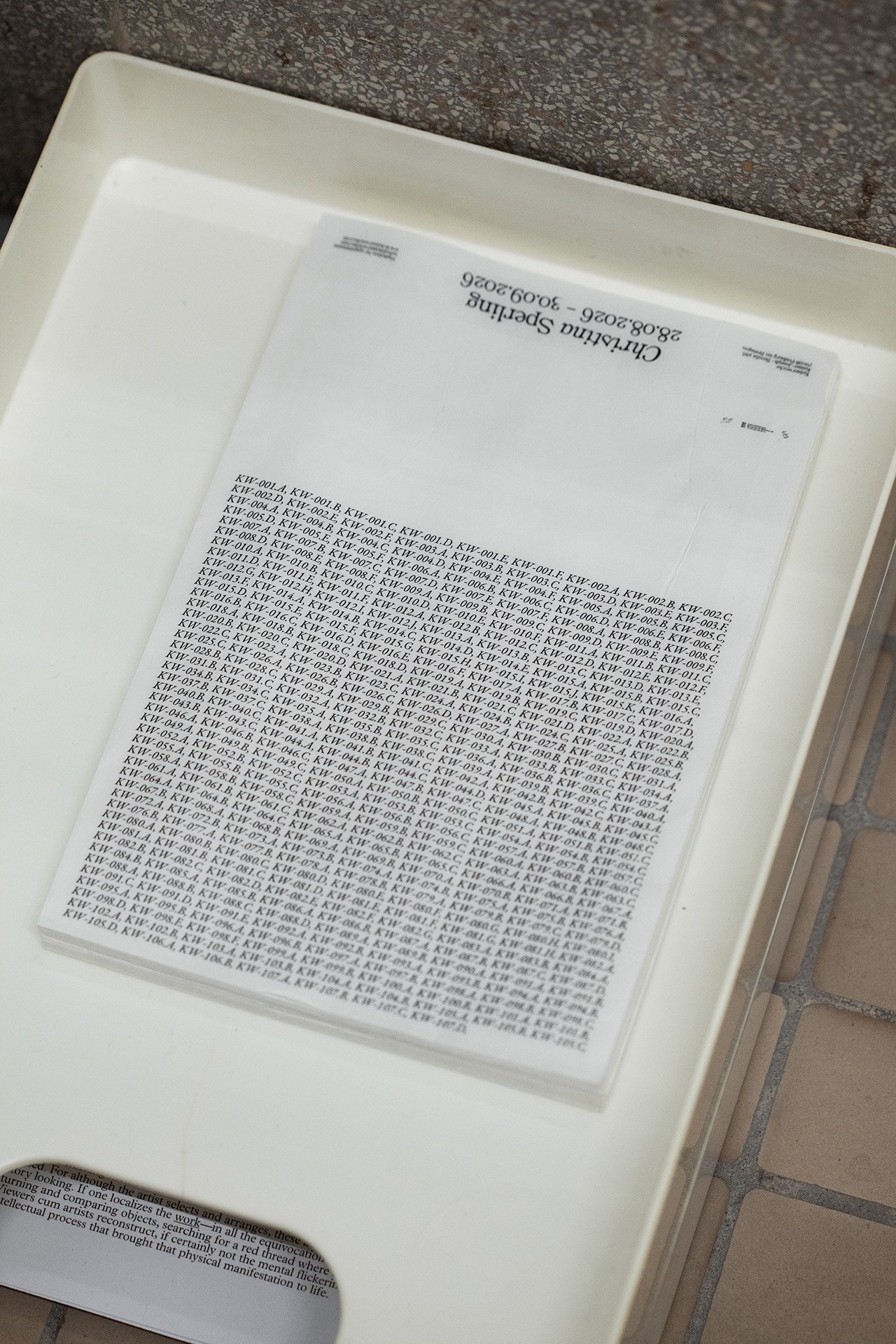
A central aspect of Christina’s artistic practice is collecting object, accumulating them through various means. The collection consists of things bought, found, and received. Those objects that find their place in her installations and photographs are subject to a process of selection, of sorting out: a selection that considers the connections between things. I look at “[universum].” ¹ By comparison, a different mode of selection comes to the fore in KW. Here, the history of Kaiserwache itself and its users have, in a sense, already made a preliminary selection. Over the course of decades, the basement has developed into a memory store, a palimpsest of different existences. The objects attest to the interweaving and coming together of waht Christina calls “different realities,” things that have ended up down here because people stored, placed, threw, displaced, misplaced, forgot, etc. them. The relevance of the provenance of these objects is open to debate, since ultimately they remain mere speculations even for the artist, certainly plausible, but ultimately imagined and inferred stories that try to bridge what is missing.
***
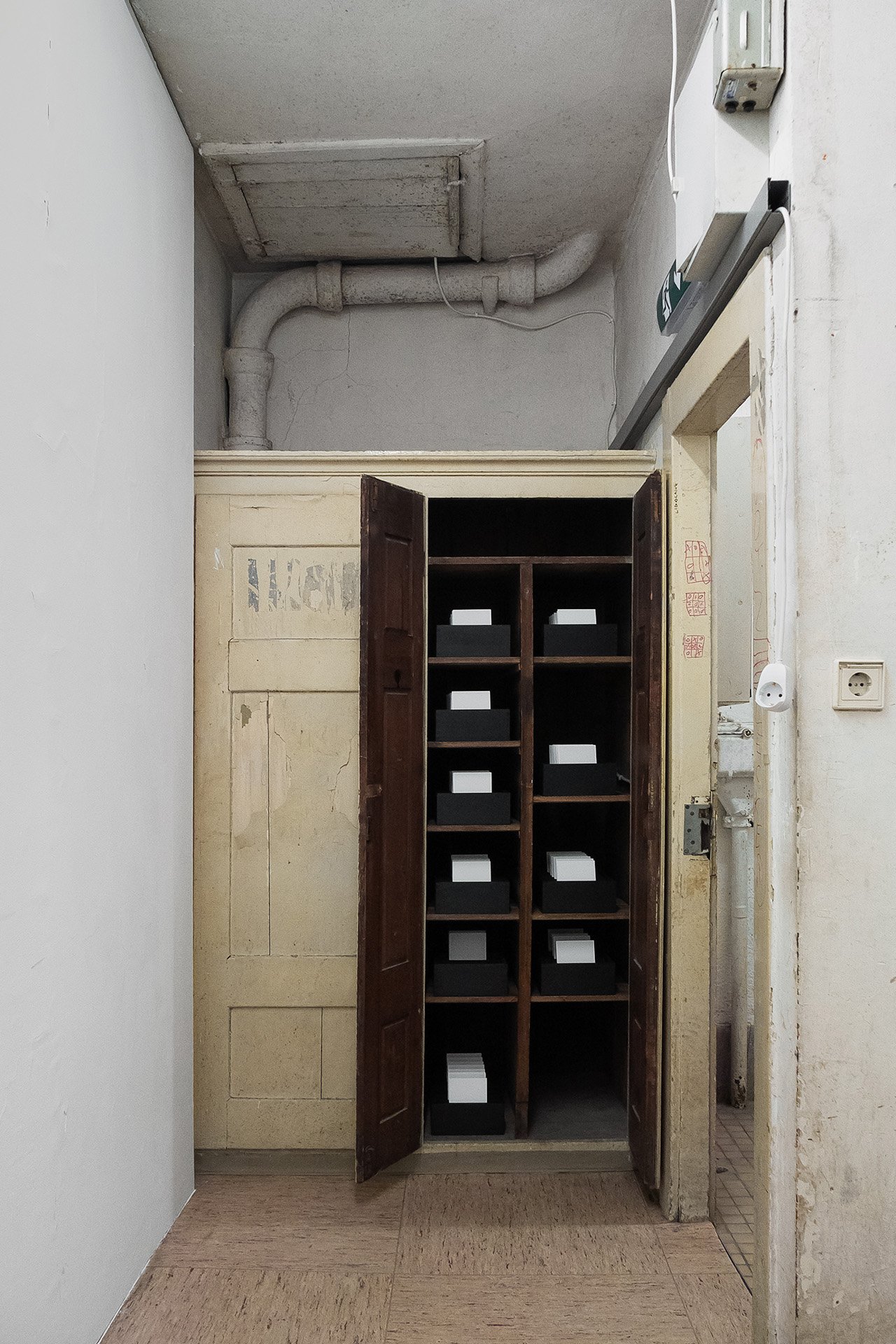
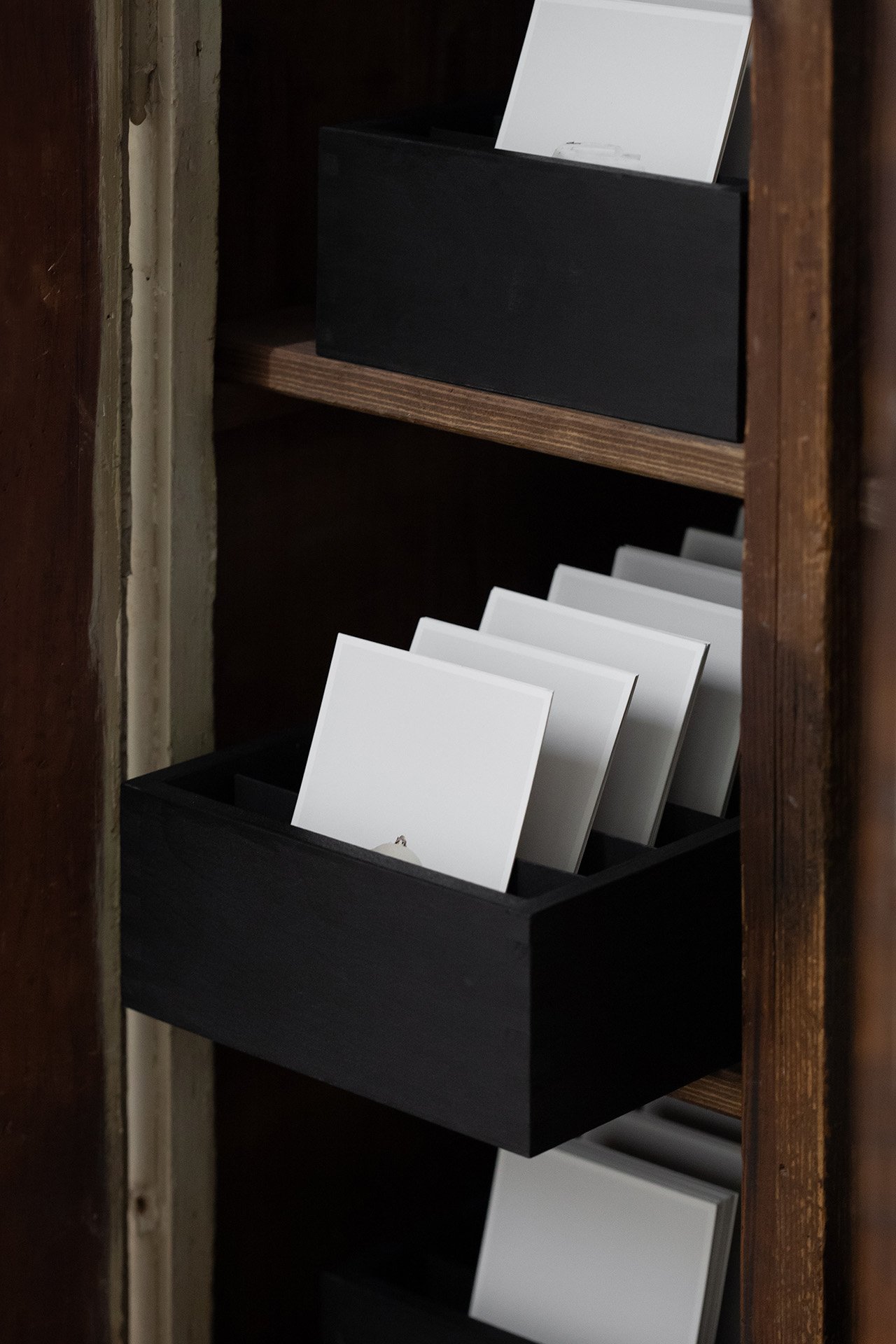
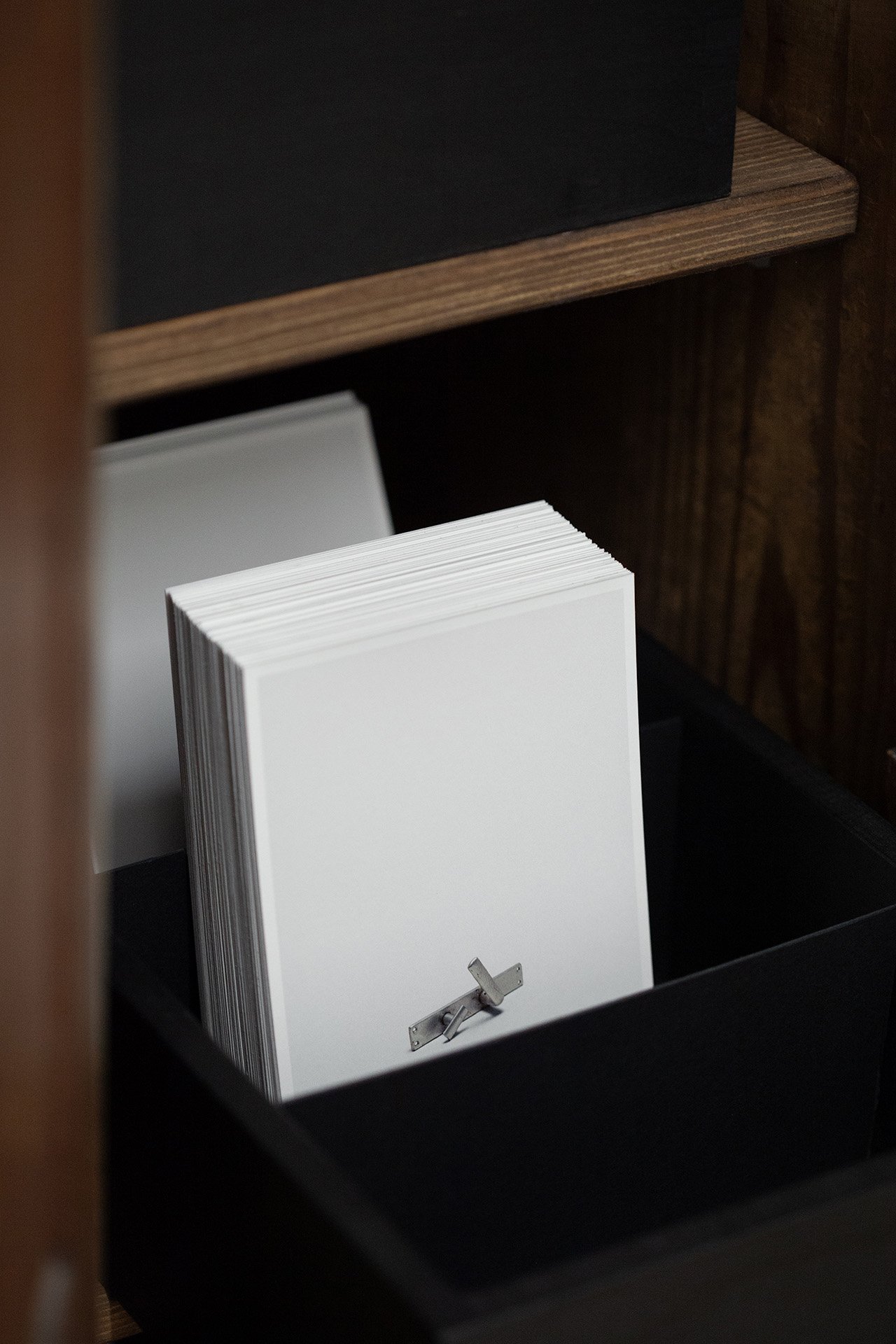
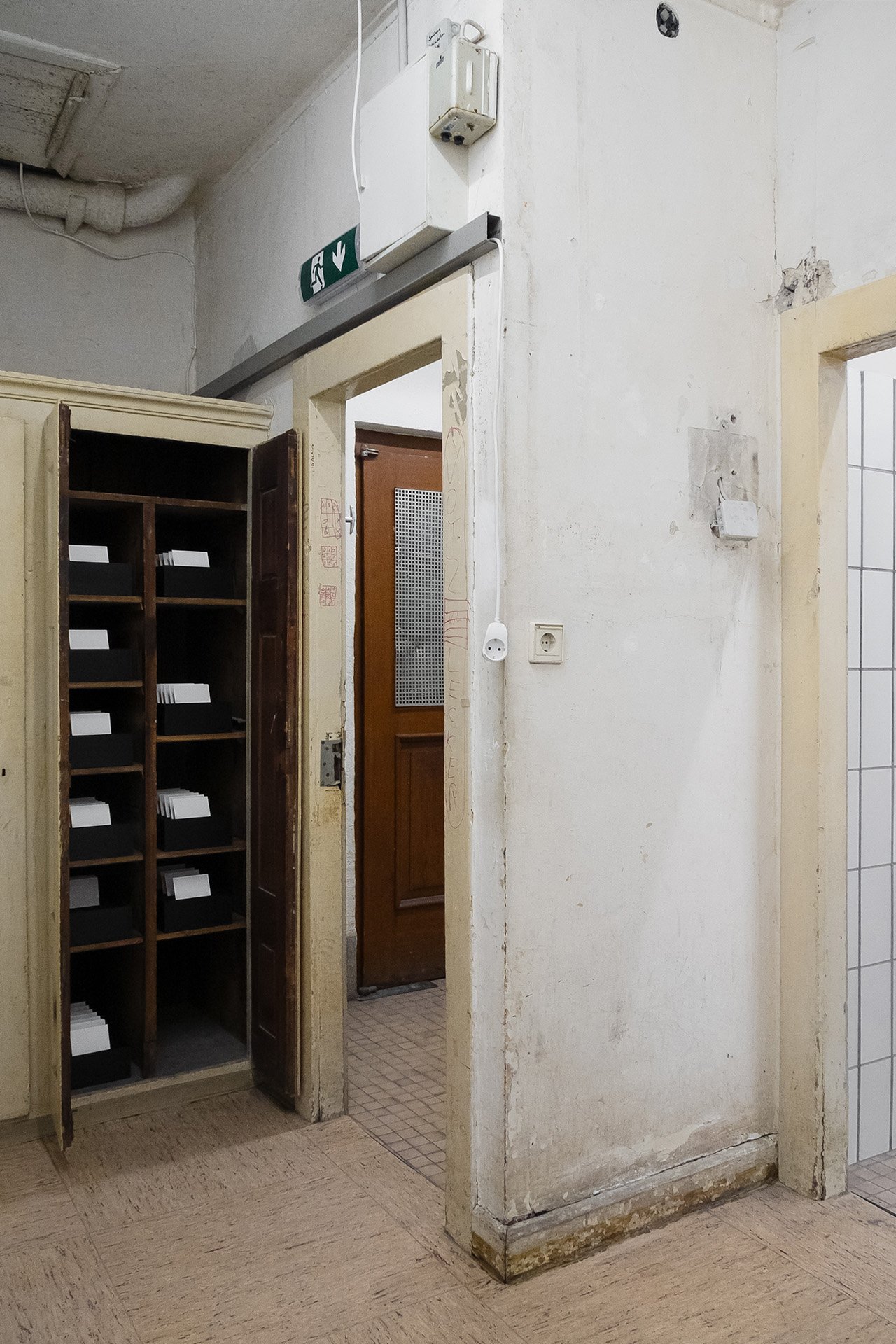
The basement could only have found its way into the cabinet in a transformed shape; uncomfortably so. The cabinet becomes the repository of the photographic postcard archive. Through the basement and into the materiality of Kaiserwache: for viewers, an inaccessible space becomes a space of thought. The gaze through the basement, through Christina’s eyes, through her camera’s lens, transports all the objects into her photo studio, into a place without dimension, at least judging by the resulting images. In photographic condensation, Christina now collects views of the individualised objects. They appear simultaneously near and yet distant. Even though we are only a meter away from the actual spatial archive and breathe the same dust as the objects, they have now acquired the appearance of artefacts as postcard motifs. Removed from the repository, from the place of rest – or rather, from the purgatory – the place that has gathered them, they now lie in the artificial light of the white/grey emptiness. The photographs oscillate between advertising photography, museum reproduction and scientific documentation. These decisions turn the attention on the medium making the photos present as photos: matter-of-fact, yet staged.
What does this tell us?
***
Already at the moment of its “recording of findings,” its coming into being and its relation to the future, the technical structure of the archive – its archival medium and system – also determines the structure of what can be archived. (Cf. p. 17, Archive Fever, Jacques Derrida, 1995, Johns Hopkins University Press.) One could say that archiving itself produces as much as it preserves. Inevitably, then, the photograph, the postcard, also comes to the fore in the KW archive. As already indicated, its specificity cannot be ignored: the identifiable formal quality of the photographs, Christina’s handwriting; the portioning and individualisation of the objects, their proportioning on the postcards, their separation from the background – particularly within an art space, the supposedly neutral backdrop resists as a fallacy – their seriality, their compactness, etc. Of course, the archival system already begins with Christina’s selection of the objects and photo angles, in the subjective artistic thought process. What logic does it follow? Obviously, it is not concerned with sensational motifs, as demonstrated by the largest group of photographs, those of door handles. These door handles, which appear identical to cursory glances, test, as a series, such a highly detail-oriented mode of looking that viewers would struggle to distinguish the individual views from one another. The logic remains opaque. The core point, the takeaway (in both senses): the singular artistic practice becomes an archival medium, mediated through photographic reproductions in postcard format. That all of this takes place within an art exhibition at Kaiserwache itself means that KW cannot be experienced merely as a strict archive. Instead, it opens itself to the conventions of viewing contemporary art and places itself in the context of Christina’s preceding exhibitions. In its quantity, the cards in KW create rather disorientation than an overview. We have an archive that does not strive for completeness, but instead, as an artistic work, refuses this function.
***
The postcard as souvenir, as a medium of reproduction and, not least, as an incarnated memory, albeit a very particular kind of memory. Here, the archive is carried out into the world. It is a collection that, over the course of time, disperses, scatters and, in a certain sense, destroys itself. Christina thus fragments the archive and collective memory from the outset, reflecting on how memory and forgetting are two sides of the same coin. What can be forgotten, or ought to be forgotten, and what should be carried into the future?
***
The objects are covered in dark dust, marked by cobwebs and, in some places, by patches of mould. The things have been left to themselves, neglected, while the basement biotope becomes a guide and makes the things its own. You can see it in them: the place has inscribed itself into the things. The basement, in a sense, archives itself. The archive simultaneously preserves and institutes. Yet it does not preserve through any “natural” process. To what extent would such naturalness even apply here to the basement as archivist? Whether Christina archives them or not: these everyday objects are there, in abundance, in countless basements, in countless Kaiserwaches. What is being archived here, beyond the material appearance of the objects?
***
Christina writes that she sees these objects as artefacts, as microcosms that constitute a fragments of the larger world. They are evidence of a world and of particular situations. In “KW,” we encounter things that have served their purpose, that are no longer of use, to put it bluntly: waste (Abfall) that refuses to fall away (abfallen), instead sedimenting in the basement. Objects in limbo, whose reflexive attribution of value (or worthlessness) stands in an awkward tension with the heritage status of Kaiserwache.
—
¹ One might think that her working method is nothing other than a demonstration of the behaviour of the viewer: she shows us how we might look at the work. On the one hand, there is the associative game, trying out mental relations between objects that are often everyday objects bearing traces of use. On the other, she traces this fundamental background process of looking at art as an artistic working method. In the tradition of the readymade, the positions of viewer and artist are intertwined and problematised. For although the artist selects and arranges, these actions are themselves based on the logic of associative, combinatory looking. If one localizes the work—in all the equivocation of this term as used here—within this mental movement, turning and comparing objects, searching for a red thread where all the dresses are red, then it exists in a twofold version. Viewers cum artists reconstruct, if certainly not the mental flickering image that Christina had before her, in any case the intellectual process that brought that physical manifestation to life.