


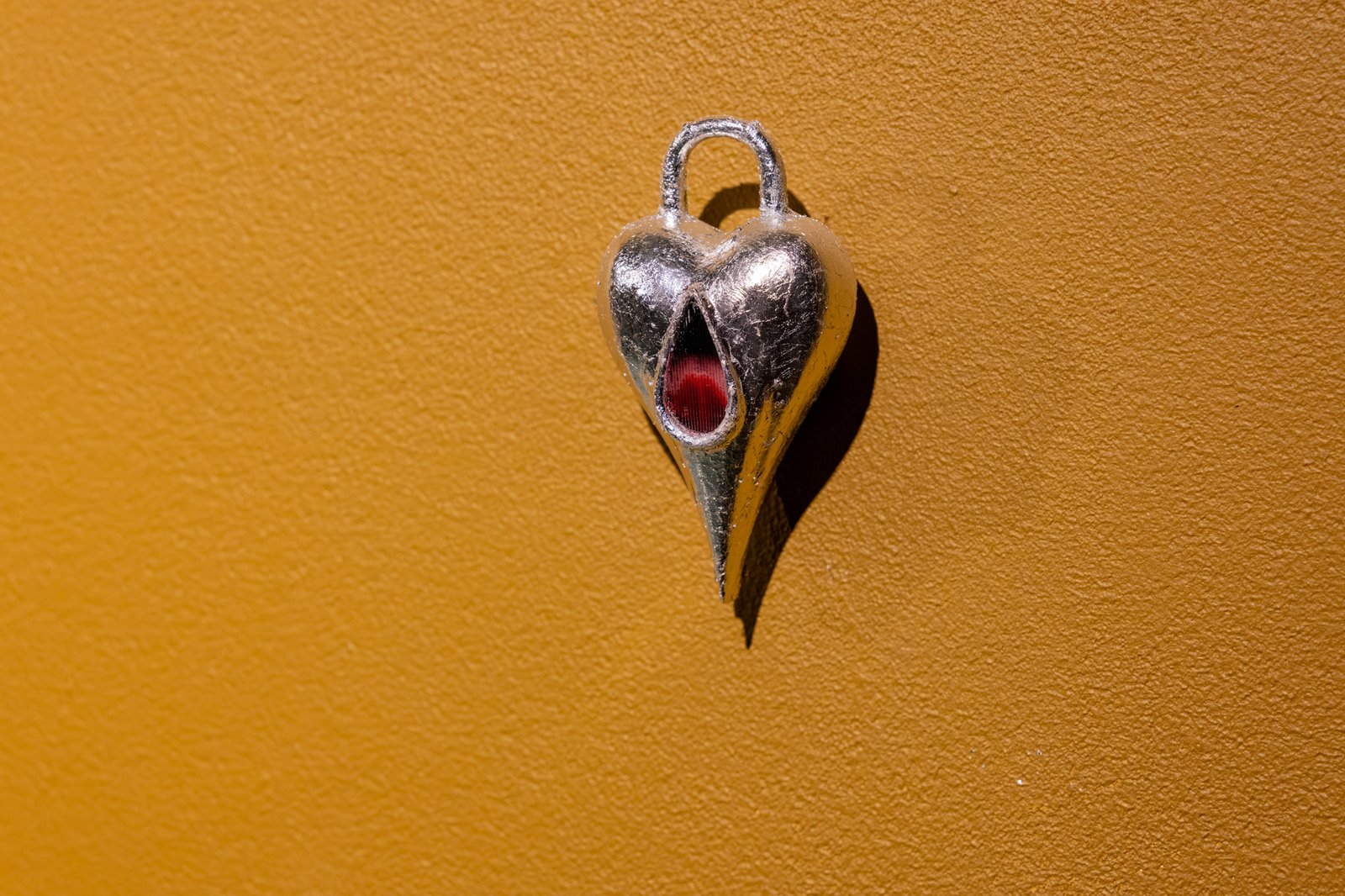
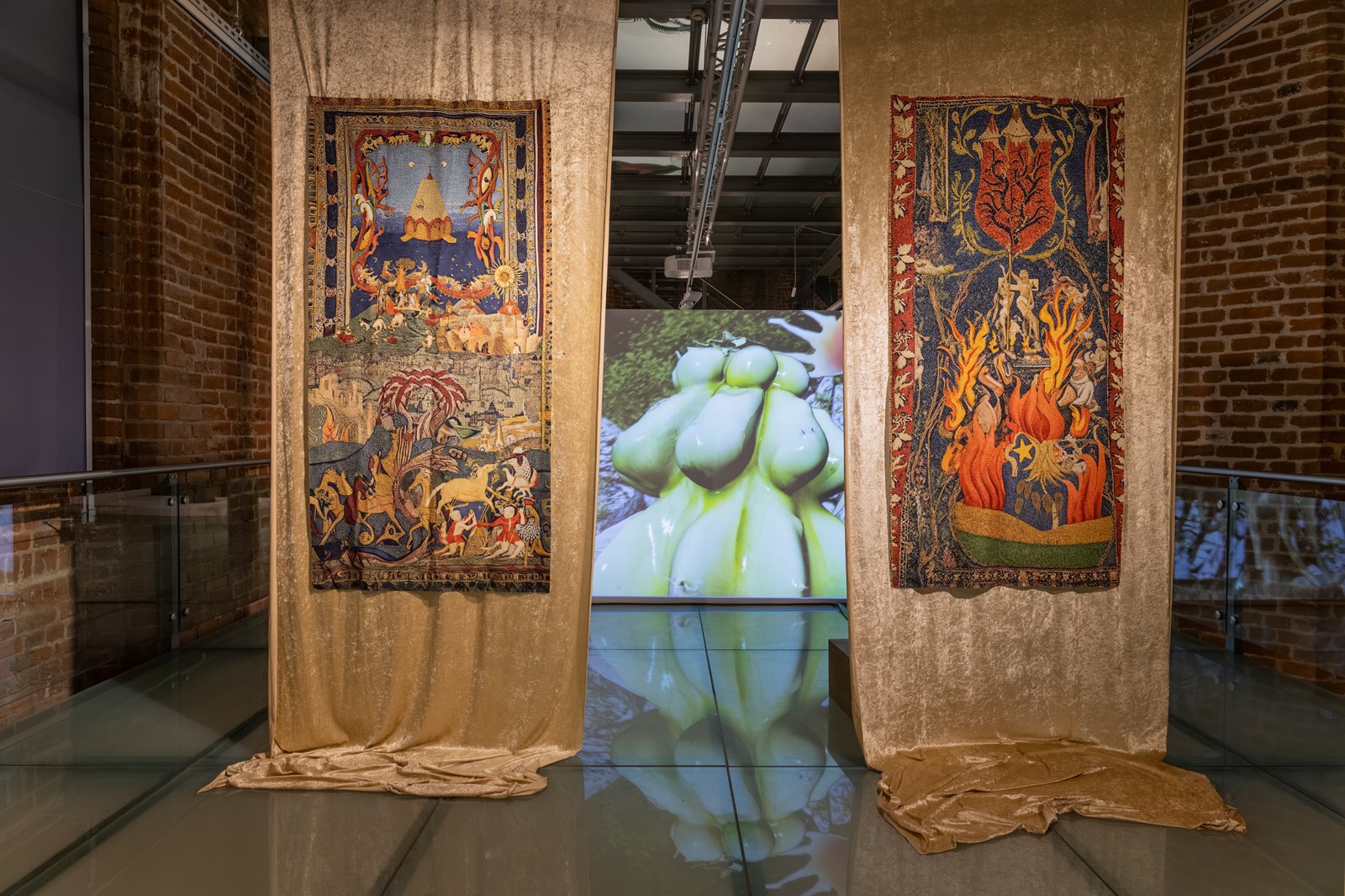
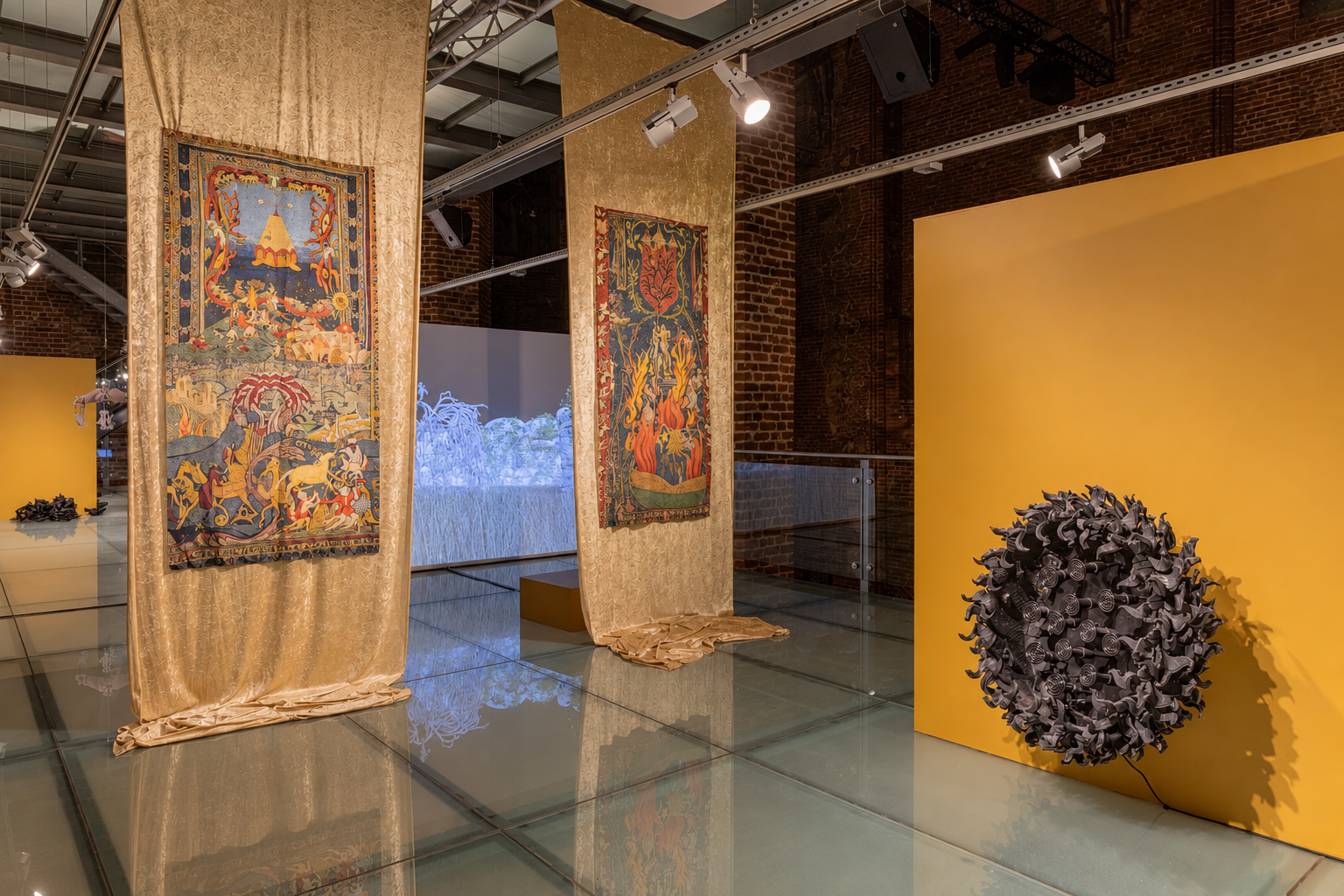
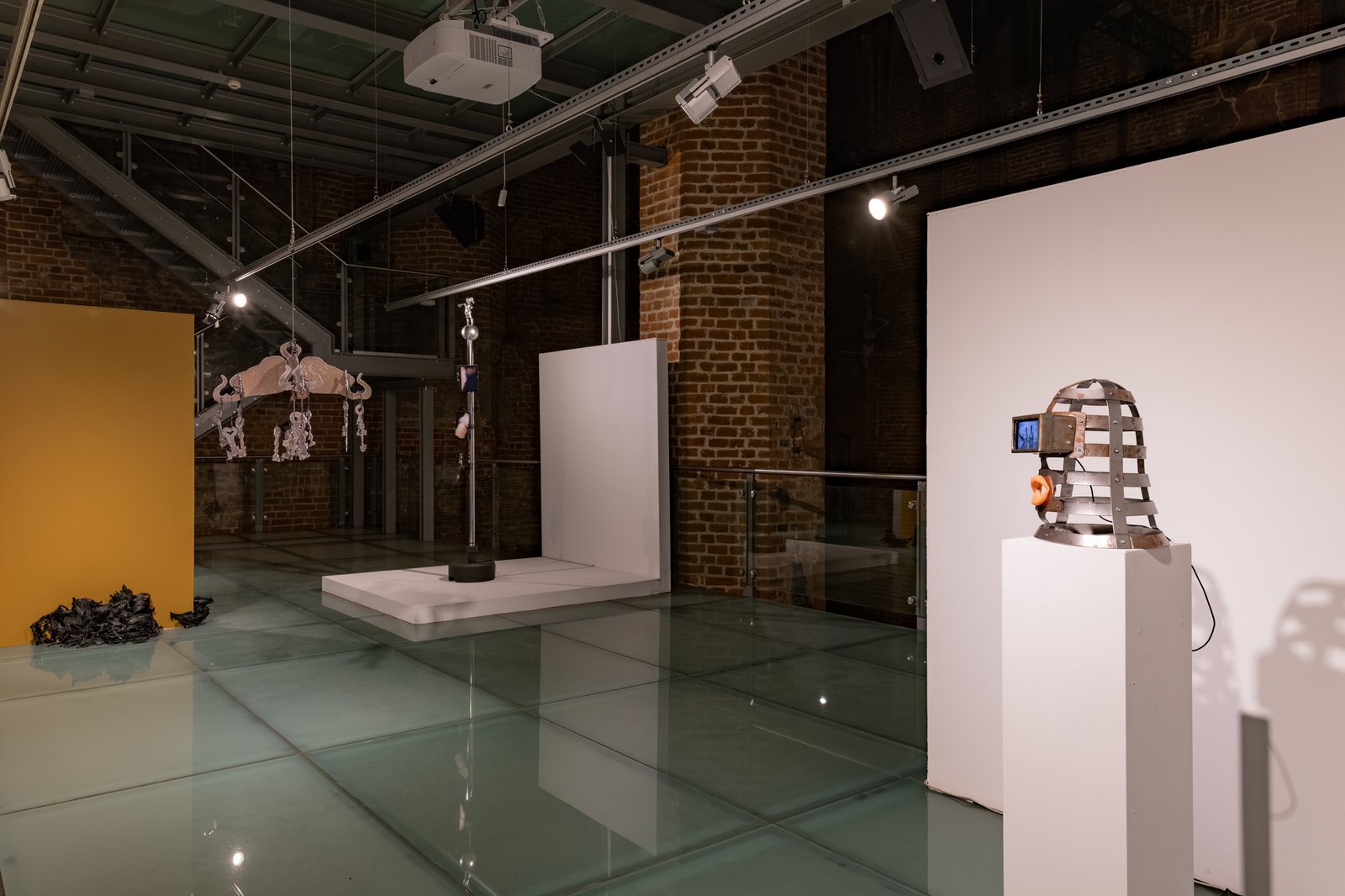
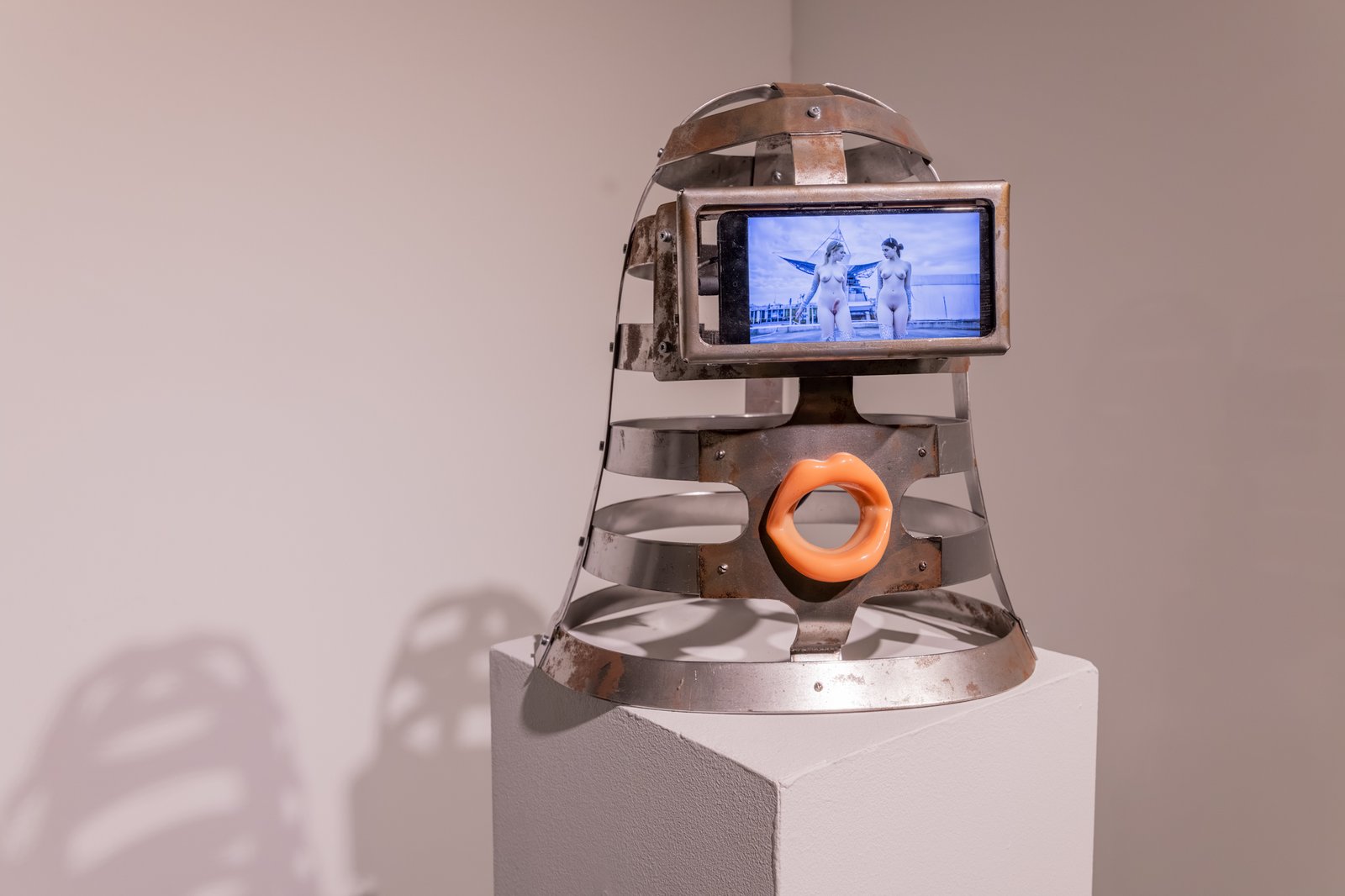
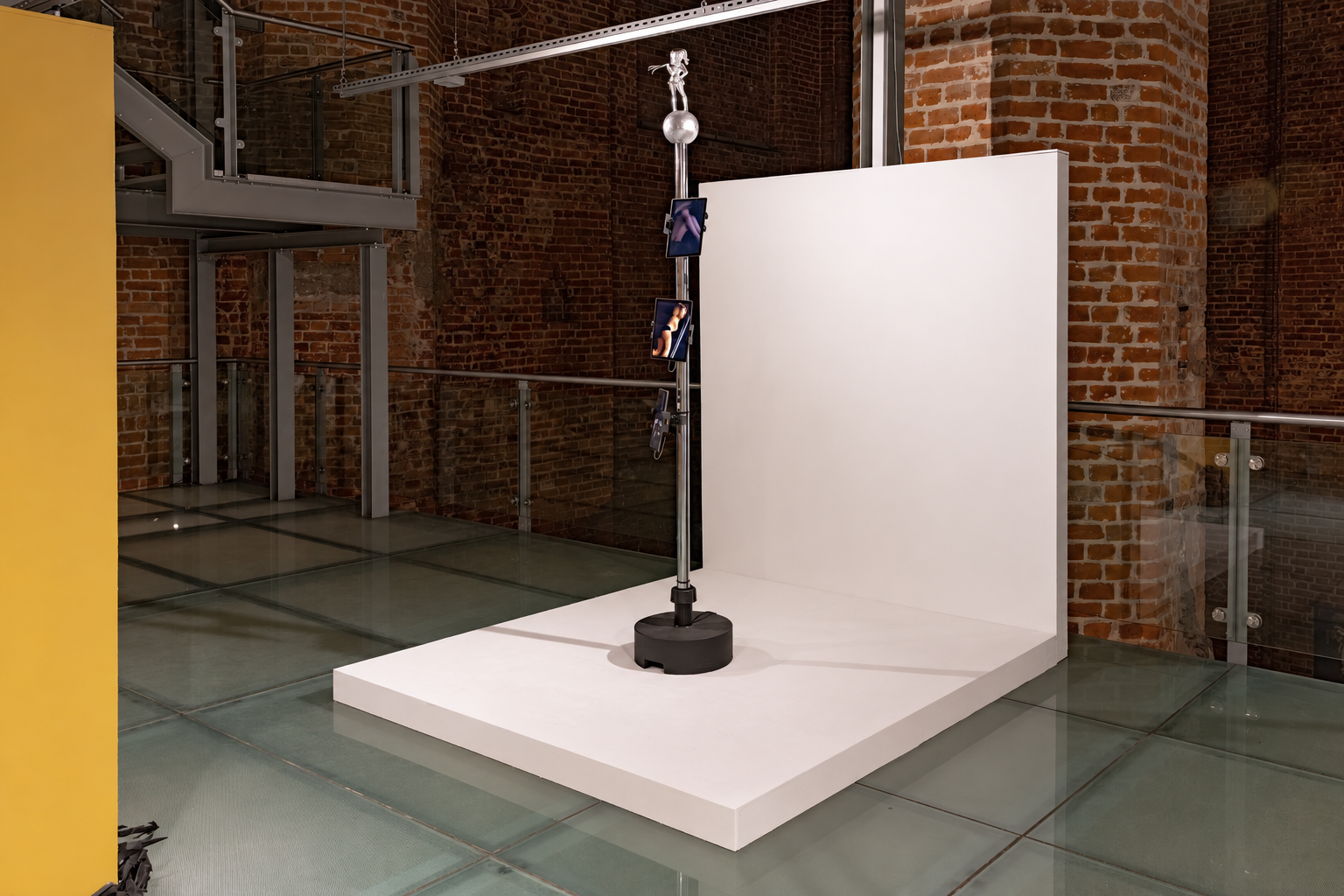
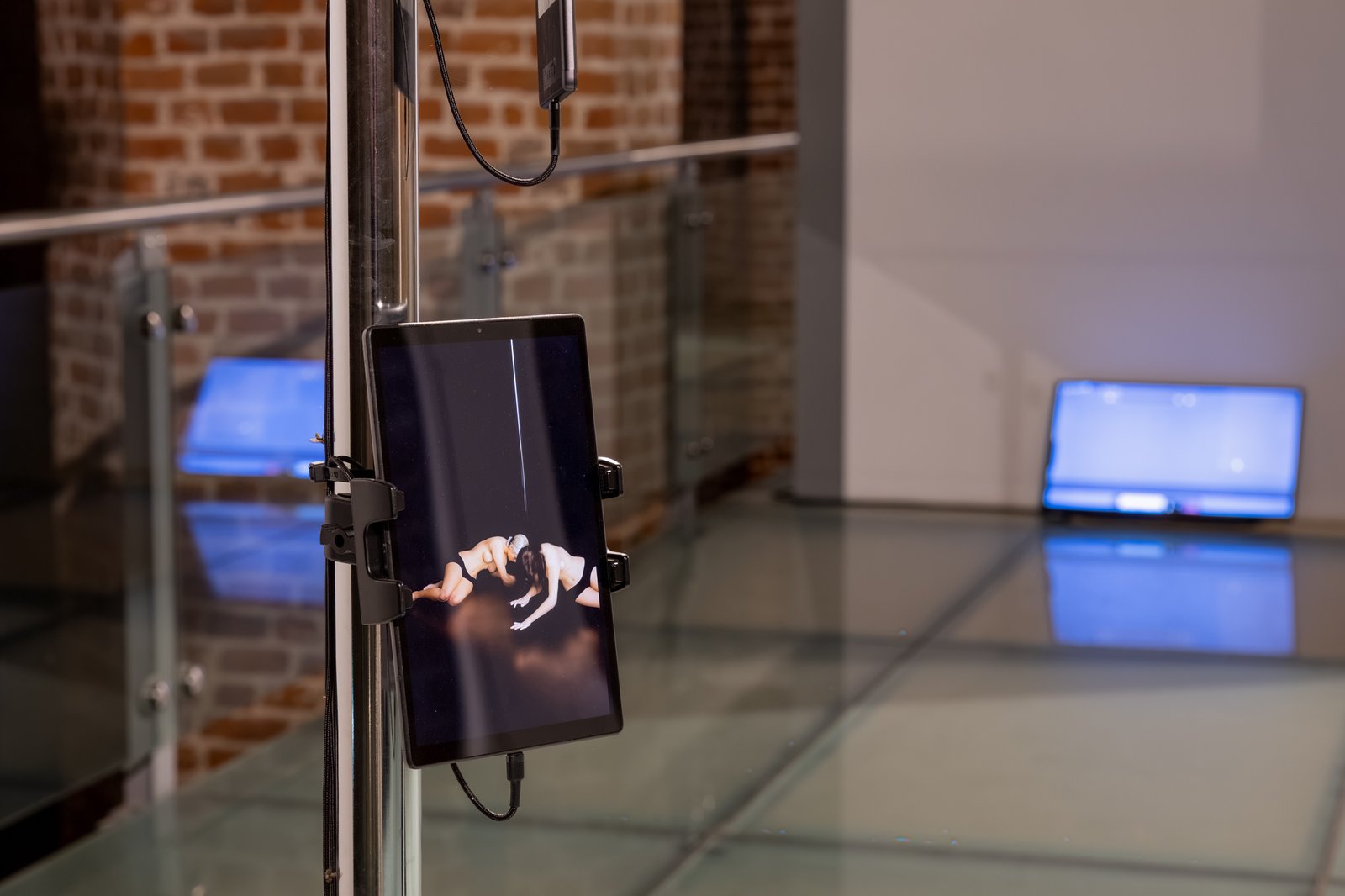
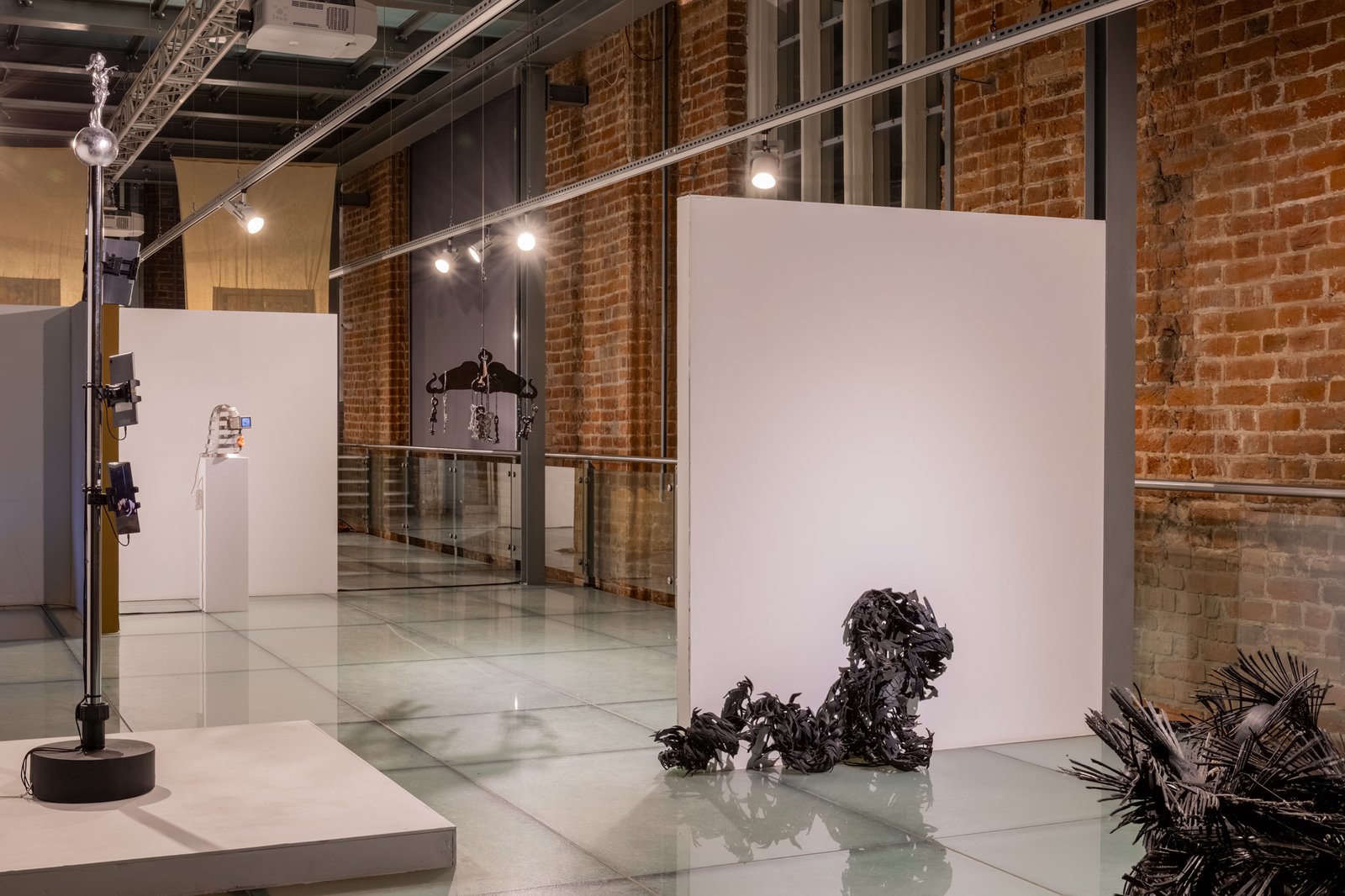
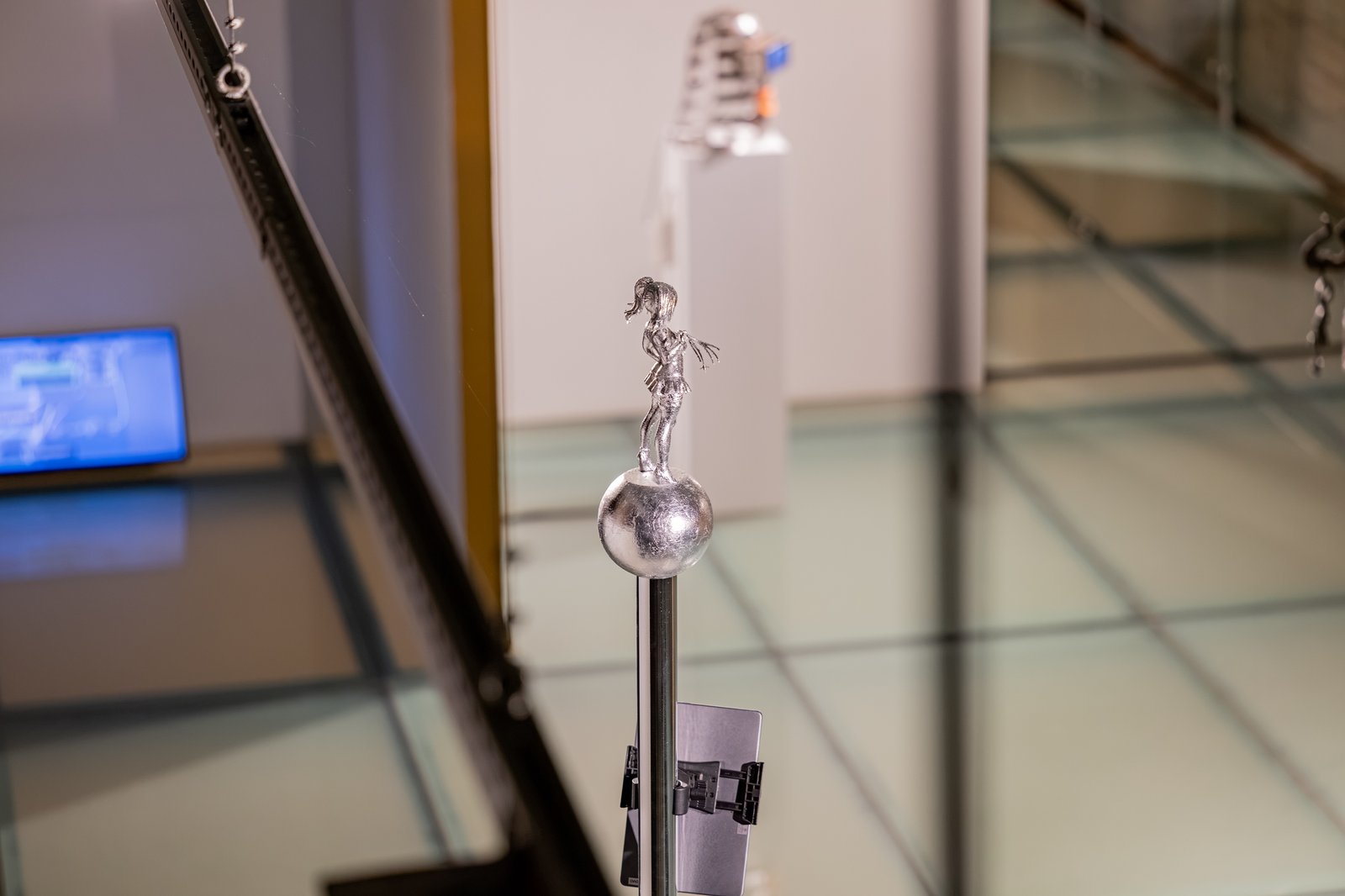
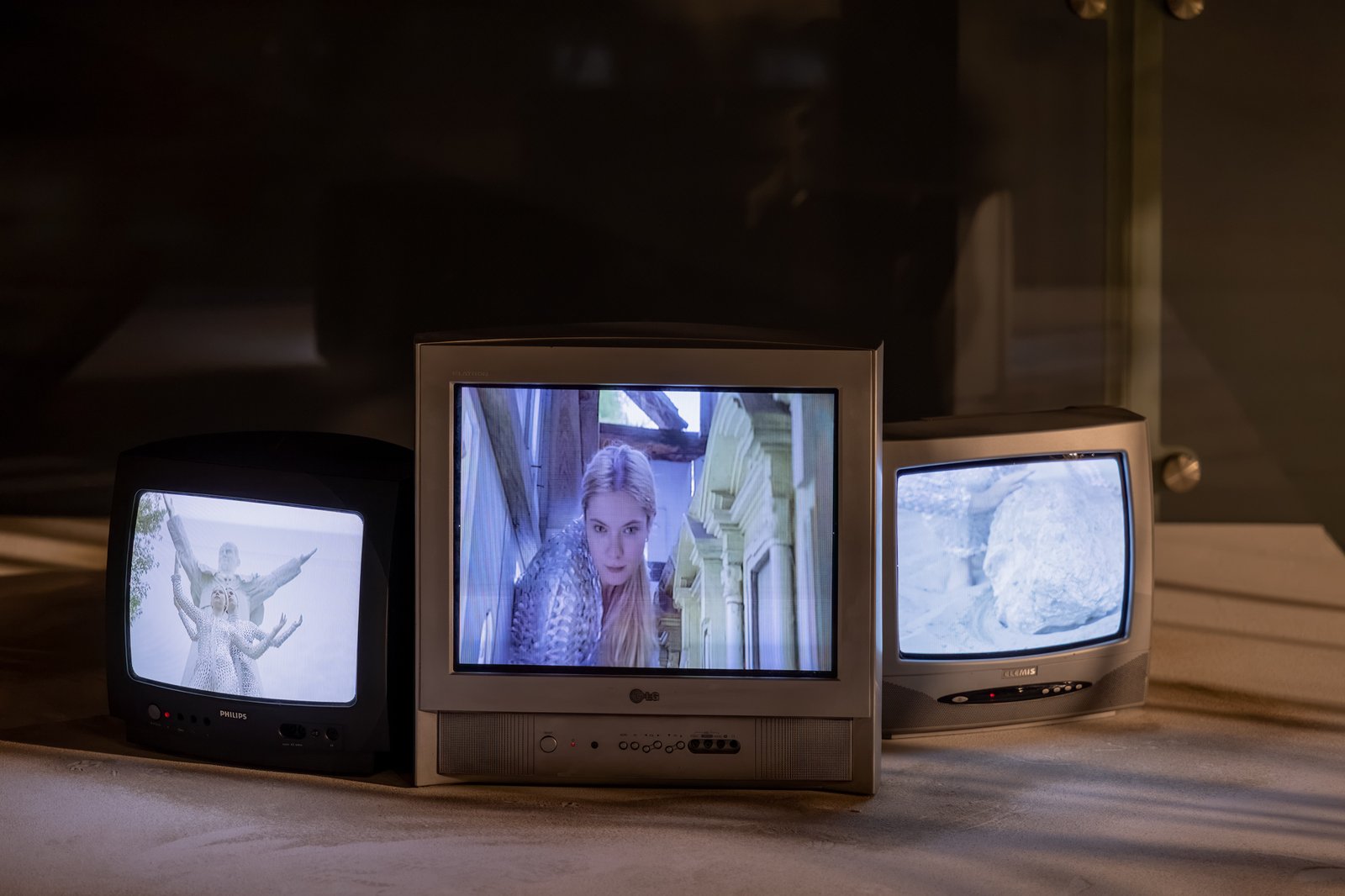

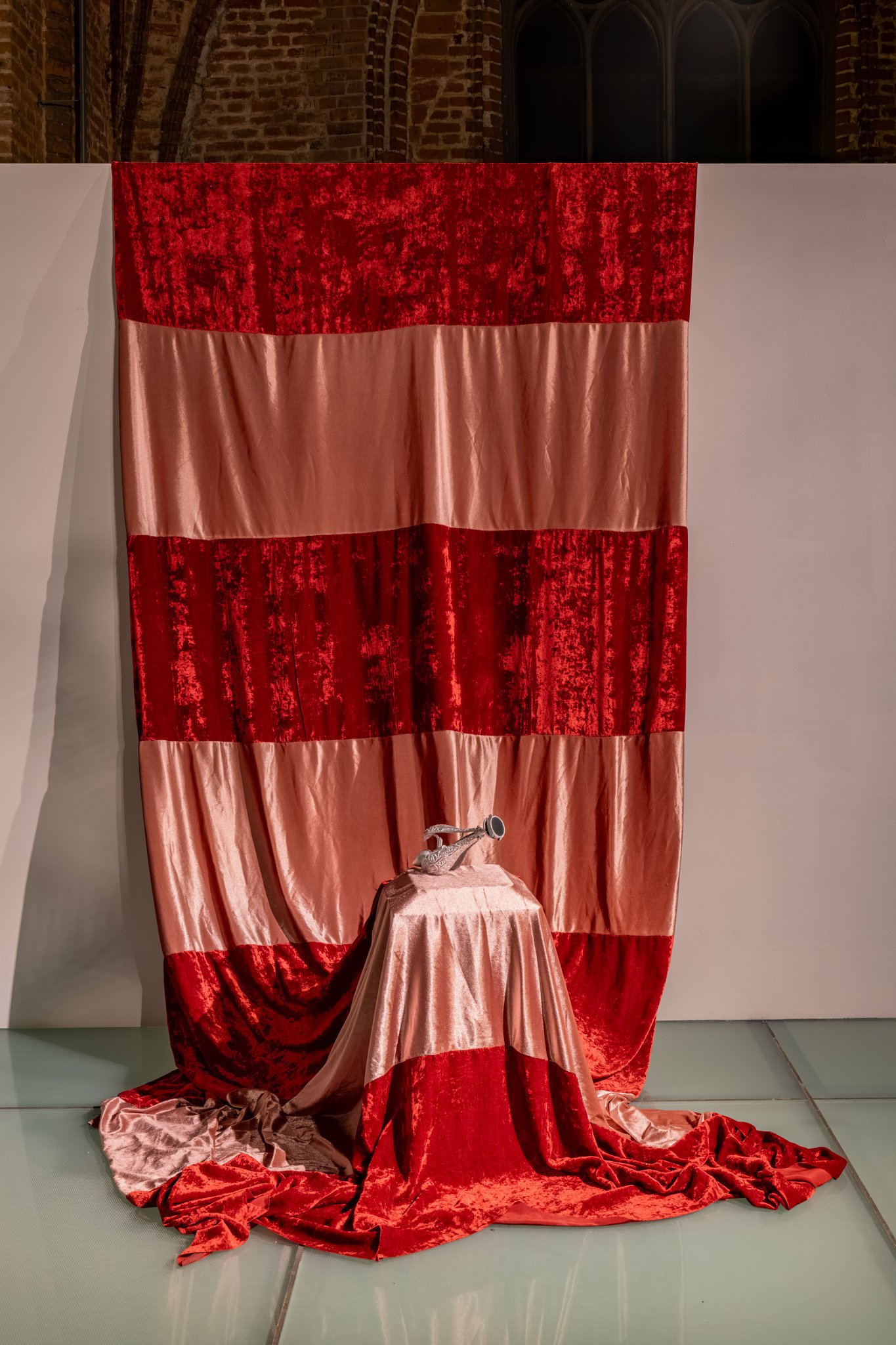
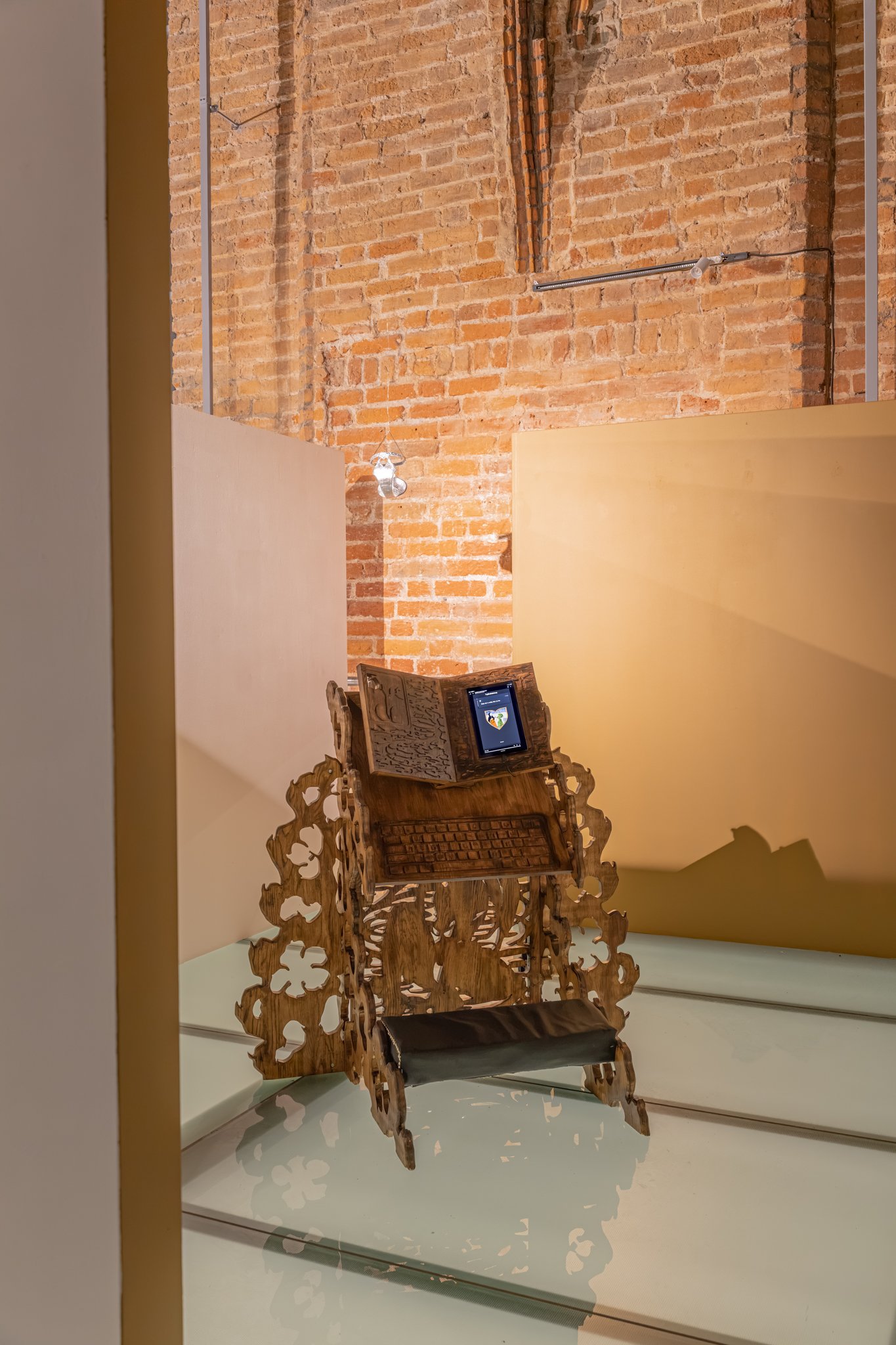
“Hortus Deliciarum” (Latin for “Garden of Delights”) is a show that intertwines spirituality, technology and violence, guiding viewers through a world of digital temptations and excess towards an attempt at purification and redemption. The exhibition draws on the medieval manuscript “Hortus deliciarum” by Herrad of Landsberg and Hieronymus Bosch’s triptych “The Garden of Earthly Delights”. From the garden of spiritual delight as a medieval compendium of knowledge, through Bosch’s fascination with the body, play and desire, to technologically mediated and manufactured forms of desire, the exhibition revisits and expands our understanding of
the hortus embedded in the European intellectual tradition. It asks what happens to the nature of the garden when the experience of body and spirit is mediated by machines, tools and technological waste.
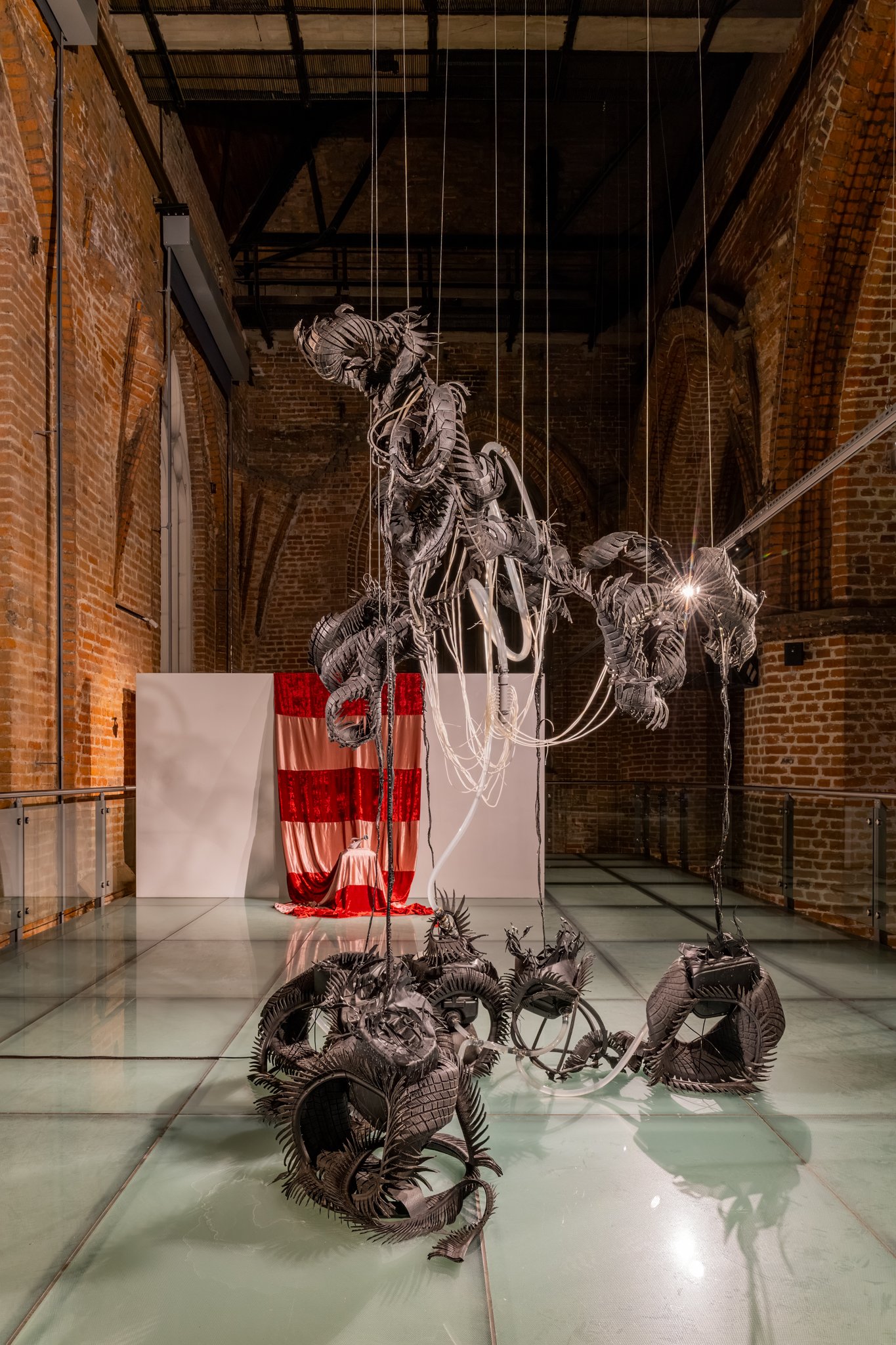
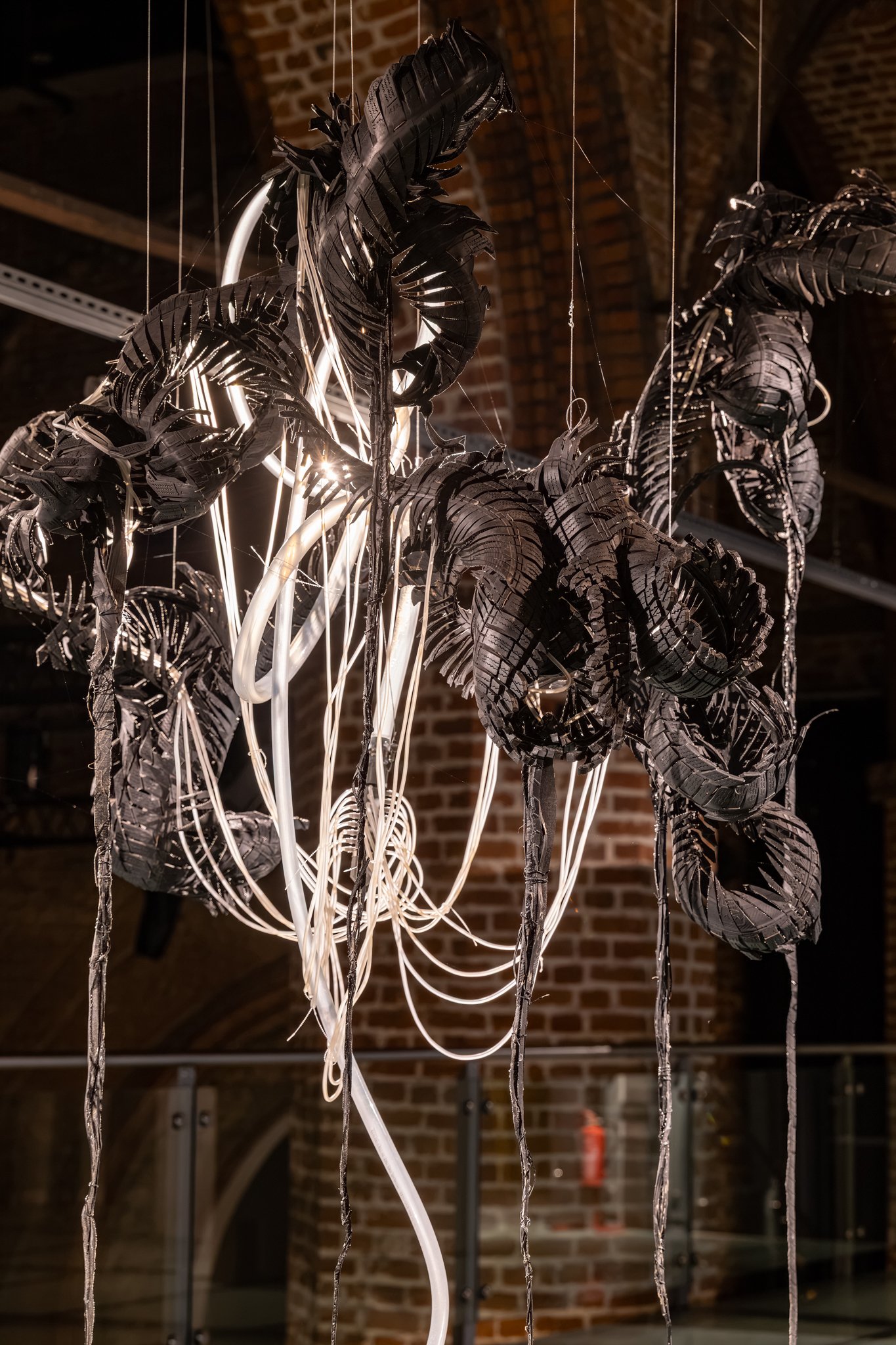
The work of Kobiety-Anteny (Agata Konarska and Agata Lankamer) emerges from a fascination with myth, magic, technology, and the mechanisms of control and power. Meanwhile, Adam Martyniak’s kinetic installations animate discarded minerals, evoking the worlds of plants, energy and the concept of deep time. Bringing these two artistic visions together reveals their common root: both can be read as stories about infrastructures. About what lies behind our desires, our ecstatic dopamine-driven cycles and hormonal highs. These are stories about the infrastructures of pleasure and torture, as well as the infrastructures of energy that sustain them, together with their remnants and residues. Our desires are not immaterial – they depend on machines that stimulate us, powered by impulses racing through copper circuits. Yet pleasure does not end when it is fulfilled. It carries on, becoming habit, a compulsive return to the
screen, a trace deposited in matter long after the desire itself has been satisfied.
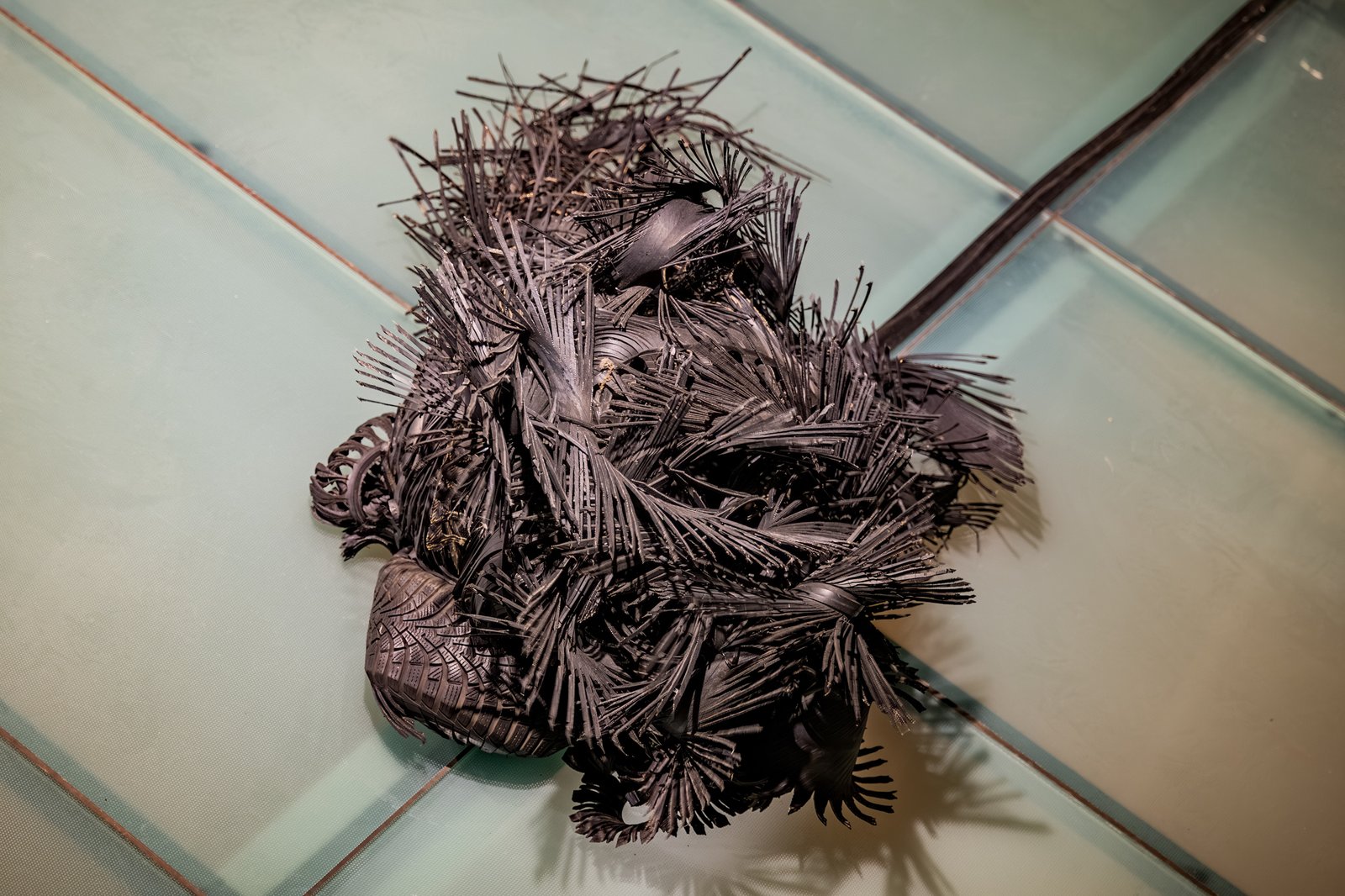
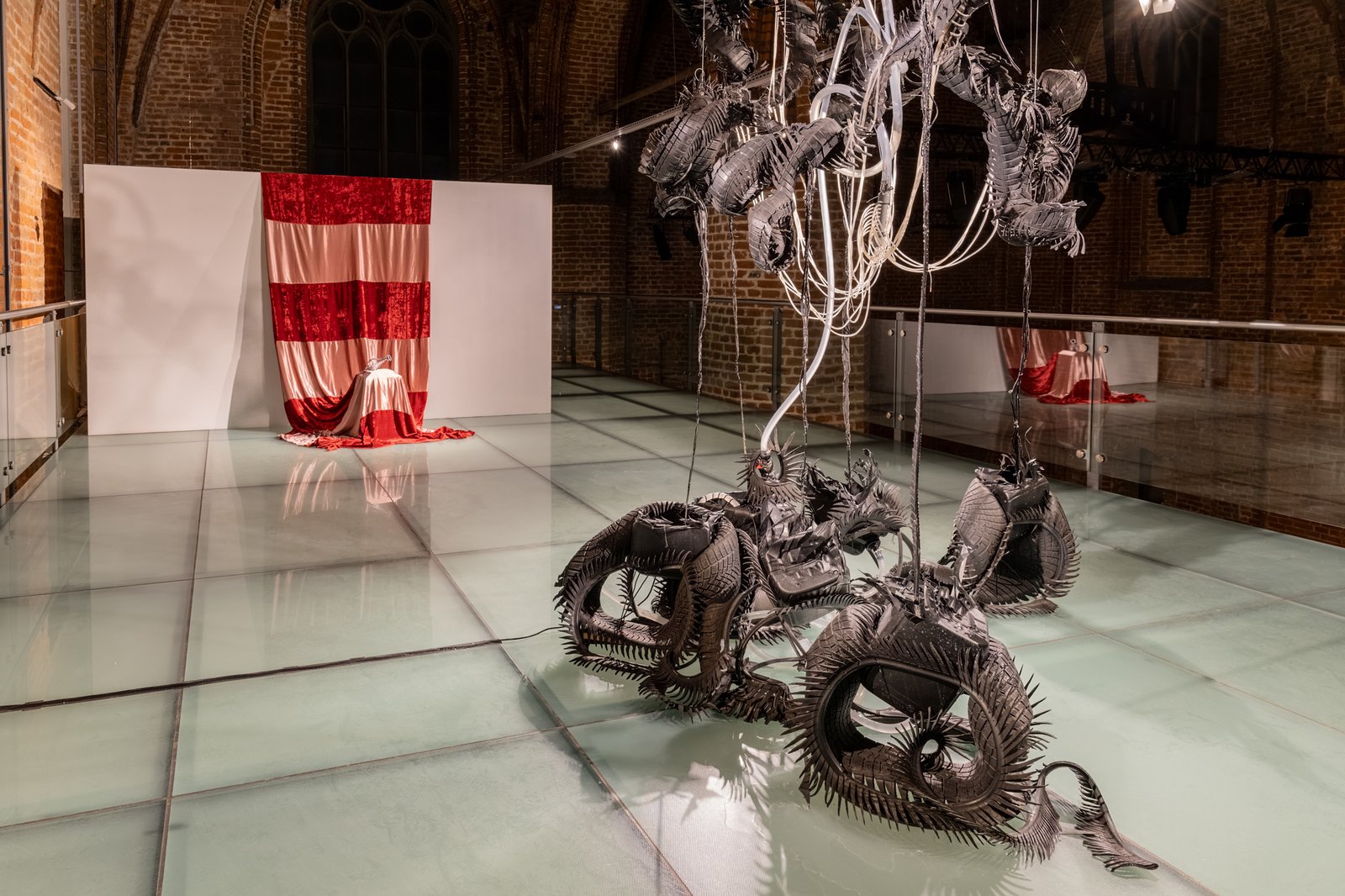
Medieval depictions of torture, sin, shame and penance meet here with deepfakes, pornography, artificial intelligence and a culture of constant stimulation.text and details.docx Accompanying them is matter transformed from petroleum derivatives, processed into fuel for combustion engines. The reality of black mirror screens and digital bacchanalia is thus intertwined with algorithmic violence and control. Contemporary technologies can be understood as skeuomorphs. In design theory, the term describes new forms that retain the formal features of their predecessors, even when they differ in material or ontological status. Think of our laptop desktops, which reproduce the layout of a nineteenth-century clerk’s desk. Contemporary technologies are precisely that: new instruments of old mechanisms of control. Beneath the guise of devices promising personal fulfilment, they enact concealed methods of subordination and the establishment of power relations.
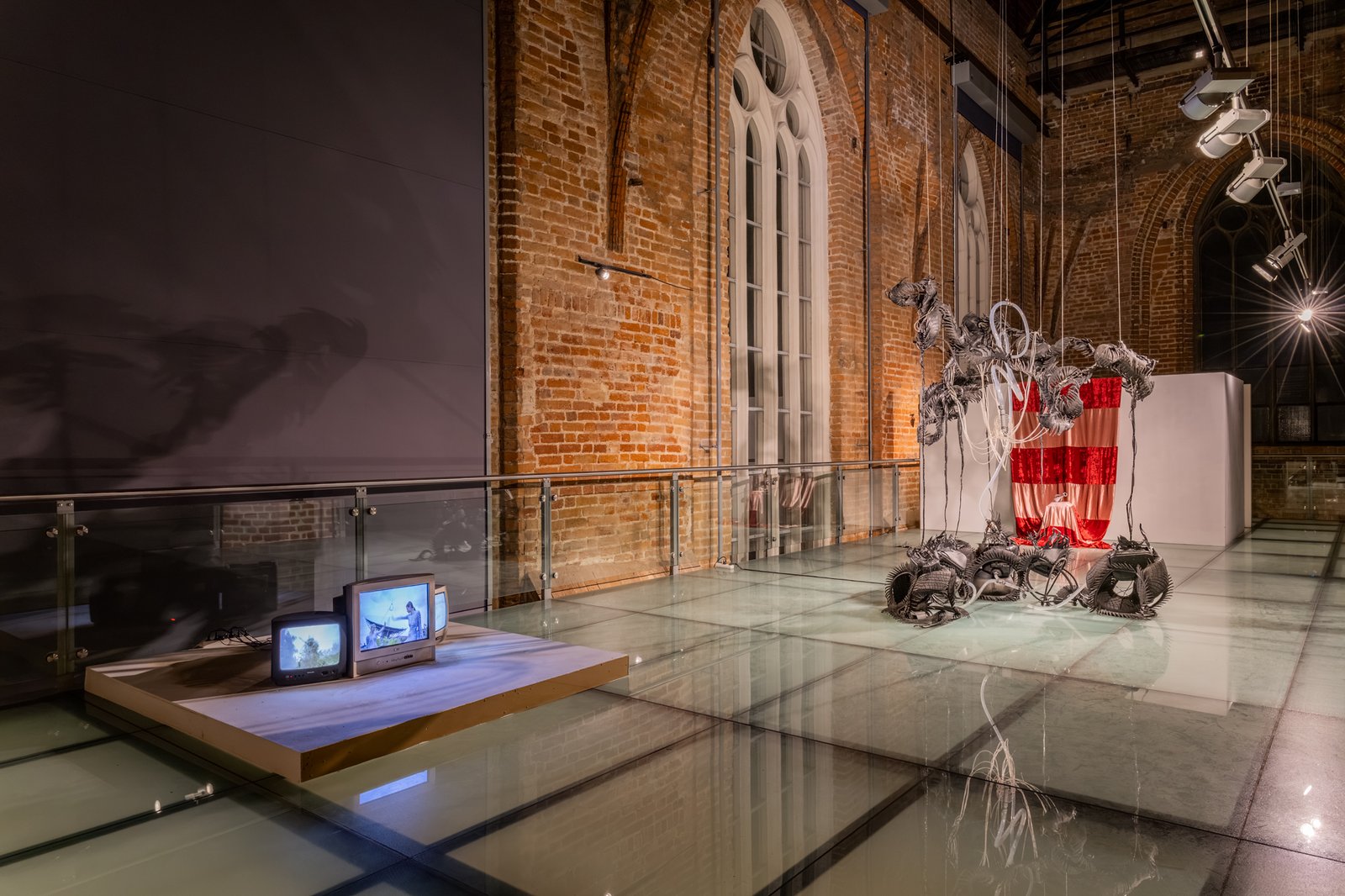
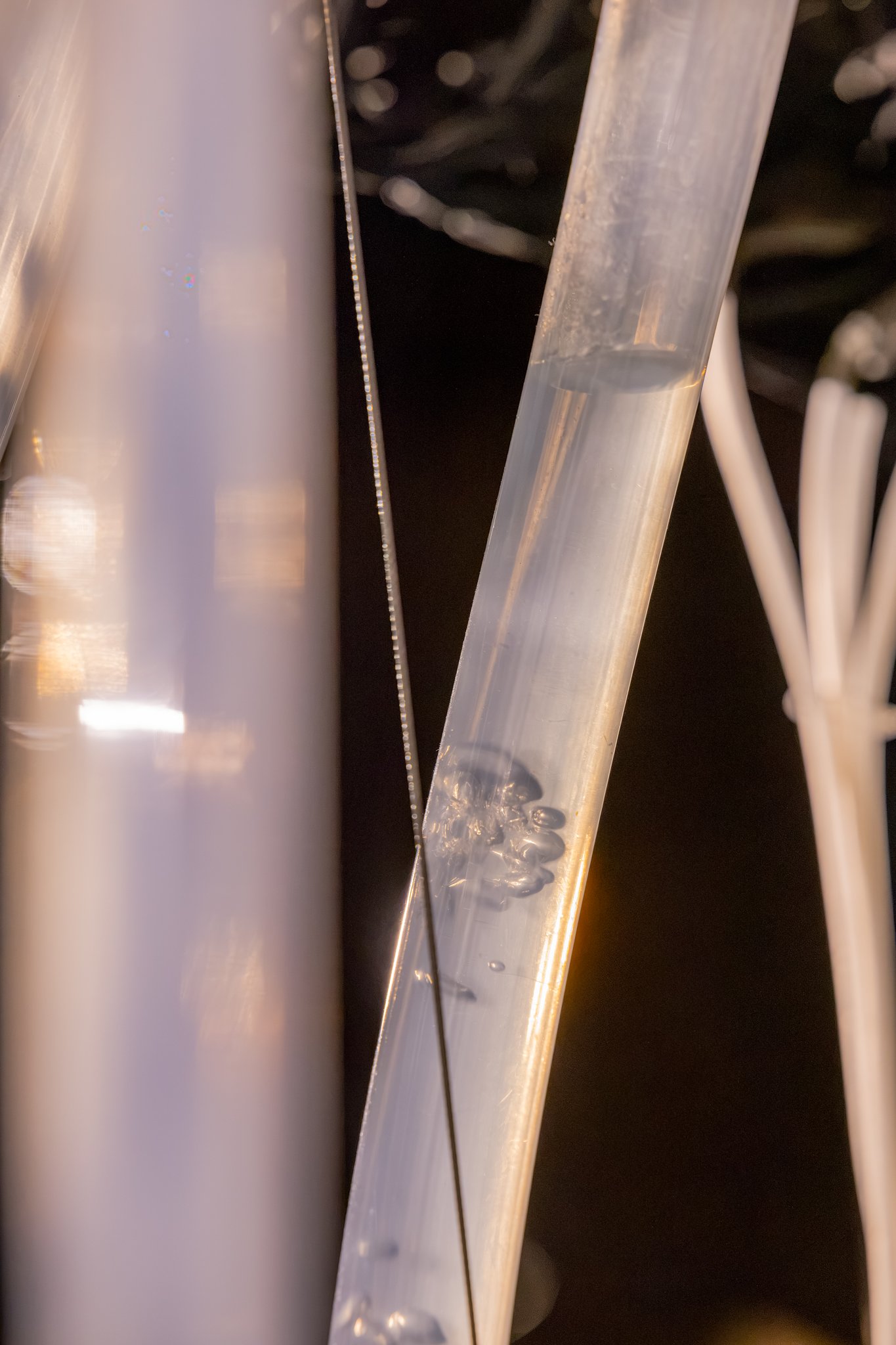
The exhibition has been designed to evoke a passage through a garden of contemporary delights, filled with individual pleasures consumed in front of a computer screen, accompanied by quasi-organisms that seem partly alive, bubbling and reminiscent of plants, animated by simple motors made from recycled tyres. This journey gradually leads towards stillness, the search for a new beginning and redemption. Moving through the two levels of the galleries at Galeria EL means encountering a garden à rebours – not a place of plant growth, cultivation, relaxation and rest, but rather a site of conditioning and control, where the traces of our desires – hormonal, affective and energetic – accumulate in matter with the same slowness with which minerals are deposited in the earth over the course of deep time.
“Hortus Deliciarum” becomes an illustration of technognosis – an entanglement of spirituality and technology in which religious and magical impulses do not disappear with technological progress, but instead find a new, digital medium through which to manifest themselves. The Garden of Delights, once a space of contemplation and growth, has become a field in which the spiritual desire for transcendence unfolds through screens, cables and motors – seeking purification not through an escape from matter, but through its most discarded and worn-out forms. From the garden of delights towards its inversion: a garden à rebours, a space of solitude, transformation and the search for spiritual purification within a labyrinth that may have no end.