


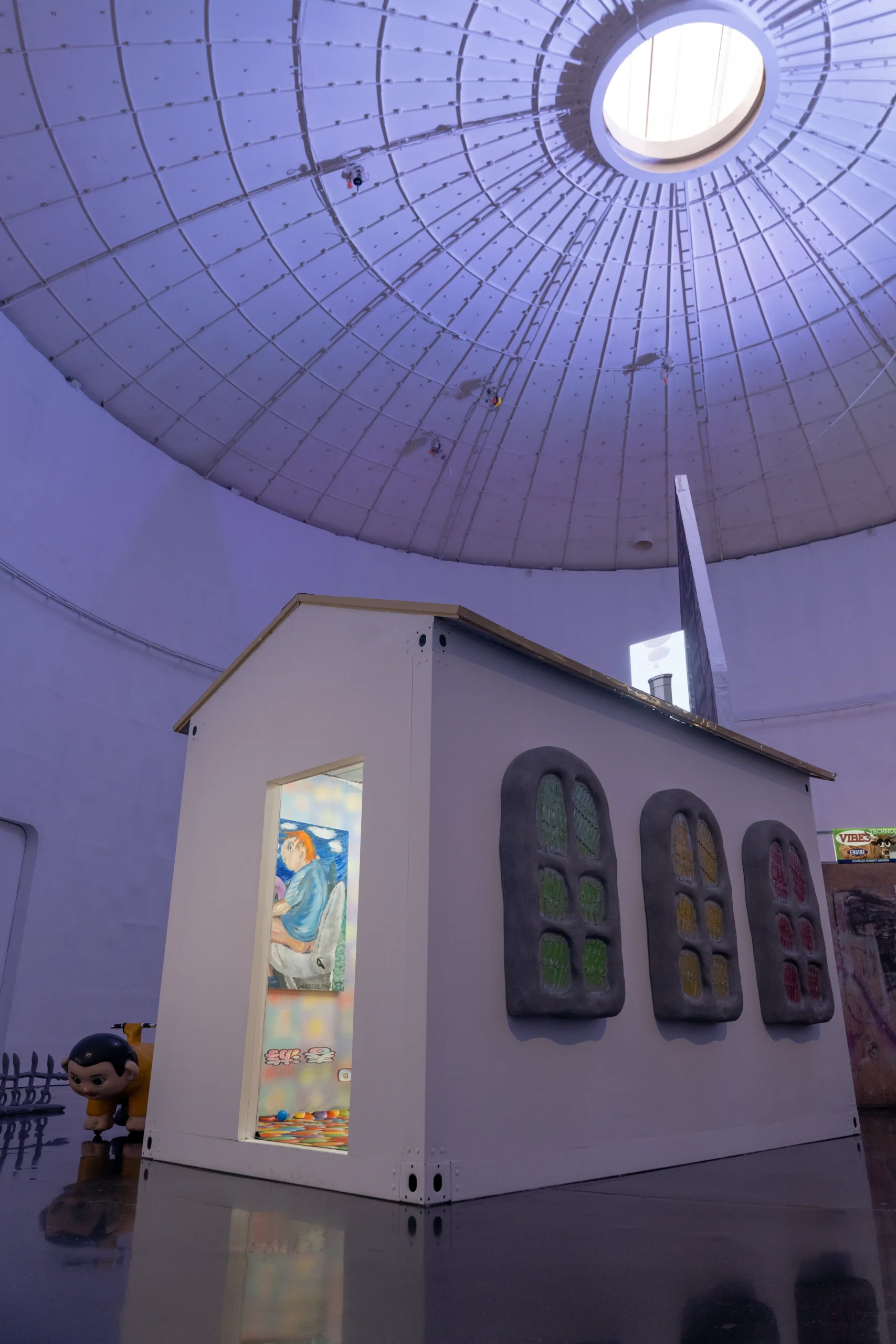
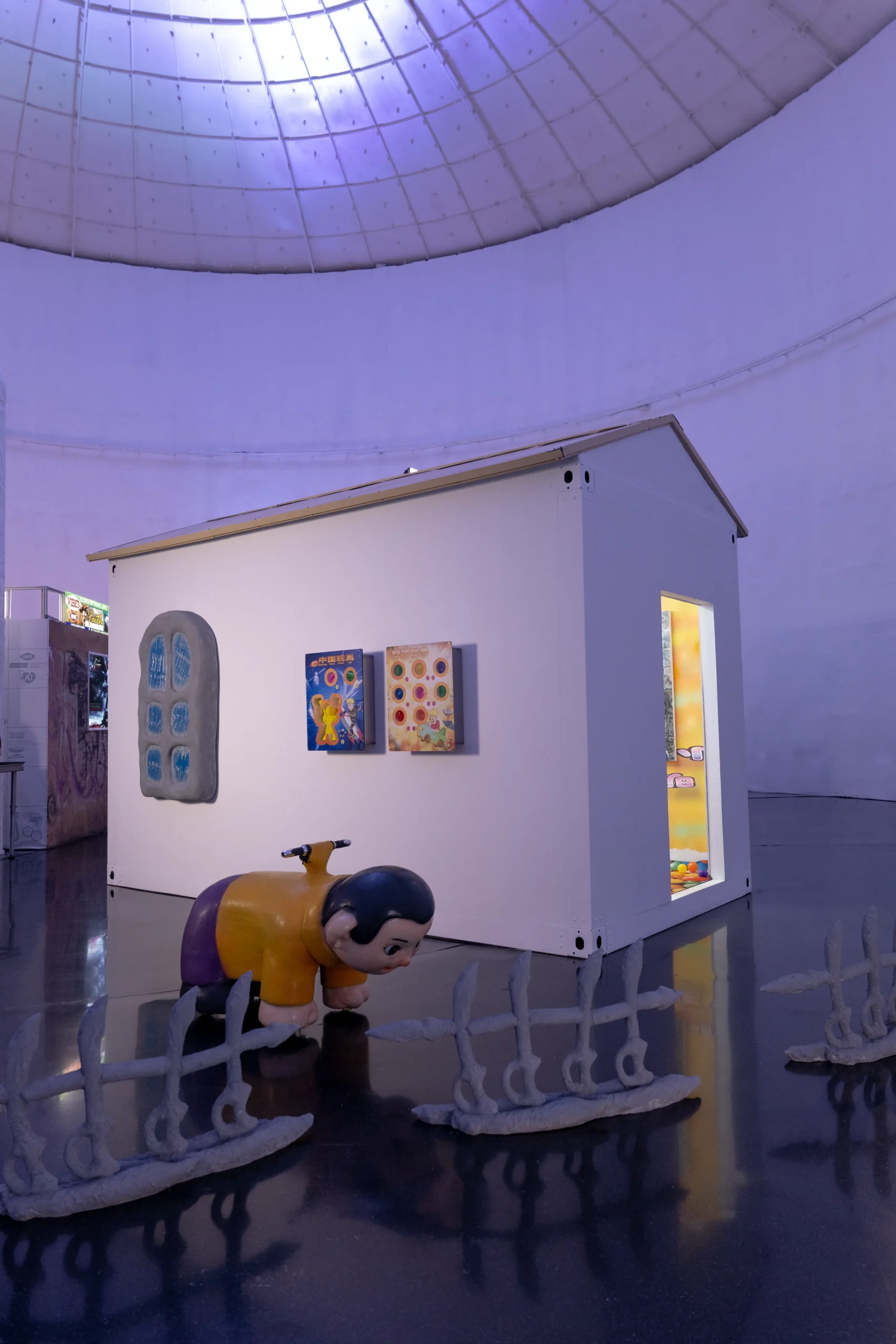
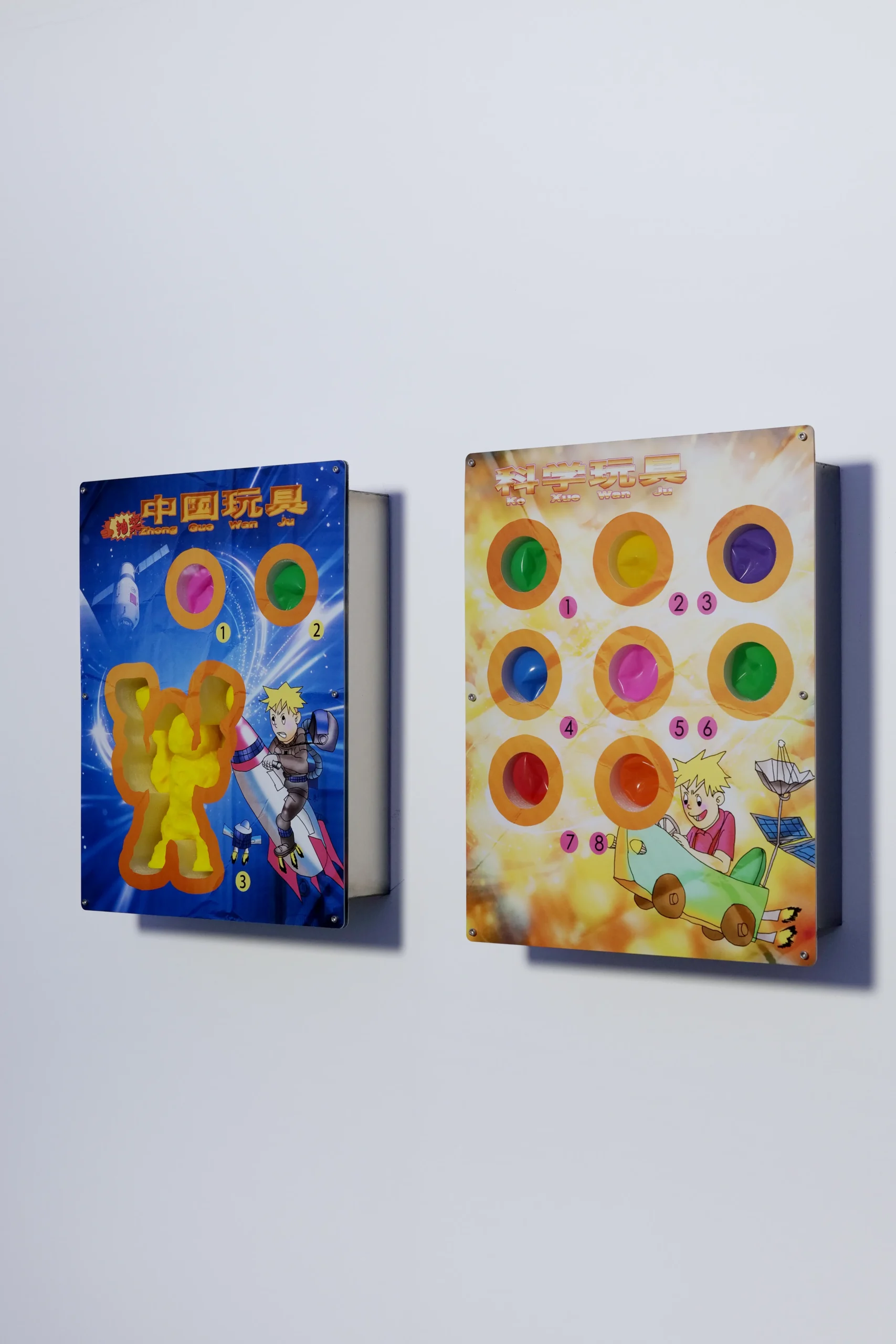
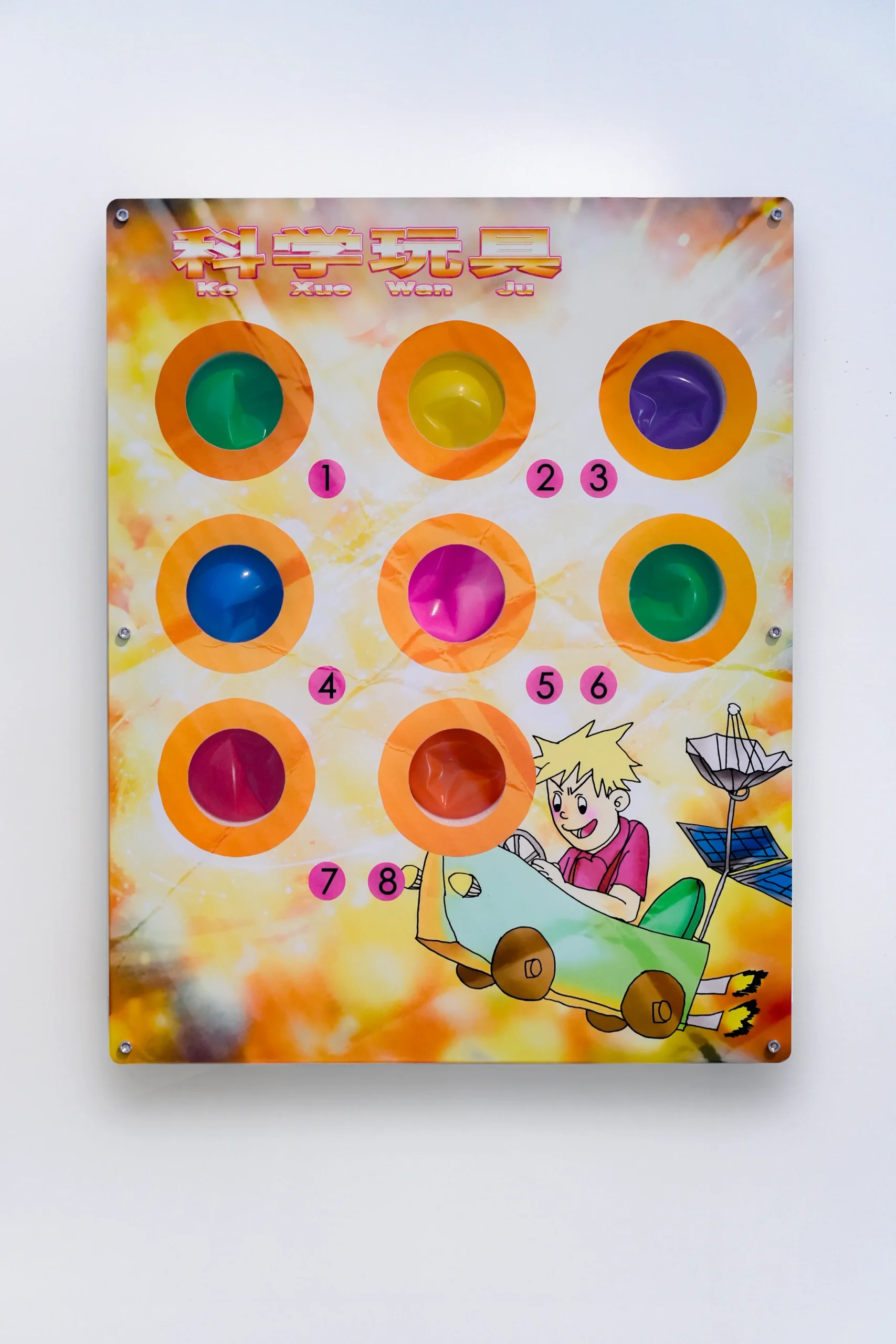
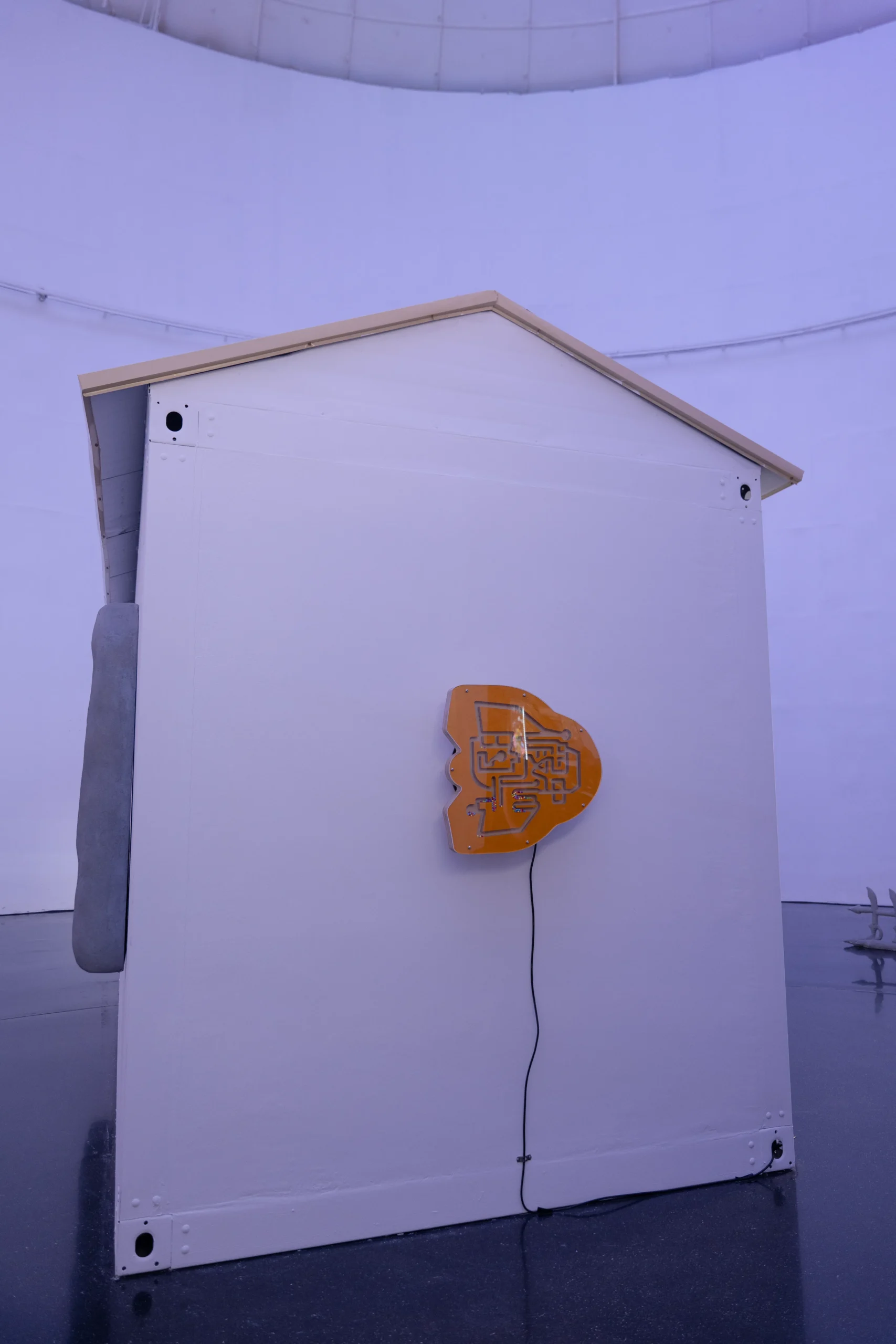
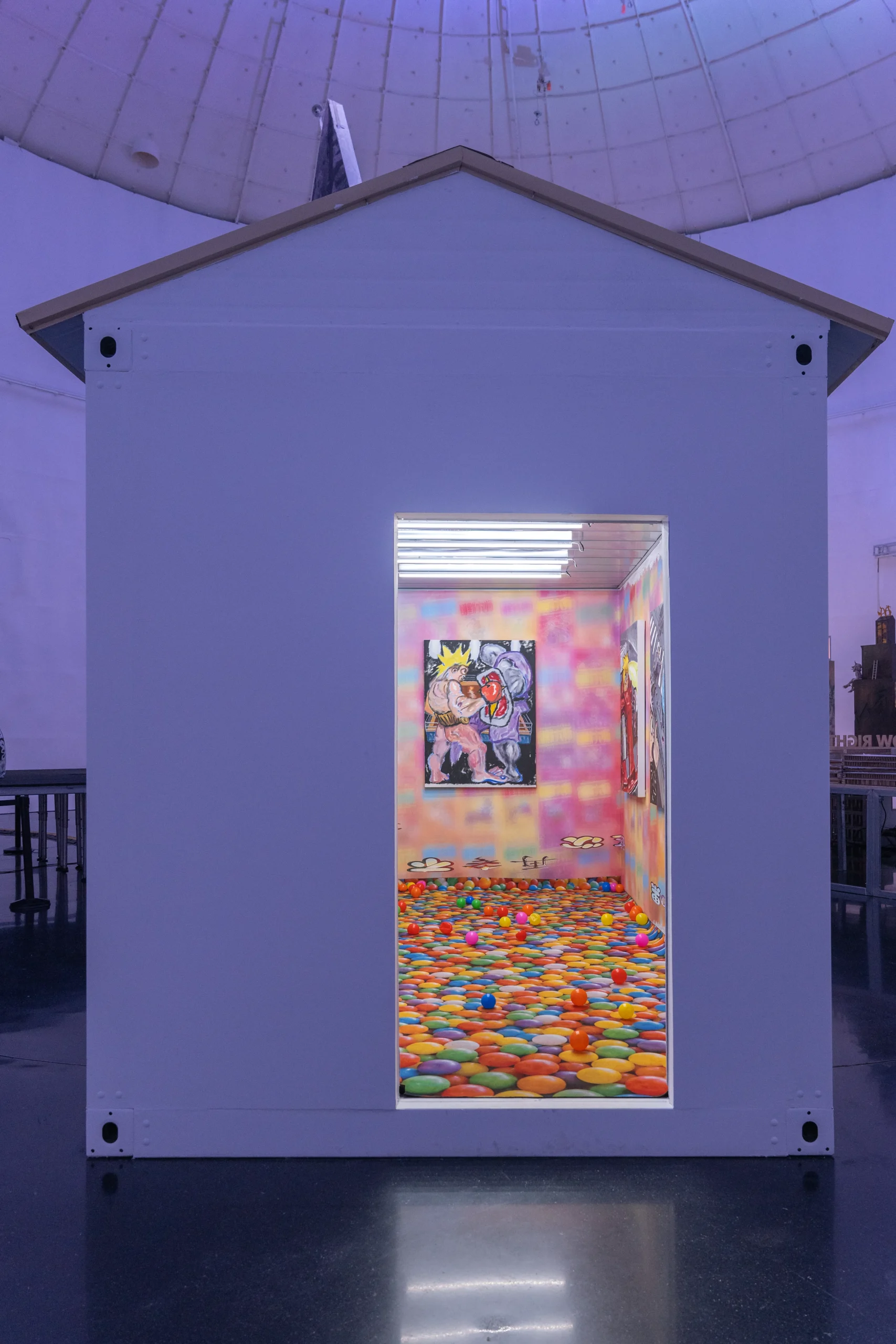
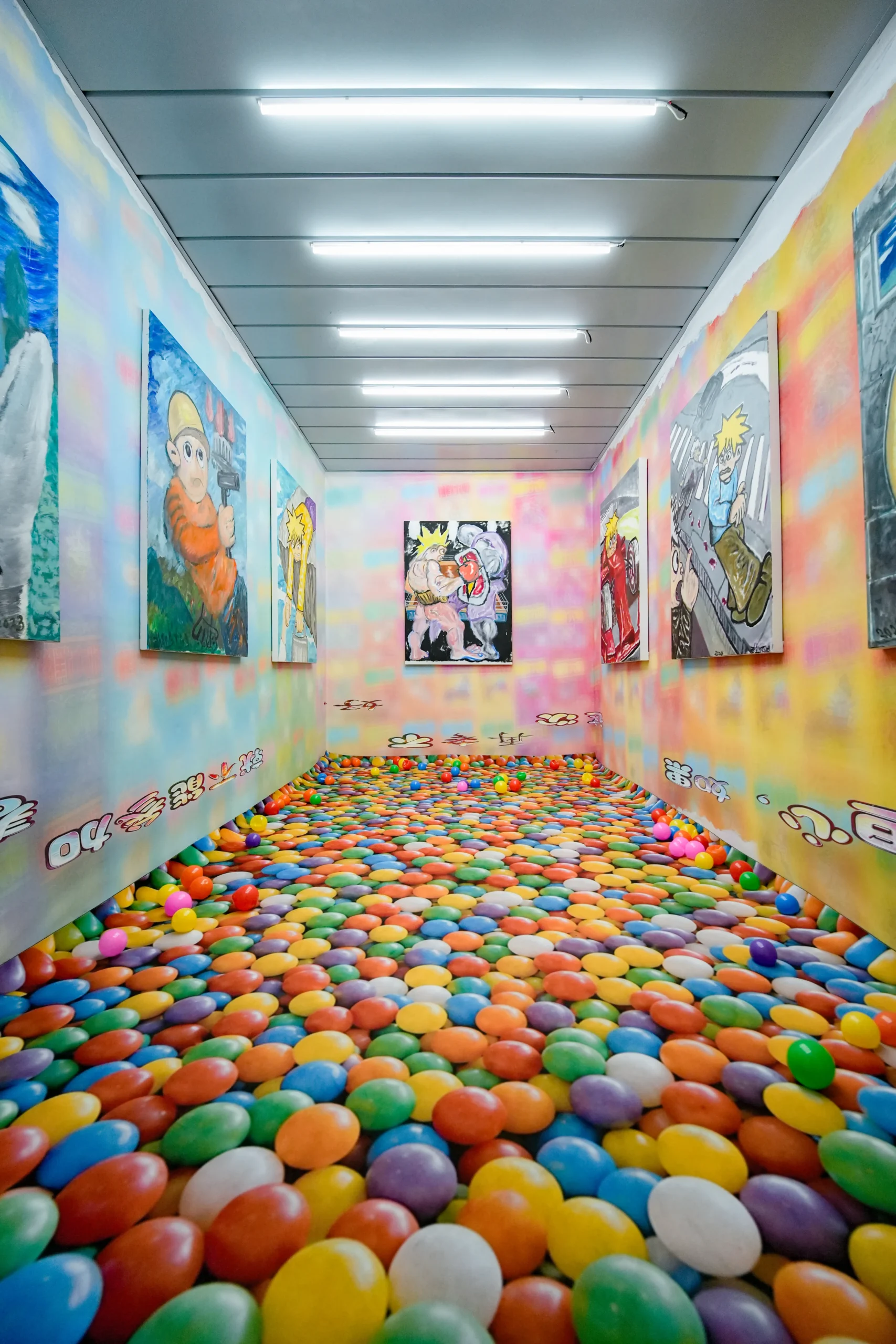
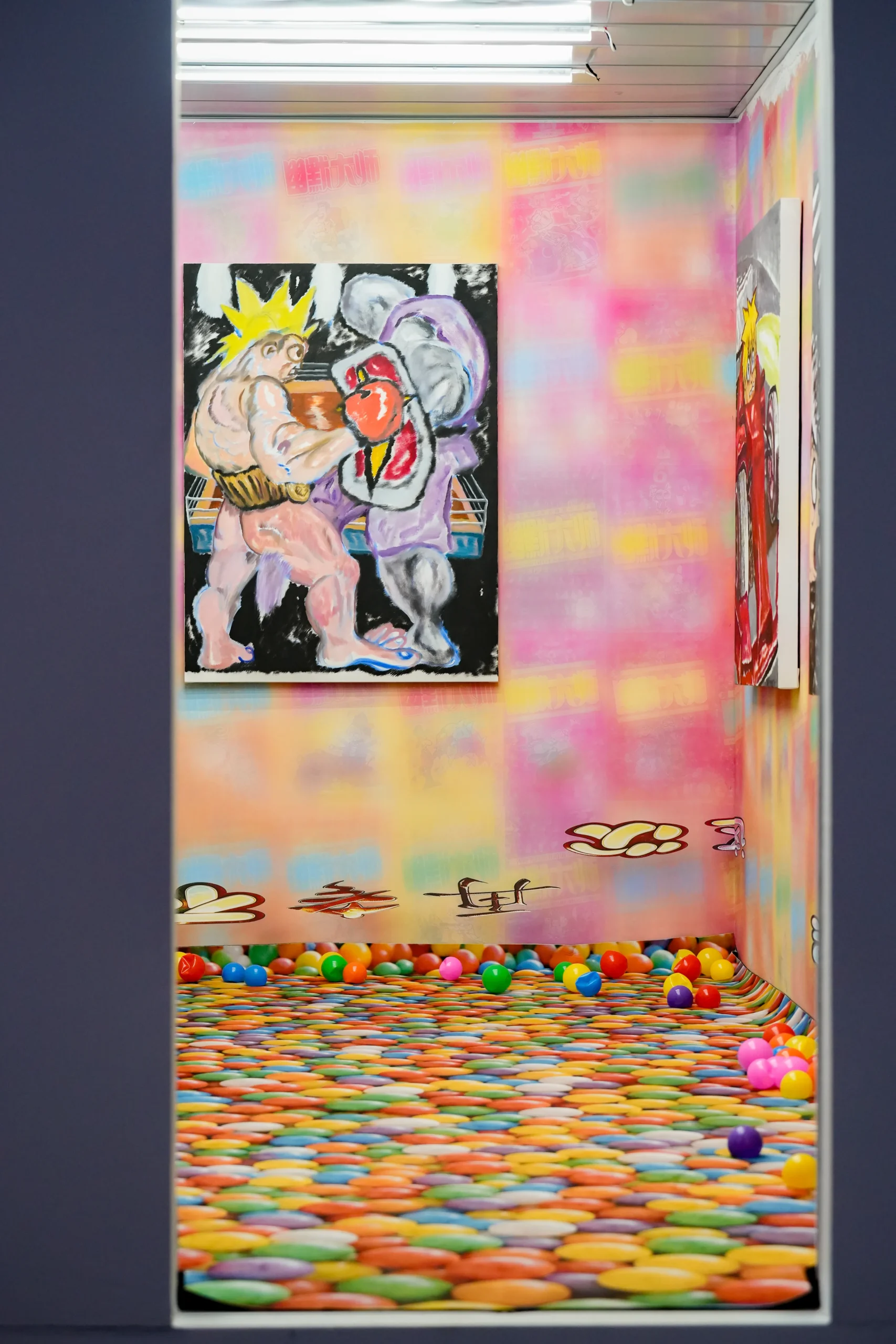
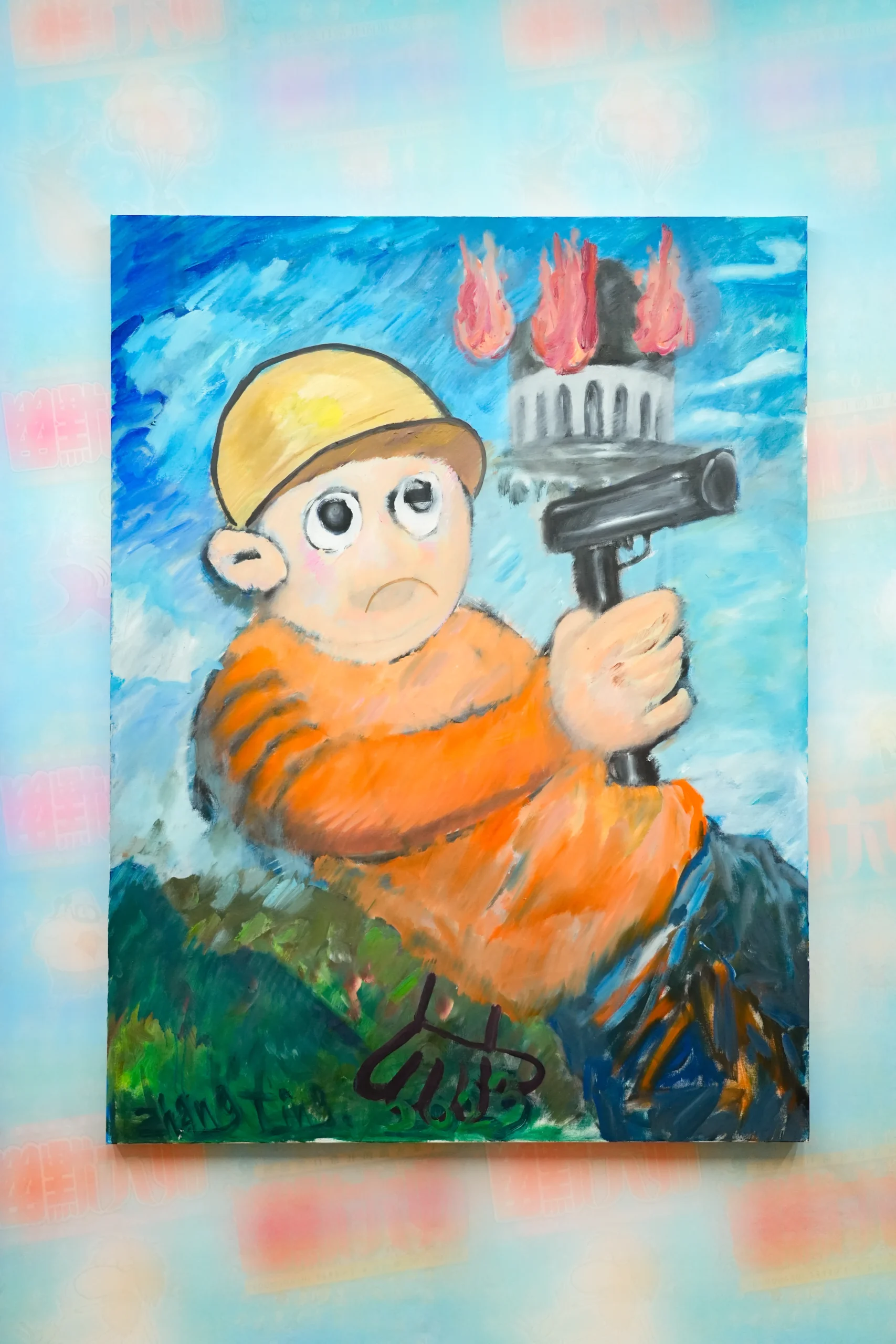
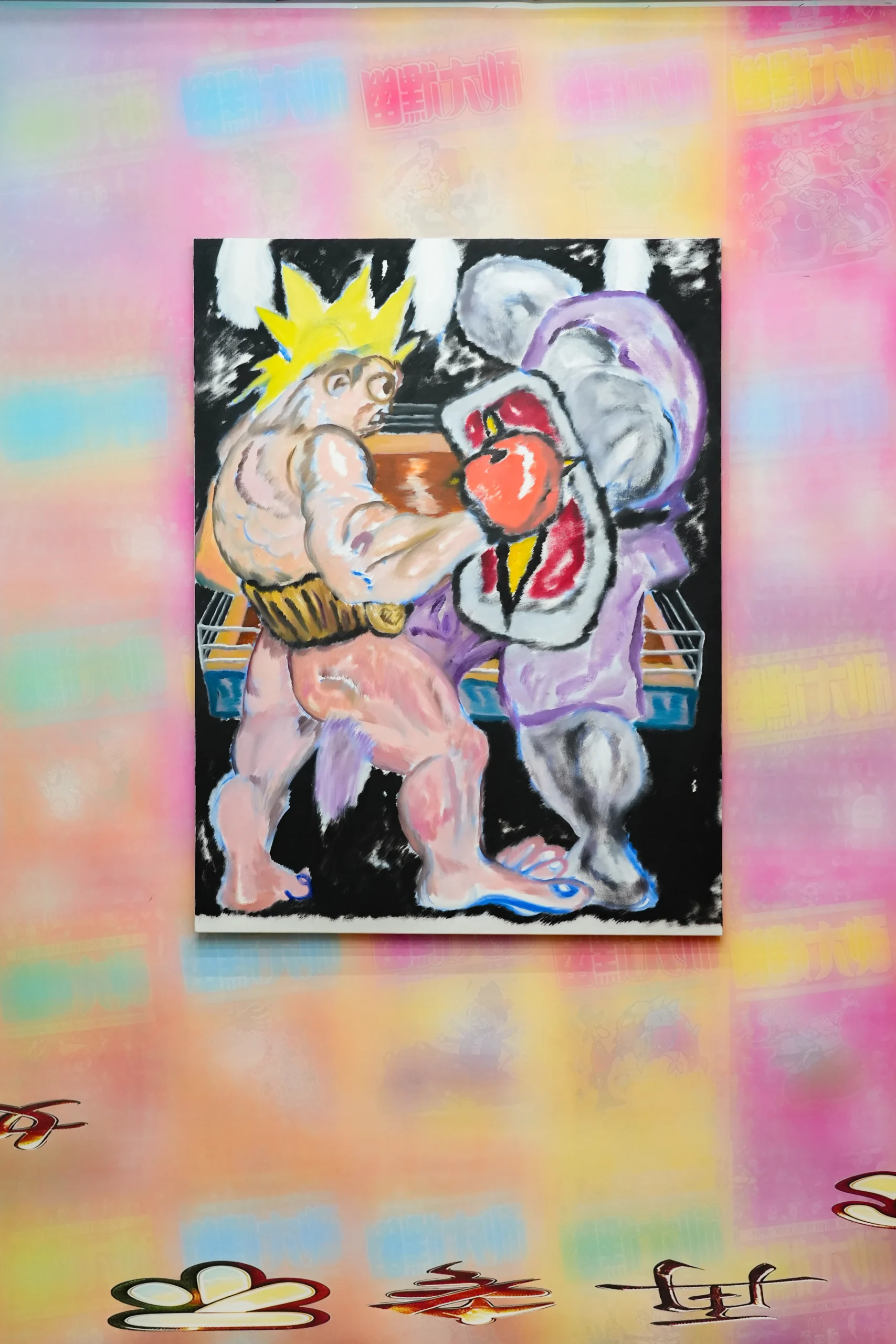
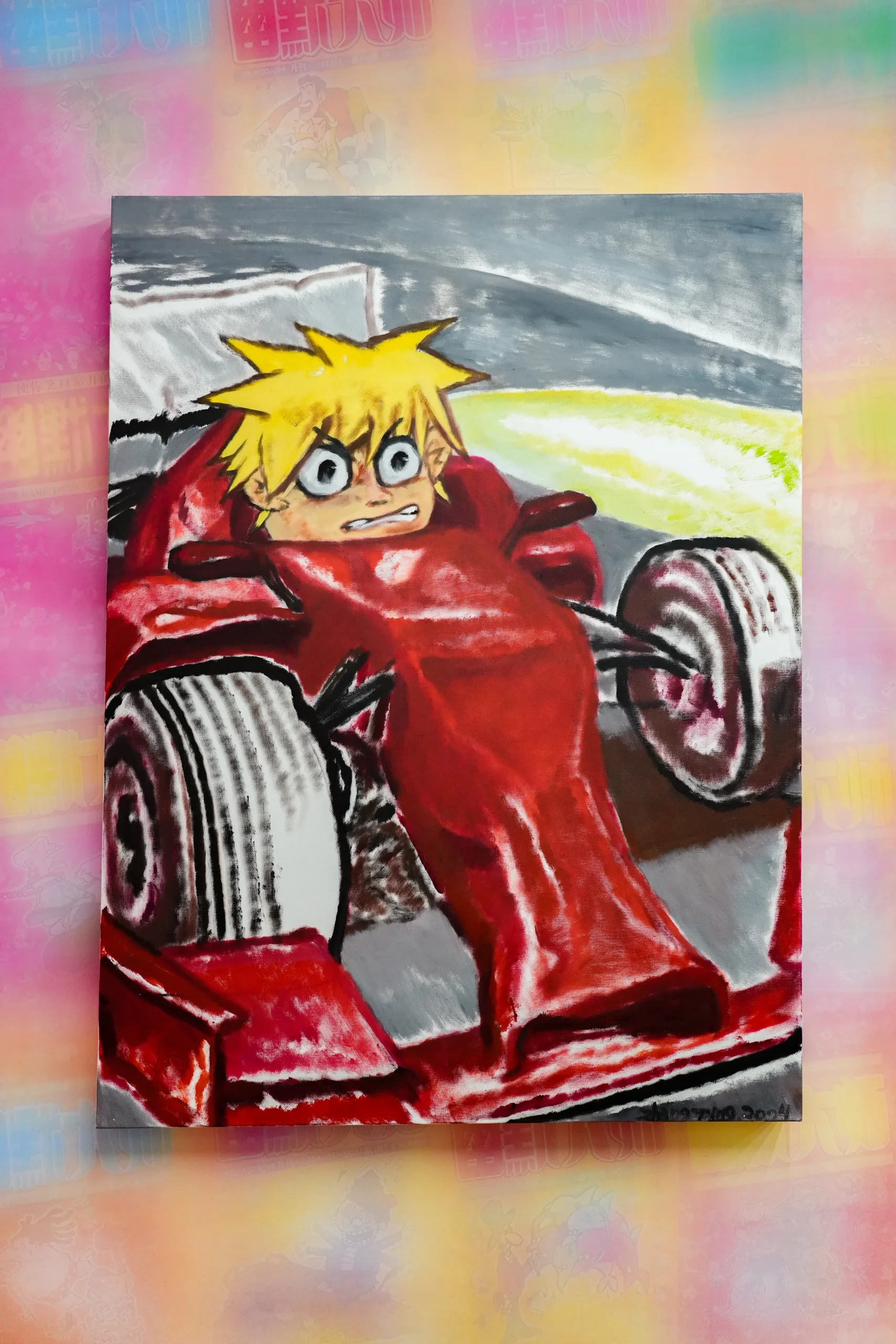
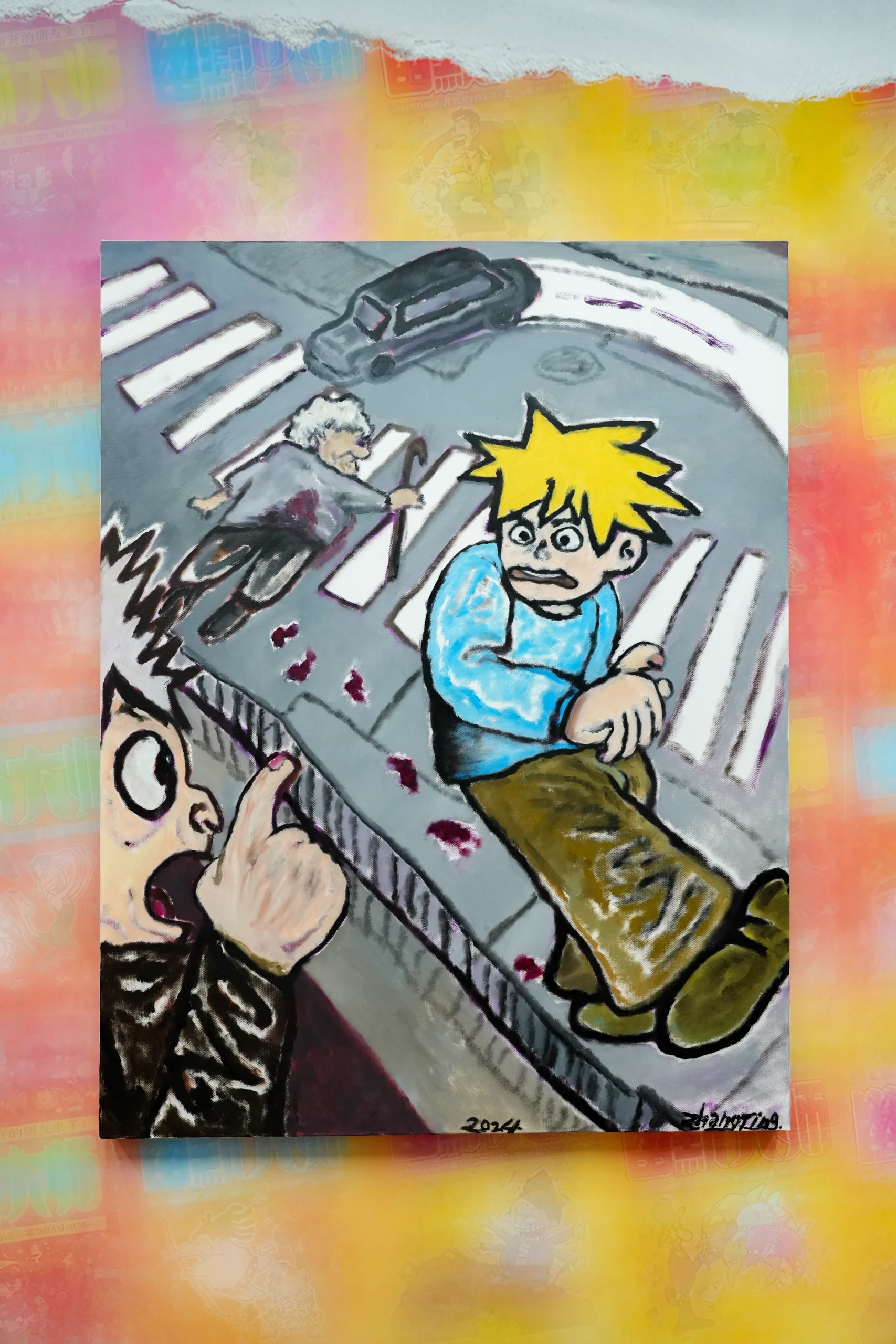
In this exhibition, Zhang Ting reimagines “Xiaoming,” a recurring fictional figure in Chinese educational textbooks, workbooks, and reading materials, through the visual language of Wit & Humour (幽默大师), a widely circulated popular comic magazine in China. Xiaoming does not refer to any particular child, but rather to a standardized educational figure repeatedly produced across generations of learning materials. He can be attentive in class, careless in an exam, helpful to his classmates, or punished for being playful; whatever the situation, his story ultimately returns to a prescribed “correct” answer. Zhang Ting places this familiar figure within new spaces and situations, transforming him from an educational model into the protagonist of an unstable narrative.
Growing up in China during the 2000s and early 2010s, Zhang Ting experienced a rapidly changing visual environment in which new forms of consumer imagery emerged alongside incomplete and uneven modes of production. Images often appeared close to contemporary consumer culture while retaining a distinctive roughness, ambiguity, and sense of imperfection. For a generation growing up during this period, these visual conditions were not distant cultural phenomena, but an ordinary part of everyday life.
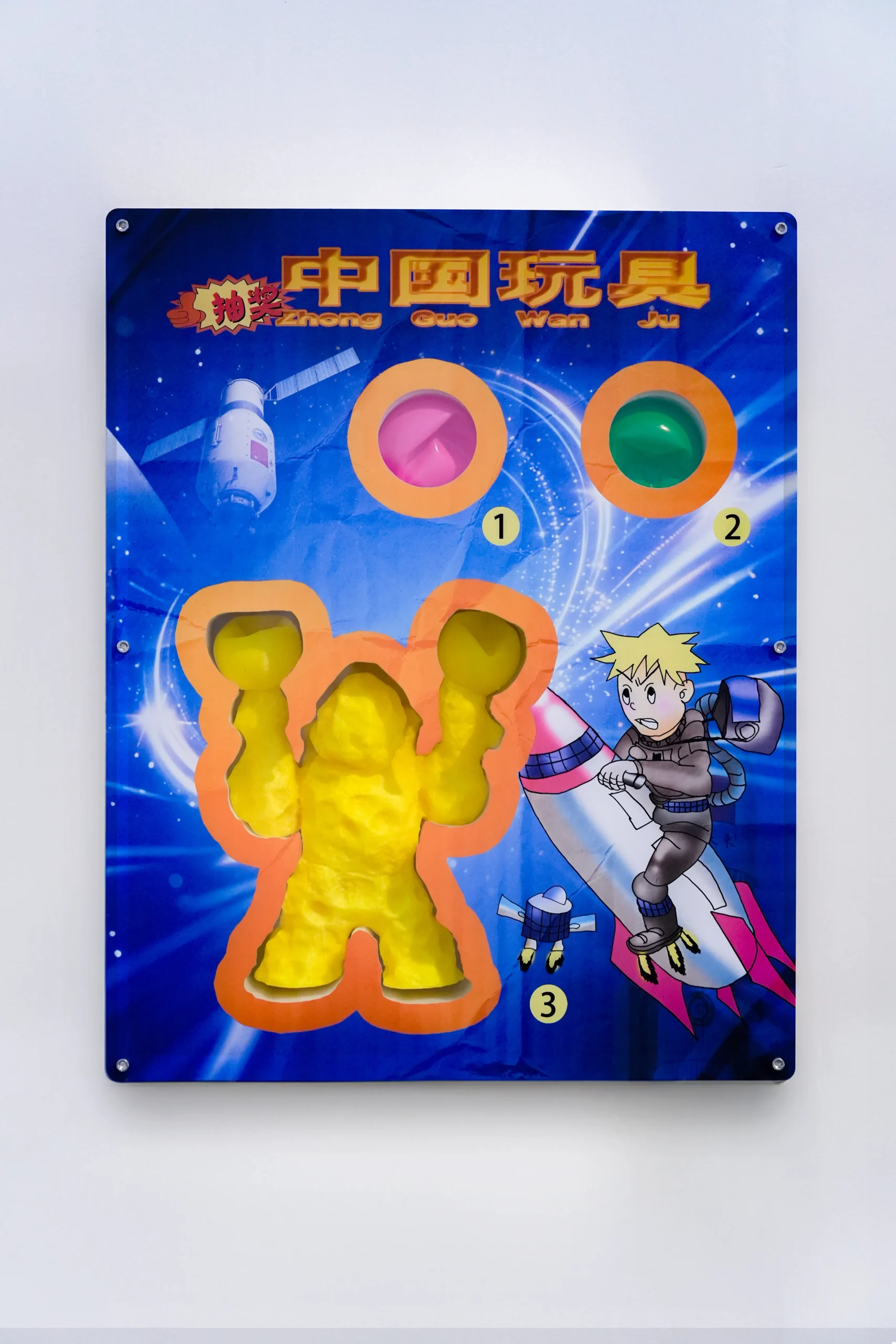
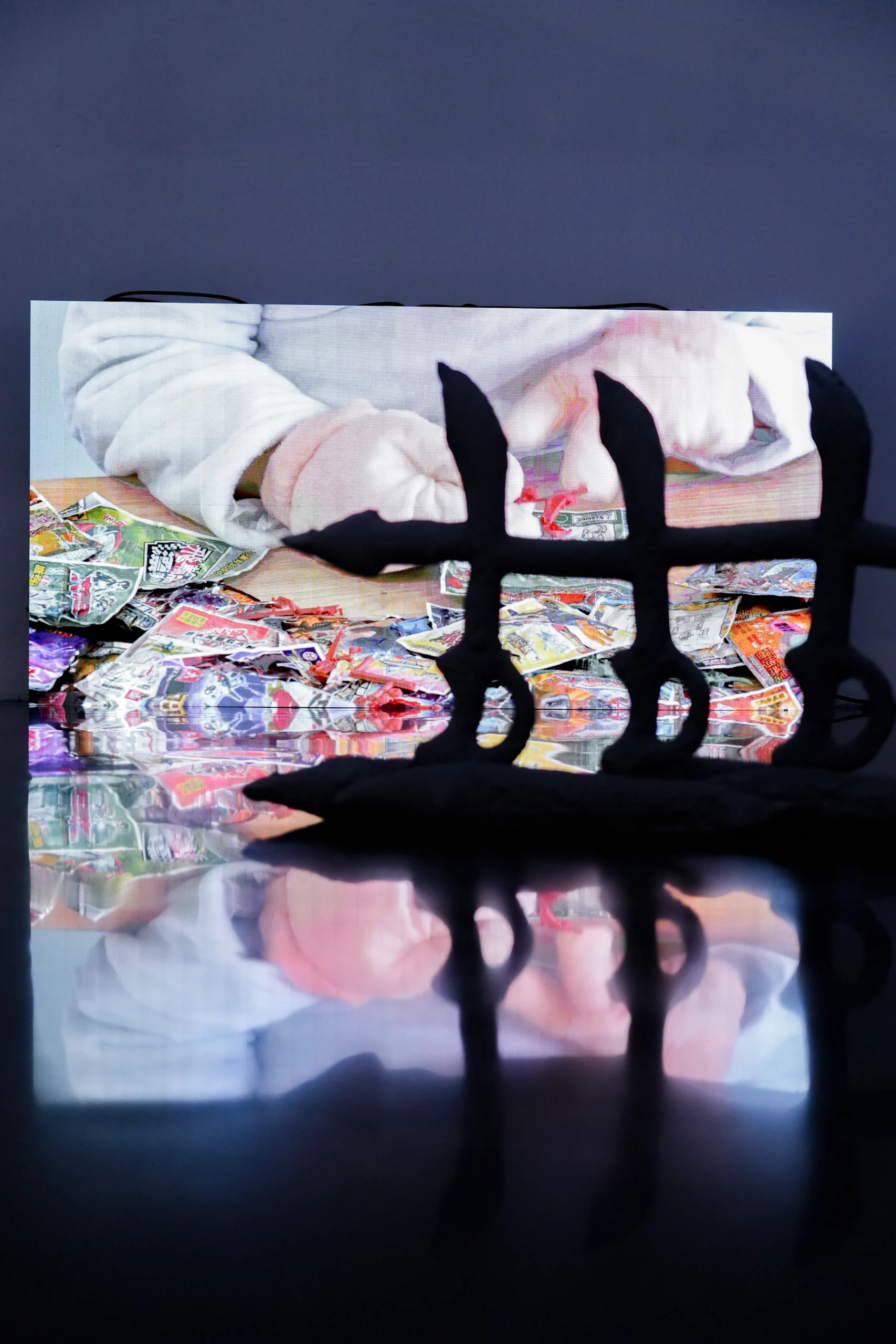
Within this context, Zhang Ting incorporates memories of unlicensed toys, cartoon imagery, and everyday objects from childhood. Among these were what were colloquially known as “Lao D” toys. “Lao D” refers to unlicensed or counterfeit toys, with the “D” derived from the initial sound of “盗版” (daoban), the Chinese word for “counterfeit” or “pirated.” These toys were widely encountered in school-gate shops, grocery stores, and prize games. Often lacking clear copyright information or identifiable production sources, they nevertheless formed an ordinary and tangible part of childhood experience.
The memory of unlicensed toys is inseparable from the memory of a generation. As part of the everyday visual culture of many young Chinese people, these objects shaped childhood experiences and collective imagination. In Zhang Ting’s work, they become not only fragments of personal memory, but also a metaphor for a generation growing up amid rapid change, uneven development, and imperfection.
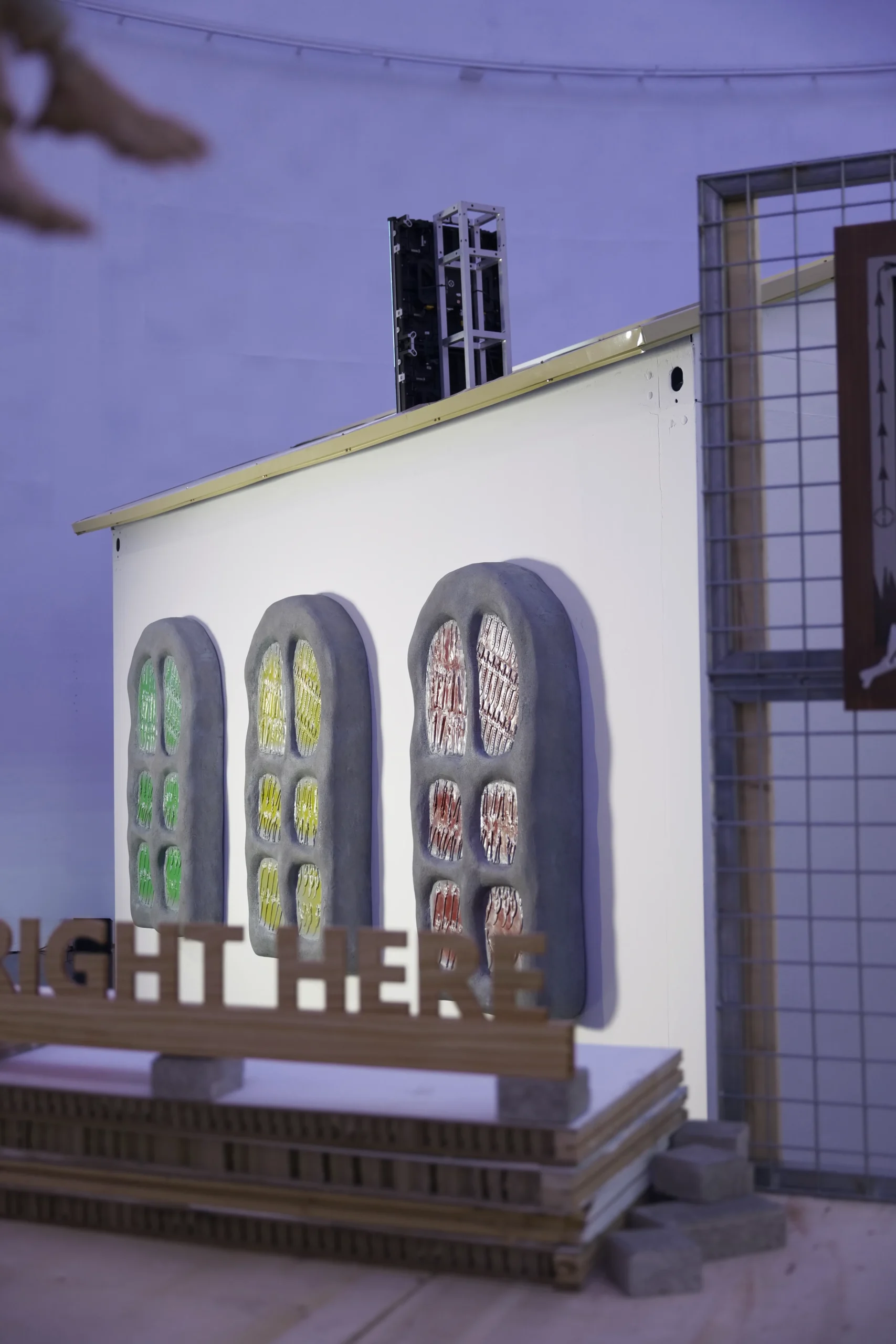
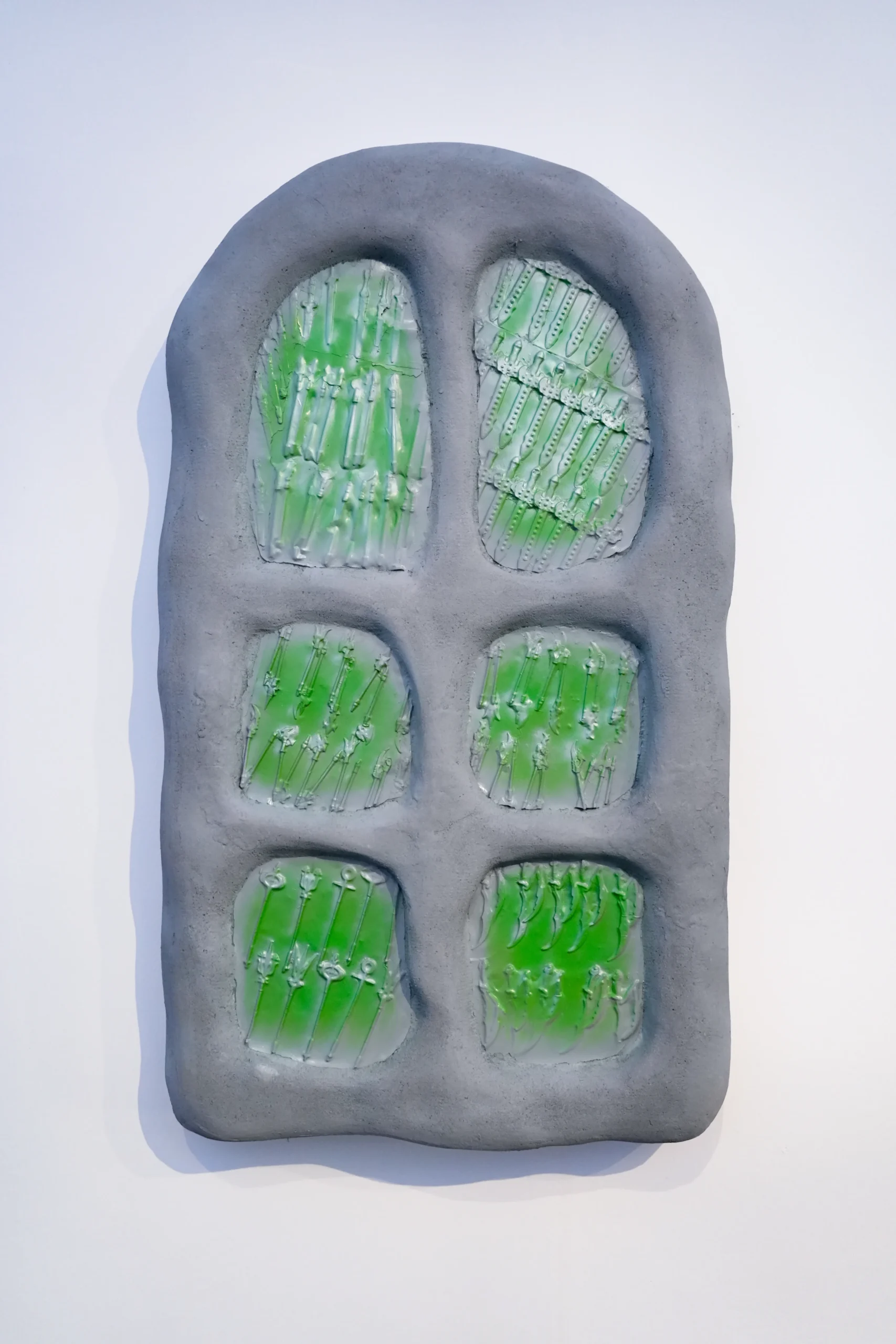
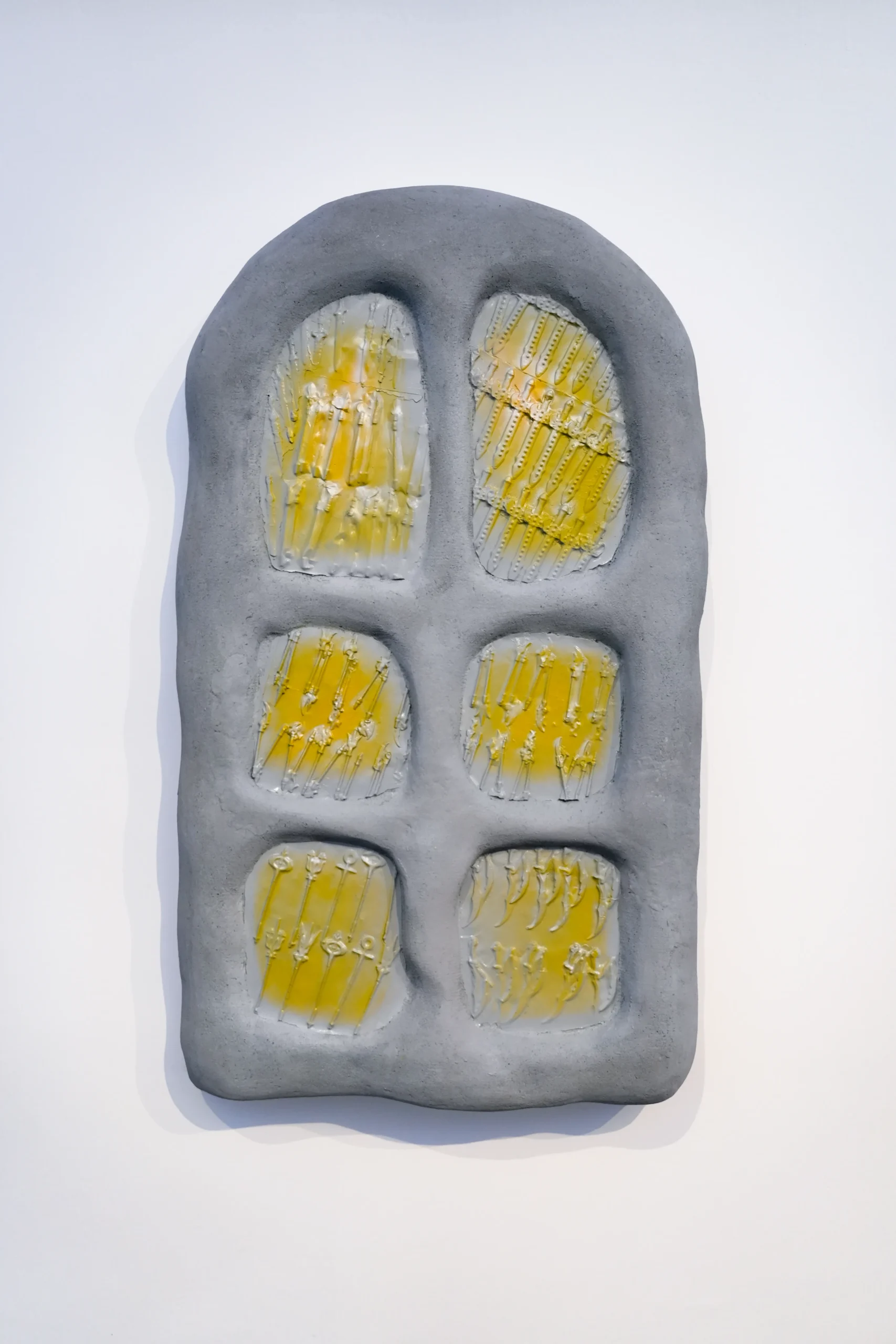
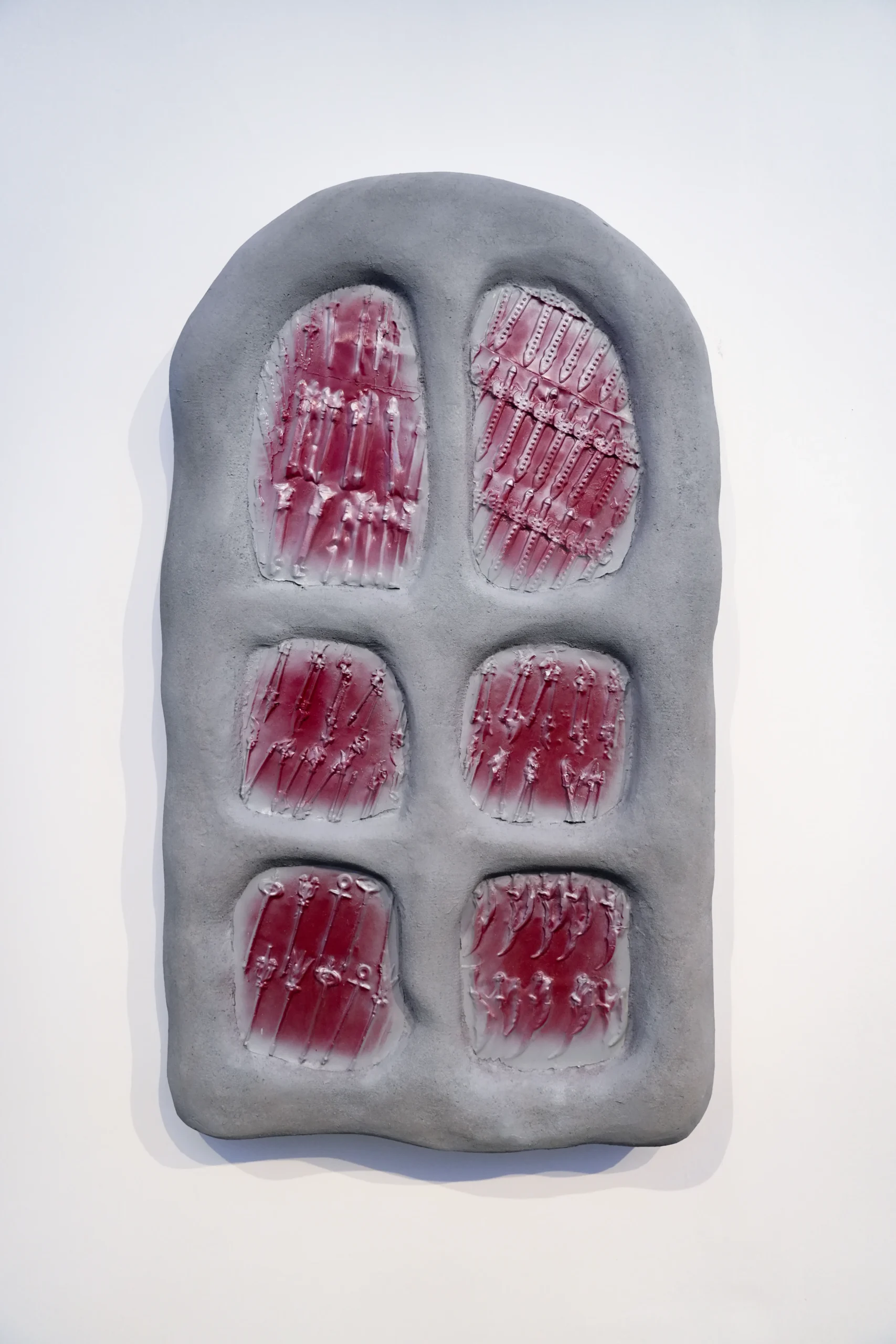
The Never-Ending Adventure is a series rooted in Zhang Ting’s imagination and exploration of what a “truly Chinese toy” might be. It centers on “Lao D” toys and the childhood memories surrounding them. In one work, Zhang Ting casts a familiar toy sword from childhood and transforms the “weapon” into the image of rain falling from a window. The molded plastic shell is stripped of its original consumer function and given the appearance of an archaeological artifact. An inexpensive toy is thus transformed into a fragment of an imagined past, carrying both the traces of rapid development and the imperfections of memory.
Across the paintings, Xiaoming repeatedly appears wearing a yellow hood and is placed in situations marked by danger and disorder. These scenes depart from the stable narratives prescribed by educational materials, bringing individual physical and psychological experience into tension with standardized models of childhood. Xiaoming therefore becomes more than a fictional character: he becomes a shared visual and cultural symbol, carrying the contradictions of a generation shaped by rapid development, unstable images, and shifting forms of modernity.
The “adventure” in Zhang Ting’s work is ultimately a departure from the prescribed path. We grow while losing things along the way; the images and objects that shaped us become worn, rough, and incomplete, much like ourselves. Yet even on a rainy day, we continue to step outside and venture into the unknown.